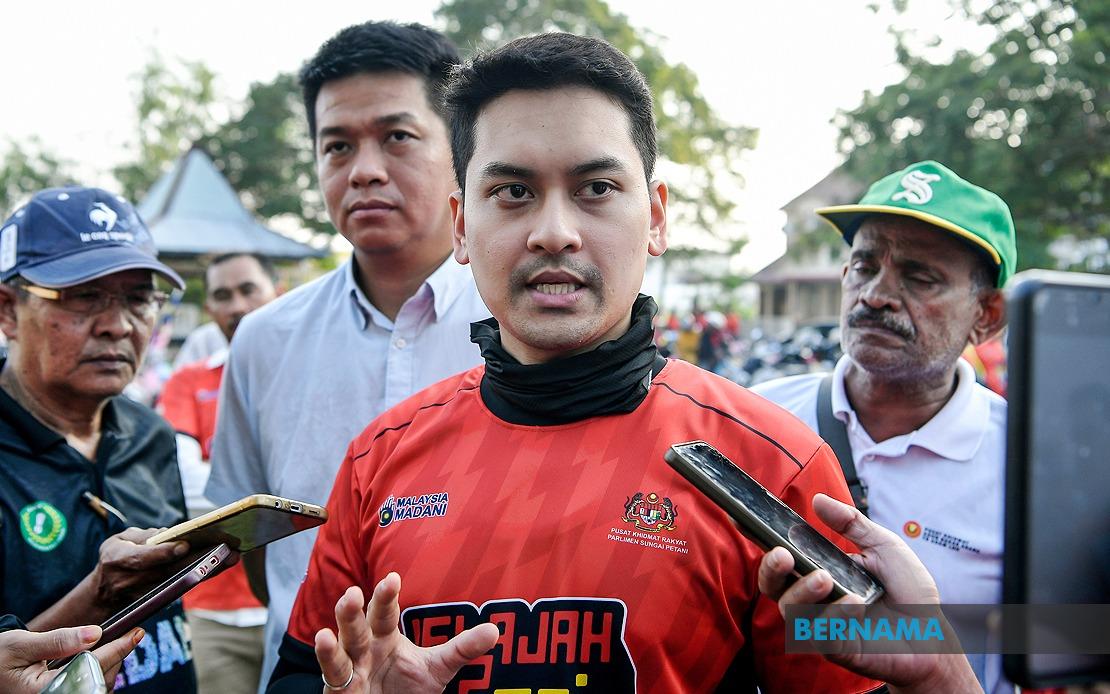
The Ministry of Youth and Sports (KBS) has embarked on an ambitious nationwide engagement initiative designed to ensure that Malaysia's young population has a direct voice in shaping the nation's upcoming federal budget. Launched in the northern zone this week, the MADANI Youth Budget Tour will traverse six regions across the country, establishing town hall sessions where citizens below voting age and young adults can express their priorities, concerns, and development aspirations to government representatives before Budget 2027 is formally presented to Parliament in October.
Youth and Sports Minister Dr Mohammed Taufiq Johari outlined the scope and timeline of the consultation exercise during remarks at the Sahabat MADANI Merdeka Eve event held at Universiti Teknologi MARA (UiTM) Penang branch. The initiative commenced at the Kedah Youth and Sports Complex and will progressively move through other regions over the coming month, with the northern zone covering Kedah, Penang, and Perlis as the starting point. This staggered approach allows the ministry to conduct meaningful dialogues across geographically diverse communities, capturing regional variations in youth concerns ranging from employment opportunities to education, housing affordability, and digital infrastructure.
The MADANI Youth Budget Tour represents a shift in how Malaysia's federal government incorporates constituency feedback into budgetary allocation processes. Traditionally, budget consultations have involved structured submissions from corporate bodies, think tanks, and political constituencies, but direct youth engagement mechanisms remain less formalised. Dr Mohammed Taufiq emphasised that these town hall sessions serve as genuine platforms for young people to articulate their views without intermediaries, breaking down communication barriers between the government and citizens who will inherit the policy consequences of today's fiscal decisions. He highlighted that contemporary Malaysian youth are increasingly vocal and politically engaged, demonstrating readiness to move beyond passive information consumption to active advocacy.
The consultation exercise carries particular significance given Malaysia's demographic profile, where citizens aged 15 to 40 represent a substantial portion of the electorate and workforce. Their economic aspirations, career prospects, and quality-of-life expectations will shape demand for social programmes, skills training initiatives, and job creation measures in the budget. By actively soliciting their input months before formal parliamentary deliberations, the government positions itself to address youth unemployment, skills gaps in emerging sectors, and affordability challenges that regularly feature in social media discourse and civil society reports.
Prime Minister Datuk Seri Anwar Ibrahim, who officiated the Penang event, has previously emphasised that youth empowerment sits at the core of his administration's policy framework. The MADANI approach—an acronym reflecting his government's broader development philosophy—integrates youth perspectives into decision-making structures as opposed to treating young citizens as passive recipients of policy. This shift aligns with emerging democratic practices in other Southeast Asian and Asia-Pacific nations, where direct consultation with younger demographics has become standard in budget cycles, reflecting recognition that intergenerational equity requires incorporating the voice of those who will bear the fiscal consequences longest.
Penang Chief Minister Chow Kon Yeow's presence at the launching event underscores the federal-state coordination dimension of the initiative. State governments often implement programmes funded through federal allocations, and their input during consultation phases ensures that budget allocations reflect ground realities and local development priorities. The northern zone's participation in early consultation rounds positions Penang, Kedah, and Perlis youth to influence budget priorities before later zones begin their dialogue sessions, potentially lending disproportionate influence to early participants unless careful attention is paid to geographic representation in the final synthesis of recommendations.
Dr Mohammed Taufiq articulated a secondary dimension of the tour beyond budget input: positioning youth as custodians of national unity and social cohesion. He called upon young Malaysians to function as bridges spanning racial and religious divisions, reframing their civic responsibility beyond inherited independence to encompass active stewardship of pluralism. This framing reflects growing concern among policymakers that socioeconomic discontent among youth, if left unaddressed, could intensify along communal lines. By embedding unity messaging within consultation processes, the government attempts to address not only material aspirations but also social fragmentation risks.
The Sahabat MADANI volunteer network, which Premier Anwar launched at the same event, provides institutional infrastructure supporting the tour's objectives. With 11,060 registered volunteers nationwide recruited to promote mutual respect and community service across demographic backgrounds, these individuals will facilitate grassroots mobilisation around the budget consultation, helping disseminate information and encourage youth participation in town hall sessions. This volunteer model distributes the logistical burden of nationwide engagement beyond government machinery alone, leveraging civil society capacity to reach communities that formal government structures might not efficiently access.
The timing of the consultation exercise relative to the October budget tabling creates both opportunities and constraints. A two-month window theoretically allows government analysts to synthesise feedback, identify recurring themes across zones, and incorporate recommendations into expenditure frameworks before parliamentary presentation. However, this compressed timeline may limit the depth of analysis possible if participation volumes exceed organisational capacity, or if conflicting regional priorities require arbitration between competing youth interests. The six-zone structure suggests a trade-off between ensuring broad geographic coverage and maintaining analytical depth in synthesising regional feedback.
For Malaysian youth themselves, the MADANI tour represents a tangible opportunity to influence resource allocation in ways that often prove inaccessible through conventional democratic channels. Young citizens frequently report frustration that electoral participation alone yields insufficient influence over policies affecting their demographics, particularly regarding employment pathways, housing affordability, and educational relevance to labour market demands. Direct consultation mechanisms, if implemented transparently with clearly communicated feedback loops demonstrating how citizen input influenced final budget allocations, can rebuild confidence that youth voices matter in governance.
The consultation tour also reflects broader regional trends across Southeast Asia toward more inclusive budget processes. Thailand, Indonesia, and the Philippines have similarly experimented with youth consultation mechanisms, though implementation quality and genuine policy responsiveness remain contested. Malaysia's approach will be monitored not only domestically but also by regional observers assessing whether institutional innovations genuinely democratise fiscal policymaking or function primarily as symbolic gestures that collect input without demonstrably shaping outcomes. The transparency with which the government communicates budget allocations traced to youth recommendations will substantially determine the initiative's credibility and effectiveness in future cycles.
As the MADANI Youth Budget Tour progresses through subsequent zones over the coming weeks, the ministry faces the challenge of maintaining engagement momentum, ensuring representative participation beyond easily mobilised activist networks, and most critically, demonstrating that youth input genuinely influences Budget 2027's final form. The success of this consultation exercise will substantially determine whether Malaysia's young citizens view budget-making as participatory governance or as theatre masking predetermined spending priorities. Clear accountability mechanisms linking consultation outcomes to final allocations remain essential for transforming the tour from a communication exercise into meaningful democratic engagement.

