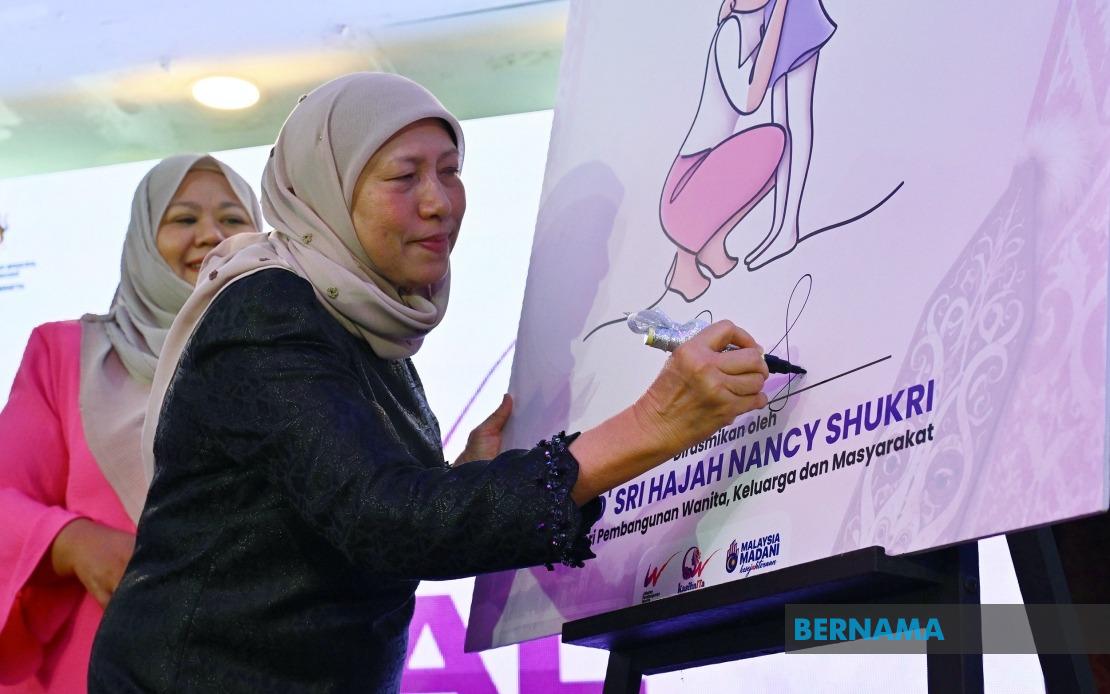
The Ministry of Women, Family and Community Development (KPWKM) has rolled out its Single Mothers Support programme, known as KasihnITa, to Sarawak as part of a nationwide expansion aimed at strengthening the social safety net for vulnerable families across the country. Minister Datuk Seri Nancy Shukri officially inaugurated the state-level initiative in Kuching on July 19, marking another significant step in the government's commitment to address the multifaceted challenges faced by single-parent households, particularly mothers managing families independently.
The phased deployment of KasihnITa represents a strategic approach to reaching Malaysia's dispersed single-mother population, which faces unique financial, legal and social pressures. Following an initial launch in Selangor, the programme's expansion to Sarawak demonstrates the federal government's recognition that support mechanisms must extend beyond the peninsula to serve East Malaysian communities effectively. This geographical expansion is particularly noteworthy given Sarawak's distinct demographic profile and the logistical challenges of delivering integrated services across a geographically vast state.
What distinguishes KasihnITa from traditional welfare programmes is its collaborative framework, which assembles expertise from multiple government agencies under a single platform. The Credit Counselling and Debt Management Agency (AKPK), Bank Negara Malaysia, the Legal Aid Department and the Syariah Judiciary Department collectively contribute their respective specialisations to provide holistic guidance to participants. This coordinated approach recognises that single mothers often struggle with interconnected problems—debt management, budgeting constraints, legal entitlements and family law matters—that require expertise across different sectors to resolve effectively.
Financial literacy emerges as a central pillar of the programme's design. By equipping single mothers with practical knowledge in financial planning and household budgeting, KasihnITa seeks to build resilience beyond immediate crisis intervention. The emphasis on empowering women to manage family finances independently reflects a deeper understanding that sustainable improvement in living standards depends on building individual capability rather than perpetuating dependency on government transfers. This capacity-building dimension addresses a critical gap in Malaysia's existing welfare architecture, where support has traditionally focused on income assistance rather than financial capability development.
The legal assistance component of KasihnITa addresses a particularly acute vulnerability affecting many Malaysian single mothers: the enforcement of child maintenance orders. Nancy highlighted how the programme provides direct access to legal expertise, enabling mothers to understand their rights and pursue enforcement action when ex-spouses fail to meet court-ordered maintenance obligations. This practical legal support is essential in a context where numerous families face prolonged financial hardship due to non-compliance with maintenance orders, effectively leaving mothers as sole providers despite formal legal judgments favouring their children's interests.
Central to the programme's development philosophy is the explicit commitment to gather direct feedback from participants and incorporate their lived experiences into future policy formulation. This bottom-up approach recognises that well-intentioned programmes often miss critical gaps when designed without sufficient input from the communities they serve. By creating structured channels for single mothers to articulate their needs, challenges and suggestions, KPWKM aims to ensure that policy evolution remains grounded in reality rather than bureaucratic assumptions about what vulnerable families require.
The inaugural Sarawak session attracted approximately 130 participants across a three-day programme, suggesting substantial demand for coordinated support services among the state's single-mother population. The multi-day format allows for deeper engagement with complex topics—financial counselling, legal procedures, welfare entitlements—rather than superficial awareness-raising. This extended timeframe also facilitates peer networking, enabling participants to build support networks with others facing similar circumstances, creating informal structures that complement formal government assistance.
Nancy's emphasis on ensuring no woman is "left behind" in Malaysia's development agenda signals a deliberate policy stance that vulnerability should not disqualify individuals from prosperity and advancement. This framing moves beyond charity or welfare as burden-management towards viewing investment in single mothers as essential to achieving broader national development goals. When single mothers gain financial stability and legal security, the benefits cascade through households—improved educational outcomes for children, reduced poverty transmission across generations and enhanced economic participation in the formal workforce.
The programme's recognition that support operates at multiple levels—financial, legal, psychological and social—reflects contemporary understanding of poverty and vulnerability as multidimensional phenomena requiring coordinated responses. A single mother's inability to afford her children's education may stem simultaneously from insufficient income, lack of financial planning skills, unresolved child maintenance disputes and psychological stress from isolation. KasihnITa's integrated approach targets these interconnected dimensions rather than treating them as separate policy domains requiring independent intervention.
For Malaysian policymakers, the Sarawak expansion offers valuable lessons about scaling social programmes across diverse geographical and cultural contexts. The successful integration of Islamic law expertise (Syariah Judiciary Department) alongside secular legal frameworks reflects Malaysia's constitutional dualism and ensures that support services remain culturally appropriate and legally effective for diverse beneficiaries. This inclusive design model could serve as a template for other federal initiatives seeking to maintain relevance across Malaysia's complex social and legal landscape.
The programme's focus on building confidence and reducing social isolation addresses dimensions of single-parent vulnerability that purely financial interventions cannot touch. When families understand that formal support systems exist and that peer communities of similarly situated mothers can provide emotional sustenance alongside practical assistance, the psychological burden of managing alone diminishes. This confidence-building function enhances programme effectiveness by reducing the shame or stigma that sometimes prevents vulnerable families from accessing available support.
Moving forward, the success of KasihnITa will depend on sustained government commitment to expand beyond pilot states, adequate funding to deliver quality services consistently, and genuine incorporation of participant feedback into evolving programme design. The initiative signals recognition that single mothers represent a constituency whose needs demand integrated, respectful and substantive government response rather than peripheral attention within broader social welfare frameworks. As the programme matures across Malaysia's diverse states, it will establish important precedent for how federal and state governments can collaborate to address vulnerability while respecting local contexts and supporting individual agency.

