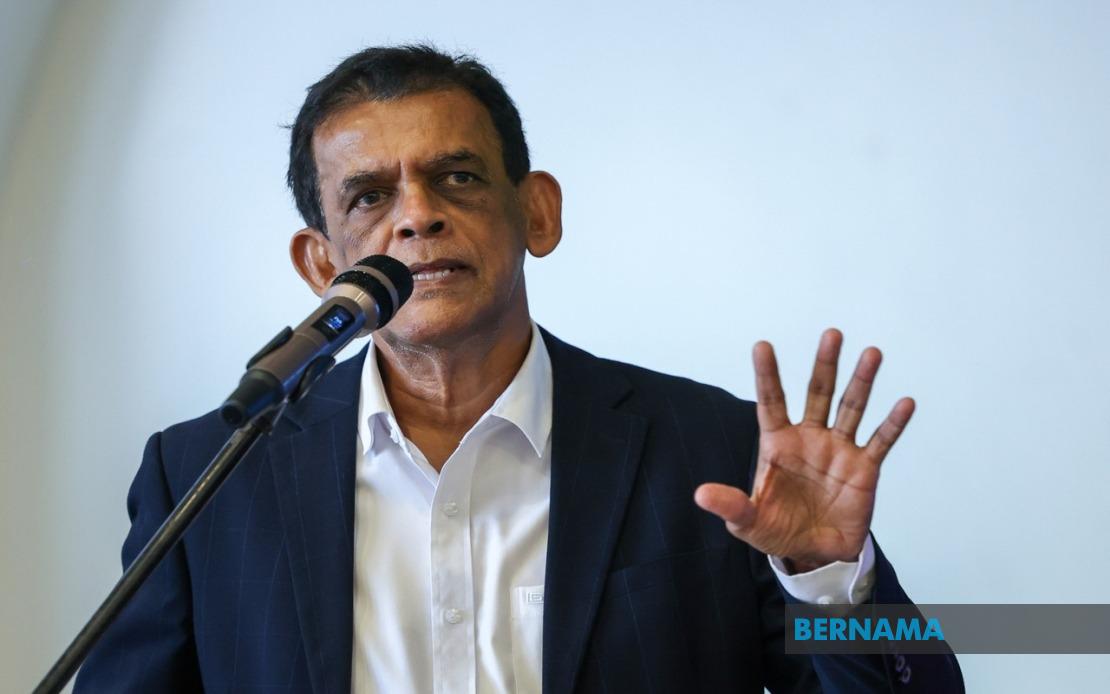
The Malaysian Artistes Association, commonly known as Karyawan, has formally requested that the government assume operational control of the nation's music royalty collection and distribution infrastructure. This proposal emerged as a unanimous resolution from the association's annual general meeting, with Datuk Freddie Fernandez, the organisation's president, announcing the call in a statement on June 29. The push represents a significant escalation in industry frustrations with a system that has generated complaints throughout Malaysia's creative sector for more than twenty years.
The association's case for reform centres on the sheer financial stakes involved in Malaysia's music sector. Annual public performance royalty collections are approaching RM200 million, making the efficiency and fairness of distribution mechanisms a matter of genuine economic consequence for thousands of musicians and composers. Yet rather than flowing smoothly to creators, these revenues have become entangled in a web of administrative complexity, high costs, and competing interests that critics argue have systematically shortchanged artists while enriching middlemen. The financial burden has fallen most heavily on individual musicians and smaller publishing entities who lack resources to navigate the fragmented collection landscape.
Karyawan's proposal draws inspiration from Indonesia's approach to the same problem. The neighbouring country faced comparable challenges within its music industry until the government intervened by establishing the National Collective Management Institution, a centralised body overseeing public performance royalty collection. By consolidating previously scattered collection operations, Indonesia's model demonstrated how governmental oversight could simplify processes and reduce the friction that inevitably accumulates in systems relying on multiple competing organisations. Freddie's reference to this precedent suggests that Malaysia has studied a practical blueprint already tested in a similar regional context, rather than proposing untested theory.
Beyond transferring administration to government hands, Karyawan has outlined a more comprehensive vision for digital transformation. The association proposes developing a centralised, government-supervised digital platform to manage the entire ecosystem of music rights. This system would function as a national repository, maintaining complete records of every musical composition and sound recording, documenting ownership structures, tracking all licensing agreements, monitoring actual usage across venues and platforms, calculating royalties automatically, and processing payments directly to verified rights holders. The concept essentially reimagines music royalties as a data-driven process where technology replaces human discretion as the primary mechanism for connecting usage to payment.
The proposed platform would address several deep-rooted problems simultaneously. Transparency remains a cornerstone concern; many Malaysian musicians have complained for years that they cannot accurately determine how royalties are calculated or why payments seem inconsistent with their works' actual public performance. A digital system offering an auditable trail accessible to all stakeholders—government regulators, artists, users, and collecting bodies—would theoretically eliminate much of the opacity that currently characterises the system. Administrative duplication, where multiple organisations perform overlapping functions, would consolidate into a single workflow. Disputes between different collective management organisations over who collected what and from where would become impossible if all transactions flowed through one system.
The specific case of Sudirman Arshad, a late music legend, illustrates why this reform matters beyond abstract principle. His family waited many years before receiving RM367,000 in accumulated royalties from album sales and other sources. This was not a failure of the system to collect money; rather, it was the system's failure to deliver what had already been collected to the person who created the underlying work. Since news of Arshad's delayed payments became public, Karyawan reports that numerous association members have come forward to share similar experiences of inadequate or belated compensation for streaming services and album sales. The association is now systematically documenting these individual cases to build a collective case for pursuing what members regard as owed compensation.
Karyawan's initiative arrives amid broader policy-level engagement on the issue. The association has been working alongside MyIPO (the Intellectual Property Corporation of Malaysia), the Ministry of Domestic Trade and Cost of Living, and the three existing royalty collection bodies—Music Authors' Copyright Protection, Public Performance Malaysia, and Recording Performers Malaysia. Notably, some of these entities have taken legal action against the government, suggesting tensions within the current ecosystem that government intervention might seek to resolve. The Copyright (Collective Management Organisation) Guidelines 2025 referenced by Freddie provide a policy framework that could support the proposed reforms, as they emphasise governance, transparency, record-keeping, and accountability.
The digital platform would also tackle an emerging challenge that the traditional system is ill-equipped to address: artificial intelligence-generated music. As AI systems become increasingly capable of composing and recording music autonomously, questions about rights ownership, royalty entitlement, and the status of human-created works will multiply rapidly. A rigid, analogue-era royalty system designed for human composers and performers may struggle to distinguish between AI-generated content and human creativity, or to protect human artists' interests as AI music proliferates across streaming platforms. A sophisticated digital system could theoretically establish rules governing AI music usage and ensure that AI-generated works do not crowd out or displace legitimate human-created music in royalty calculations.
The broader Southeast Asian context makes Malaysia's situation particularly relevant. Several countries in the region have experimented with different approaches to creative industry governance, and a successful digital music royalty system in Malaysia could become a model for other nations facing similar challenges. The region's rapidly growing digital economy, combined with increasing music consumption through streaming platforms headquartered globally, creates urgency around establishing clear, efficient systems that protect local creators from exploitation. Malaysia's proposal reflects recognition that the traditional approach—a loose federation of private collecting organisations—leaves creators vulnerable to administrative delays, opacity, and disconnection from revenues their work generates.
Implementing such a system would require technical infrastructure investment, legal framework amendments, and political will to confront entrenched interests currently benefiting from administrative opacity. The financial stakes are significant enough to motivate some resistance from collection bodies and other intermediaries whose roles might change under a consolidated system. However, from the perspective of working musicians and the broader creative economy, the case appears compelling: nearly RM200 million in annual royalties should flow efficiently and fairly to those who created the musical works generating those revenues. Karyawan's proposal represents an attempt to align Malaysia's music industry governance with the transparency and efficiency standards that digital-era audiences and creators increasingly expect.

