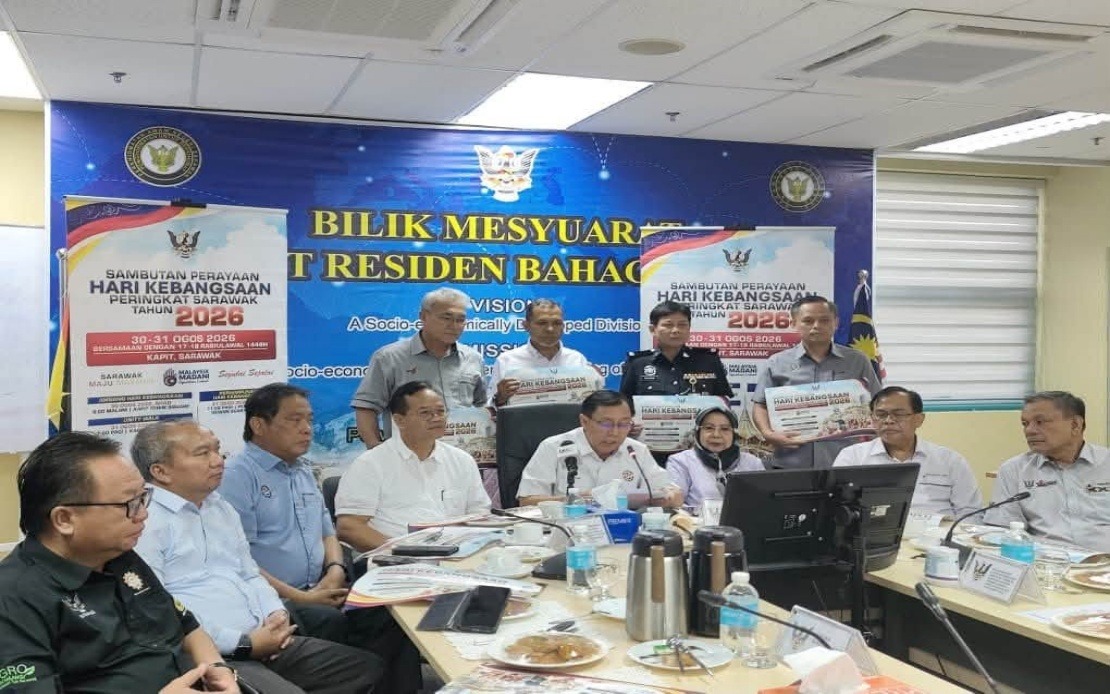
The riverside town of Kapit will become the focal point of Sarawak's National Day commemoration this August, hosting the state-level celebration across two days as part of Malaysia's broader independence festivities. Scheduled for August 30 and 31, the event represents an opportunity for the inland division to showcase community spirit whilst honouring the nation's founding principles and the contributions of past leaders who shaped Malaysia's trajectory.
Datak Seri Dr Stephen Rundi Utom, who oversees the Sarawak Food Industry, Commodity and Regional Development portfolio and serves as minister responsible for coordinating the celebration, outlined the significance of bringing the state-level commemoration to Kapit. The choice of venue carries symbolic weight, as divisional-level hosting of national celebrations rotates across Sarawak's regions, distributing civic engagement opportunities and ensuring that communities beyond the state capital participate meaningfully in Malaysia's founding day observance.
The celebration will draw high-level attendance, with Sarawak Governor Tun Dr Wan Junaidi Tuanku Jaafar and Sarawak Premier Tan Sri Abang Johari Tun Openg expected to grace proceedings. This presence underscores the government's commitment to the event and provides visible symbols of state leadership engaging directly with the populace in celebrations of national identity and cohesion.
Three distinct activities have been structured to engage residents throughout the two-day period. The festivities will commence on the evening of August 30 with a National Day Eve celebration at Kapit Town Square, setting an anticipatory tone for the following day's main events. This evening component typically features cultural performances, speeches from civic leaders, and social activities designed to build community momentum heading into the official commemoration date.
August 31 morning will feature a Unity Walk commencing at 7 am, a participatory element that encourages residents to physically demonstrate their commitment to national solidarity by marching together through town. Such walks have become standard features of Malaysian National Day celebrations, transforming abstract notions of togetherness into tangible communal action. The early start time reflects the traditional practice of beginning Independence Day observances with vigorous public engagement.
The centrepiece gathering will occur at 11 am on August 31 at the grounds of Dewan Suarah Kapit, where formal proceedings will accommodate speeches, flag ceremonies, and recognition of civic contributions. Governor Wan Junaidi will participate in both the Unity Walk and the main gathering, whilst Premier Abang Johari will attend the culminating National Day Gathering, reflecting the coordinated involvement of state leadership across the celebration's span.
By extending invitations broadly to residents of Kapit Division and surrounding areas, organisers are deliberately expanding participation beyond immediate township boundaries. The inland division encompasses several longhouse communities and smaller settlements whose residents may have limited regular exposure to state-level official functions. This inclusive approach strengthens democratic engagement by ensuring that Malaysia's National Day remains a shared observance across diverse geographic and demographic segments of the population.
For those unable to attend in person, broadcast provisions will democratise access to proceedings. Live television coverage through TVS and streaming via the Sarawak Public Communications Unit's (UKAS) official social media platforms will enable remote participation, a growing necessity in an era where digital connectivity bridges physical distances. This multiplatform approach ensures that elderly residents, individuals with mobility constraints, and those engaged in essential services can nonetheless experience the celebrations and feel part of the broader national commemoration.
The structured emphasis on patriotism, unity, and historical acknowledgment reflects contemporary Malaysian governance priorities. Following political transitions and electoral shifts in Sarawak in recent years, such state-level celebrations serve dual purposes: commemorating genuine historical milestones whilst reinforcing narratives of governmental legitimacy and social cohesion. For the Kapit Division specifically, the hosting responsibility elevates the town's profile and offers local government and civic organisations platforms to demonstrate organisational capability and community mobilisation.
The celebration's timing during late August positions it within Malaysia's broader independence season, which extends through Merdeka Day on August 31 and continuing through Malaysia Day on September 16. Kapit's hosting thus anchors Sarawak's participation within this national cycle, creating temporal connections between federal and state commemorations. The divisional celebration represents the practical mechanism through which state-level governance translates national observances into local experiences accessible to ordinary residents.
Rundi's framing of the event as strengthening togetherness and honouring historical contributions suggests organisers view the celebration as serving functions beyond mere ceremonial repetition. In Sarawak's context, where ethnic and cultural diversity requires constant cultivation of shared identity, such events become deliberate investments in social cohesion. The public invitation thus extends beyond courtesy, representing substantive outreach to ensure diverse community representation across the celebration's various activities and audience composition.
The logistical coordination required to host a state-level celebration demonstrates the administrative capacity of divisional governance structures. Securing gubernatorial and premier attendance, arranging multiple concurrent venues and activities, and establishing media broadcasting infrastructure demands considerable planning and resource allocation. For Kapit's municipal administration and community organisations, the hosting responsibility provides opportunity to demonstrate civic readiness and organisational proficiency to state-level observers.
Ultimately, Kapit's National Day celebration embodies how Malaysia's independence commemoration extends beyond the federal capital and major urban centres into regional towns and divisions. By distributing hosting responsibilities across Sarawak's geography, the state ensures that all communities experience direct engagement with official national observances, reinforcing the principle that Malaysia Day belongs equally to all residents regardless of geographic location or administrative hierarchy. The August 30-31 events will thus function simultaneously as historical commemoration, patriotic reinvigoration, and practical demonstration of inclusive governance.

