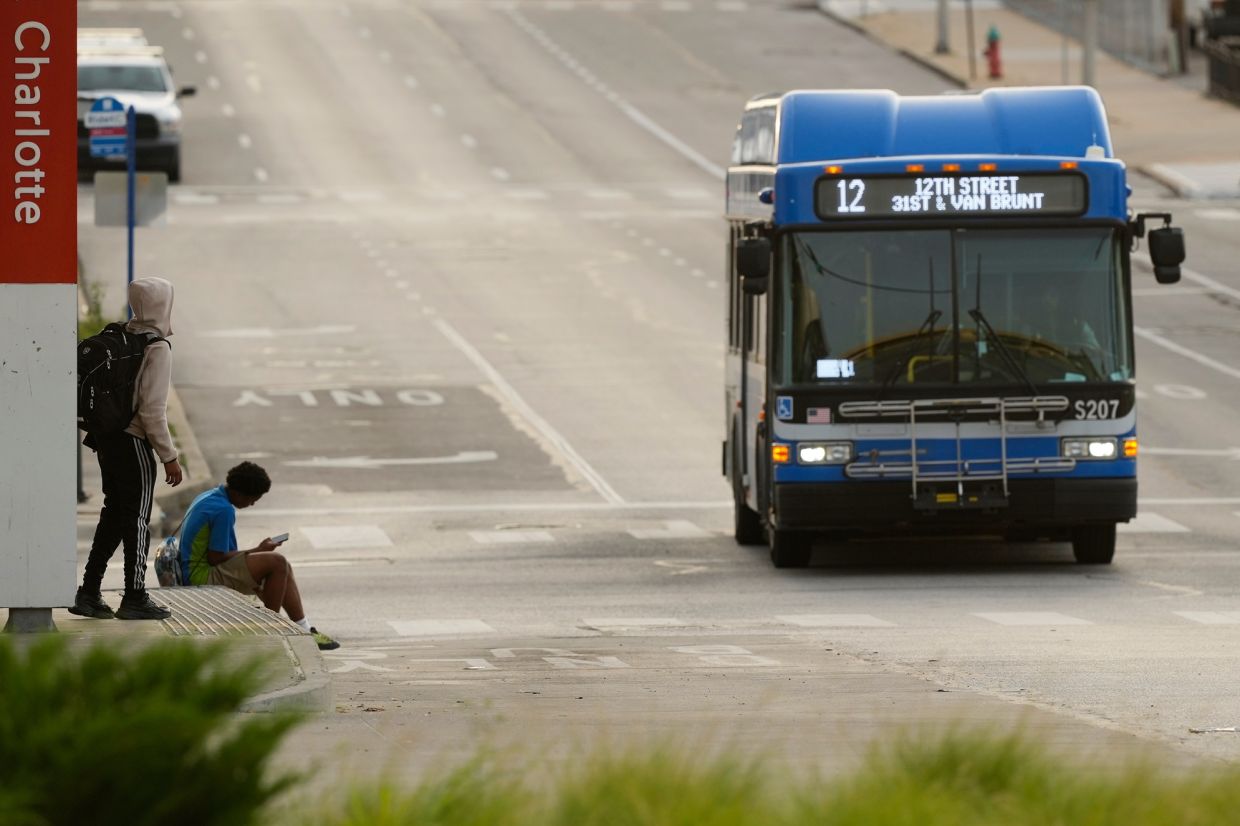
Kansas City, Missouri, is positioning itself at the forefront of a contentious national conversation about artificial intelligence and public safety. City officials plan to deploy facial recognition technology on public transit buses—a move that advocates regard as a watershed moment in the deployment of AI-powered surveillance systems across American transportation networks. The cameras would scan passengers in real time, cross-referencing faces against databases of banned riders, missing persons, and individuals flagged by law enforcement agencies. This initiative in the American Midwest carries particular significance as a test case for how governments might balance security concerns against fundamental privacy rights in shared public spaces.
The project represents a significant escalation in surveillance infrastructure, moving beyond the static recording cameras that have long been standard equipment on buses nationwide. Rather than passive documentation, the system would actively and continuously analyse human features, extracting and processing biometric data from every passenger without explicit consent or notification. Tyler Means, the Kansas City Transportation Authority's chief mobility and strategy officer, has framed the technology as merely an extension of existing camera systems, suggesting that facial recognition represents merely an incremental technological advance rather than a qualitative shift in surveillance capability. Officials argue that the system would discard facial data immediately if no match occurs against active watchlists, with only standard video footage retained on local servers for up to five years.
The American Civil Liberties Union and allied privacy advocates have characterised the Kansas City initiative as crossing a critical threshold in surveillance technology deployment. Jay Stanley, senior policy analyst at the ACLU's Project on Speech, Privacy and Technology, emphasised that live facial recognition on cameras monitoring public spaces represents unprecedented territory in contemporary American surveillance practice. The concern reflects a fundamental unease about normalising this technology in everyday civic infrastructure before establishing adequate legal frameworks and accountability mechanisms. Critics worry that once deployed, such systems inevitably expand beyond their original, narrowly defined purposes—a historical pattern evident in previous surveillance deployments across numerous American cities.
SafeSpace Global, a Knoxville, Tennessee-based technology firm, serves as the private partner implementing the system. The company has previously deployed live facial recognition technology in nursing homes to track residents, correctional facilities, and educational institutions, but Kansas City's buses represent the company's inaugural foray into public transportation surveillance. Chief Executive Officer Scott Boruff has stressed that the system captures facial data transiently, comparing the process to momentary identification checks rather than persistent recording. However, privacy advocates like Will Owen from the Surveillance Technology Oversight Project contend that city residents should not serve as test subjects for unproven, potentially biased surveillance technologies developed by Silicon Valley corporations.
The historical record demonstrates why communities harbour profound scepticism about facial recognition in public spaces. Following the 9/11 terrorist attacks, Tampa, Florida police deployed facial recognition cameras in the Ybor City neighbourhood to identify crime suspects, but the program faced immediate public backlash and was rapidly discontinued. More recently, New Orleans police secretly operated facial recognition surveillance cameras operated by private contractors despite municipal ordinances prohibiting the technology. Detroit implemented a system involving high-definition cameras at commercial establishments that transmitted live crime footage to police, generating significant public opposition. These precedents underscore how surveillance systems initially presented as narrow, targeted interventions frequently expand beyond their original scope when oversight mechanisms prove inadequate.
The Kansas City initiative encountered unexpected obstacles that delayed its rollout beyond the originally scheduled spring launch window. State government funding withdrew due to concerns specifically regarding the facial recognition component, forcing city administrators to pursue alternative financing through local and federal resources. Technical complications also emerged, including the necessity to upgrade Wi-Fi infrastructure on buses to simultaneously support the facial recognition cameras and newly implemented fare collection systems. These delays prevented the system's deployment during World Cup matches in Kansas City, circumstances that ironically underscored how quickly such projects can become entangled in practical complications.
The broader context of facial recognition expansion across American public infrastructure reveals inconsistent regulatory responses and fragmented governance approaches. Some cities have installed AI-enabled camera systems on public buses and school buses specifically designed to read vehicle license plates, automatically identifying and ticketing vehicles illegally parked in bus lanes or committing related infractions. While privacy advocates express concerns about these applications, facial recognition systems that could record human faces even absent any identified crime generate particularly acute anxiety, as such technology represents a qualitatively different form of surveillance capability. The surveillance technology increasingly deployed across American cities lacks the consistent legal and policy frameworks that Southeast Asian democracies like Malaysia might contemplate when evaluating similar initiatives.
Formerly Detroit Police Chief James Craig has advocated for continued facial recognition deployment, provided it operates under robust policies, transparent procedures, and genuine accountability mechanisms. Craig argued that abandoning such technology would squander valuable law enforcement capabilities, contending that cities unwilling to develop and enforce stringent regulatory guardrails resort to blanket prohibitions rather than implementing more nuanced governance approaches. His perspective reflects a recurring tension between security officials emphasising law enforcement effectiveness and civil liberties advocates warning against normalising ubiquitous biometric surveillance. The debate ultimately hinges on whether existing governance institutions can reliably constrain surveillance systems once deployed, or whether technological capabilities inevitably expand beyond their initial parameters.
Ryana Parks-Shaw, serving as Kansas City mayor pro tem on the City Council, expressed support for methodical implementation rather than expedited deployment. Parks-Shaw emphasised that any surveillance technology application requires careful deliberation, transparency, and clearly defined constraints—language suggesting some municipal officials recognise the profound governance questions such initiatives raise. Her comments hint at growing awareness that surveillance technology deployment decisions carry lasting implications for civic relationships and public trust. The delayed rollout, while partly attributable to technical and financial complications, may inadvertently provide valuable opportunity for more thorough deliberation regarding appropriate safeguards and oversight mechanisms.
The postponement prompted Kansas City to adopt alternative security measures for World Cup events, including deploying up to forty additional police officers at transit stops and facilities. This reversion to traditional uniformed policing illustrates how cities frequently abandon technological interventions when immediate deployment becomes impractical, reverting instead to labour-intensive conventional approaches. The contrast highlights that surveillance technology expansion is not inevitable—practical and financial constraints can effectively constrain deployment even when political will exists. Yet Kansas City authorities remain committed to the facial recognition initiative, with Means expressing confidence the program will launch during the current year at potentially expanded scale, potentially encompassing thirty buses rather than the original nine-bus pilot programme.
For Malaysian and Southeast Asian observers, the Kansas City situation provides instructive perspective on how democratic systems negotiate surveillance technology deployment. The vigorous public debate, civil society scrutiny, and municipal deliberation evident in the American context demonstrate governance mechanisms that operate quite differently from more centralised decision-making frameworks. Malaysia's own considerations regarding surveillance technology, particularly in public transportation contexts, might benefit from examining how Western democracies wrestle with balancing security objectives against privacy protections. The Kansas City case illustrates that even wealthy, technologically sophisticated cities struggle to establish adequate governance mechanisms for constraining surveillance technology expansion, suggesting the challenges only intensify in contexts with different institutional capacities and legal frameworks.

