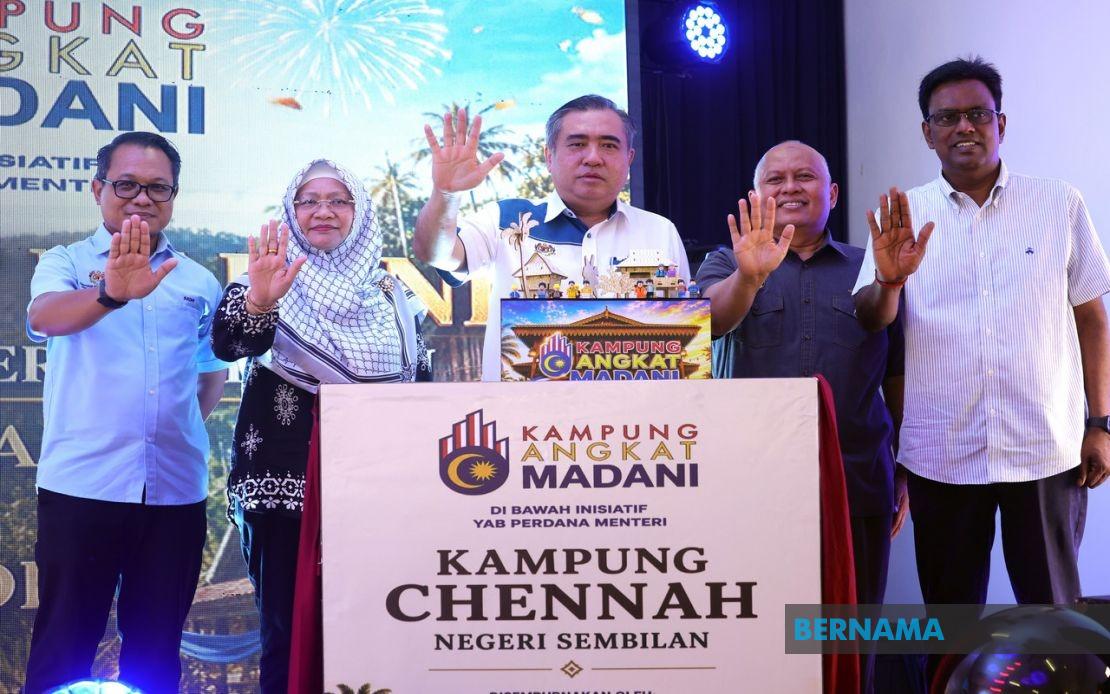
Transport Minister Anthony Loke Siew Fook has moved to distance the "Kampung Angkat MADANI" rural development programme from the ongoing state election campaign, describing it instead as a longstanding nationwide initiative that predates recent electoral activity. Speaking in Jelebu after launching the Land Public Transport Agency's initiative at Kampung Chennah, Loke sought to clarify that the phased rollout of the programme addresses genuine infrastructure and socio-economic needs across remote communities rather than serving any electoral purpose.
The minister stressed that the government remains committed to administrative protocols restricting official programmes during election campaigns. He explained that the crucial difference lies in timing, noting that projects must be implemented before nomination day commences, after which no government-sponsored activities or official events can take place in affected constituencies. This approach, Loke indicated, reflects a governance directive introduced by Prime Minister Anwar Ibrahim as part of a broader cultural shift toward cleaner administrative practices.
Loke underscored his personal adherence to these electoral guidelines, noting that while he continues performing his duties as Transport Minister, he will refrain from attending official government programmes within constituencies during the campaign period. This self-imposed restraint demonstrates, he argued, the seriousness with which the government treats the separation between administrative functions and electoral activity—a distinction that has historically blurred in Malaysian politics.
The Kampung Angkat MADANI programme, which Loke indicated was launched approximately two years ago, operates on a selective basis determined by specific community needs. Villages are chosen based on factors including geographic remoteness, infrastructure deficiencies, and socio-economic challenges. The government recognises that many rural settlements, particularly those located far from urban centres, face persistent developmental gaps that require coordinated intervention across multiple service delivery agencies.
Kampung Chennah's selection as the 2024 beneficiary reflects these criteria precisely. The settlement's isolation from urban services and pressing need for improved basic amenities made it a logical choice for the programme's current phase. The government has committed RM500,000 to address five distinct project areas affecting village residents' daily lives and community infrastructure.
The allocation targets infrastructure improvements spanning multiple domains. These include substantial upgrades to the village library building, refurbishment of the futsal court facility, and enhancement of the drainage system surrounding the local mosque. The sequential nature of these projects—ranging from educational and recreational facilities to essential civic infrastructure—demonstrates a holistic approach to rural development that balances immediate quality-of-life improvements with longer-term community resilience.
Loke projected that the five initiatives will reach completion within two to three months of commencement. The Transport Ministry has signalled its intention to maintain close oversight throughout implementation to prevent delays and ensure alignment with budgeted parameters. This supervisory commitment reflects growing government emphasis on accountability in rural development spending, an area historically vulnerable to implementation failures and cost overruns.
Beyond the specific Kampung Chennah projects, Loke articulated a broader institutional philosophy regarding the Transport Ministry's societal role. He characterised the ministry's responsibilities as extending significantly beyond its traditional regulatory and development mandate over ports, airports, railways, and public transport systems. This expanded conception positions the ministry as bearing explicit social responsibility to engage directly with communities and demonstrably improve residents' material welfare.
The minister's framing reflects wider governmental efforts to present development as integral to core ministerial functions rather than peripheral public relations activity. This rhetorical repositioning attempts to legitimise rural outreach as fulfilling institutional missions rather than serving narrower political purposes. The integration of community engagement within ministerial identity represents an attempt to normalise direct government involvement in local development across agency portfolios.
For Malaysian observers following electoral administration, Loke's clarifications address persistent concerns regarding the conflation of development programming with electoral advantage. The staggered implementation model allows the government to demonstrate substantial rural investment while ostensibly respecting campaign period restrictions. However, the strategic timing of announcements and project launches during election cycles—even technically prior to nomination day—suggests nuanced navigation of electoral rules rather than complete separation of development from political calendars.
The Kampung Angkat MADANI programme also reflects broader Southeast Asian patterns wherein rural development becomes a primary mechanism through which central governments assert legitimacy and responsiveness in peripheral communities. By targeting villages requiring infrastructure improvements, the government addresses tangible grievances while simultaneously generating visible evidence of state capacity and commitment to equitable development distribution.
Loke's emphasis on systematic, phased implementation across numerous communities suggests recognition that episodic, high-visibility projects risk appearing transparently electoral. Instead, the framing as a continuing programme with established selection criteria implies objective, need-based distribution of development resources. This approach aims to provide plausible deniability regarding electoral motivation whilst simultaneously ensuring rural communities experience material improvements in civic infrastructure and service delivery.
The programme ultimately illustrates how Malaysian governance navigates tensions between democratic electoral requirements and governmental desire to maintain development momentum. By respecting formal campaign restrictions whilst implementing programmes through careful temporal and administrative positioning, the government attempts to satisfy both electoral propriety and developmental ambition—a balancing act reflecting the complex realities of contemporary Malaysian politics.

