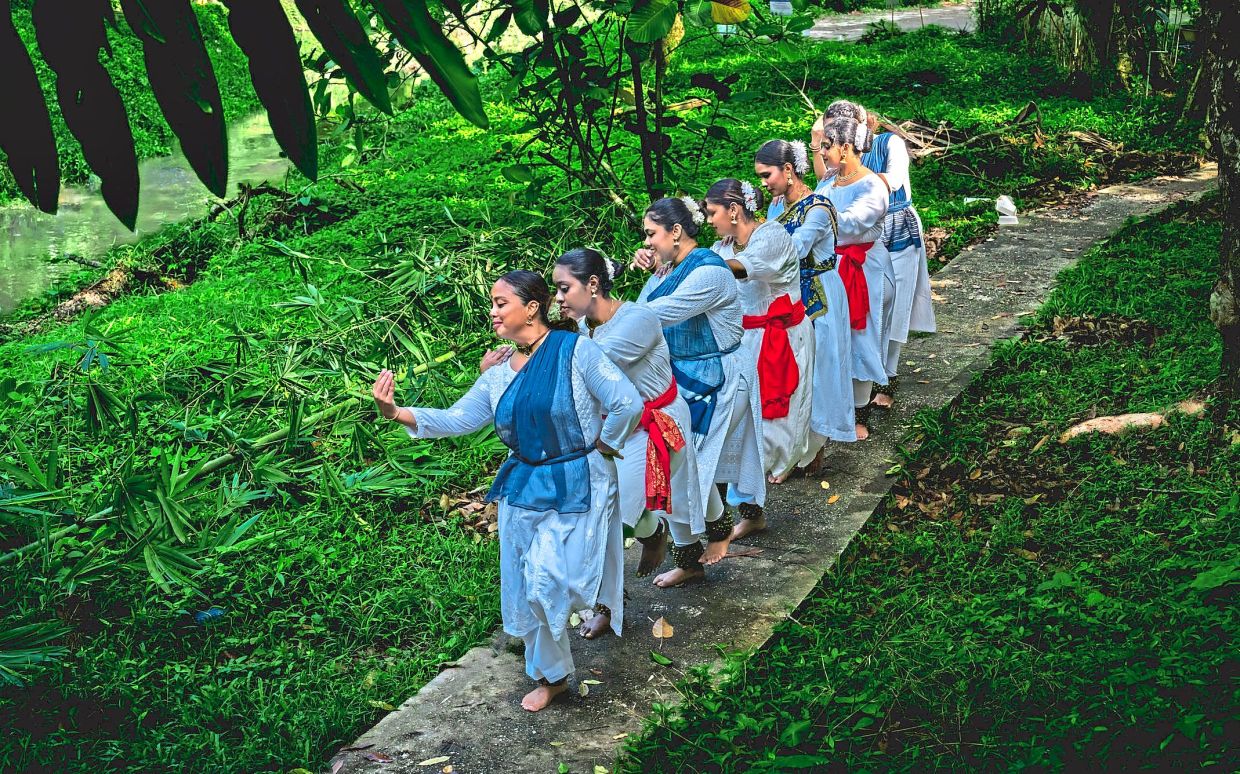
Kuala Lumpur's Kalpana Dance Theatre has navigated three turbulent decades of artistic practice, proving that survival in the unpredictable performing arts requires perpetual evolution. Founder-director Shangita Namasivayam marks this significant milestone with an audacious bharatanatyam concert scheduled for August 8 at the Temple of Fine Arts' Shantanand Auditorium, one that marries classical Indian dance traditions with urgent contemporary environmental concerns. The production embodies her philosophy that artistic vision resembles raising a child—beginning as fragile concept before crystallising into lived experience before an audience.
The thematic spine centres on two of India's most significant waterways: the Ganga in the north and the Kaveri in the south. The Ganga holds paramount spiritual status in Indian civilisation, while the Kaveri earns recognition as the "Ganga of the South," sustaining agricultural, industrial and power-generation needs across southern regions. Both rivers have cradled civilisations, enabling trade networks and cultural exchange while serving as subjects of profound artistic reverence. For centuries, Indian classical and folk dance traditions have drawn narrative material from these waters, weaving mythology, regional musical forms and spiritual symbolism into performances that celebrate their sacred dimensions. Shangita's choice to centre this production on river narratives deliberately addresses her conviction that contemporary generations require grounding in ecological responsibility.
Namasivayam articulates a poetic framework for the dual-river concept: the Ganga represents compassion's shoreline where transgressions dissolve, while the Kaveri embodies maternal prosperity where life flourishes. Her vision extends beyond metaphor into material responsibility. Water sustains all existence and constitutes Earth's most precious finite resource, yet humans systematically contaminate, squander and ignore rivers and oceans at accelerating pace. She recognised an opportunity to instil environmental consciousness in her young dancers through experiential learning rather than abstract instruction. This pedagogical approach transforms the production from cultural preservation exercise into activist catalyst.
The theatre company has partnered with The Alliance of River Three (ART!), a volunteer-led environmental organisation established in 2018 by Kennedy Michael to revitalise the Klang River through community-constructed River Three Parks, routine cleaning operations and sustained ecological rehabilitation. ART!'s achievements earned recognition when it won The Star Golden Hearts Awards in 2020, validating its model for urban riverine ecosystem restoration. Since January, KDT's dancers have engaged in ground-level restoration work at Taman Melawati River Three SDG Park and Mid Valley River Three SDG Park, projects ART! aims to complete by 2030. Shangita observes that this direct engagement astonishes younger dancers accustomed to sanitised environments, forcing them to confront tangible consequences of environmental neglect.
The production itself represents a collaborative synthesis emerging from sustained artistic dialogue. Namasivayam worked extensively with Chennai-based collaborators—choreographer PT Narendran, musician OS Arun and scriptwriter Dr Va Ve Subramanian—across multiple months of conceptual development. These partnerships span decades of prior collaboration, permitting the creative confidence necessary for ambitious projects. Rather than importing the complete Indian ensemble, Malaysian dancers gain invaluable mentorship from internationally recognised artists, acquiring technical refinement alongside deeper philosophical understanding of bharatanatyam's evolving possibilities and aesthetic richness. Such cross-cultural artistic exchange strengthens the regional dance community while elevating Malaysian performers' global competitiveness.
Fifty-four dancers ranging from six to sixty-two years old, including differently-abled performers, comprise the cast of this ninety-minute thematic presentation. Rather than concentrating dramatic weight on soloists or featured roles, the production distributes meaningful dancing opportunities equitably across all participants. The script, presented in Tamil with English narration, achieves philosophical depth through poetic language, constructing narratives that transcend generational boundaries through lyrical beauty combined with contemplative substance. A thirty-member music ensemble provides accompaniment, though logistics constraints prevent the entire Indian team from travelling to Malaysia, necessitating creative solutions for ensemble integration that nonetheless preserve artistic integrity.
Shangita emphasises the transformative potential of stage experience for developing dancers. Classroom instruction alone cannot constitute comprehensive artistic training within performing arts traditions; public performance creates distinct psychological and technical demands that catalyse artistic maturation. This heritage of live performance transmission demands that teachers create regular opportunities for students to experience theatrical conditions. Beyond technique refinement, performing alongside international artists exposes Malaysian dancers to diverse approaches, philosophies and interpretive possibilities, cultivating thoughtful, intellectually engaged practitioners rather than merely technically proficient ones. These formative experiences prove essential in shaping future dance leaders.
Financial precarity persistently challenges arts production, particularly in Malaysia where cultural funding remains insufficient. Namasivayam's determination to provide her students with stage experience motivates her to navigate these constraints creatively, refusing to allow economic barriers to obstruct artistic development. The performing arts demand active creation rather than passive consumption; without regular performance opportunities, transmission of knowledge becomes incomplete. She recognises that contemporary dancers inherit responsibility for perpetuating endangered artistic traditions while simultaneously innovating in response to contemporary concerns. Climate awareness and environmental activism represent legitimate extensions of bharatanatyam's philosophical dimensions rather than external impositions.
The August production arrives at a critical cultural moment. Malaysian audiences increasingly seek arts experiences addressing urgent social concerns, and classical traditions risk irrelevance if perceived as disconnected from contemporary life. Shangita's approach demonstrates that heritage forms retain vitality through recontextualisation that honours foundational aesthetics while engaging contemporary imperatives. The partnership with ART! anchors artistic expression in material environmental work, preventing the production from devolving into aesthetic exercise while amplifying individual dancer commitment to ecological stewardship. This model offers templates for other Malaysian performing arts organisations seeking authentic engagement with climate narratives.
Three decades of operation establish Kalpana Dance Theatre as a significant institutional force within Malaysia's arts ecosystem. The theatre has weathered financial instability and cultural indifference through Namasivayam's sustained creative vision and pedagogical commitment. This anniversary production crystallises accumulated experience, bringing together international collaborators, young Malaysian dancers, environmental partners and audience communities into unified artistic-activist statement. By grounding classical bharatanatyam in river consciousness and climate responsibility, the company signals that tradition and contemporary urgency need not remain opposed. Rather, properly contextualised, classical forms provide aesthetic and philosophical resources for addressing twenty-first century challenges.

