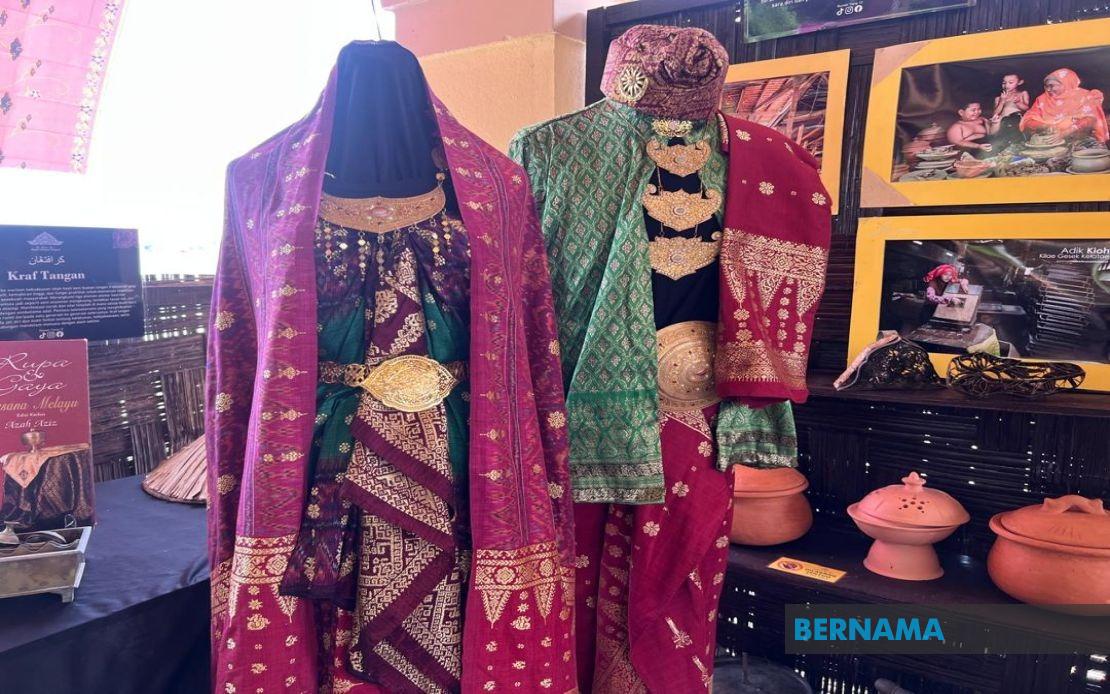
The traditional Malaysian textile Kain Lima stands at a critical juncture, threatened with extinction as the pool of skilled artisans shrinks and younger generations turn away from the labour-intensive craft. The distinctive fabric, which commands prices between RM3,000 and over RM4,000 in today's market, represents one of Southeast Asia's most sophisticated weaving traditions, yet its survival now depends on urgent preservation efforts and a renewed appreciation for heritage craftsmanship.
What distinguishes Kain Lima from other traditional textiles, particularly songket, is its highly specialised production method. The technique combines tie-dyed threads with intricate weaving patterns to create fine motifs and a characteristic colour-reflection effect that cannot be replicated by simpler methods. According to Nik Mohd Murdani Nik Hassan, caretaker of Galeri Rumah Tiang 12 in Kelantan, the process demands extraordinary precision and expertise. Each motif must be individually arranged using multiple coloured threads before the actual weaving commences, a labour-intensive process that sets Kain Lima apart from ordinary fabrics that rely on gold or silver threads alone.
Historically, Kain Lima occupied a position of supreme prestige within Malay society. The fabric was reserved for royalty and the elite classes, who wore it as sarongs, shawls, and ceremonial garments during important occasions and formal functions. This association with nobility and luxury speaks to both the quality of craftsmanship involved and the high regard in which the textile was held across Malaysian courts and communities. The status of Kain Lima reflected not merely its aesthetic qualities but the skill, time, and resources required to produce a single piece.
Today, distinguishing authentic Kain Lima from other traditional textiles requires an educated eye and deep knowledge of textile heritage. Connoisseurs examine the patterns, weaving structure, and materials used to verify authenticity. This specialised knowledge is increasingly rare, as fewer individuals undergo the extended apprenticeship necessary to master these distinctions. The complexity of the craft means that production cannot be industrialised or simplified without destroying the essential qualities that make Kain Lima valuable. Each piece produced today represents hours of meticulous work that cannot be compressed or automated.
The market value of Kain Lima fluctuates based on several factors including age, motif complexity, physical condition, and the finesse of the weaving work. Antique examples or pieces featuring particularly intricate patterns command the highest prices. This economic reality presents both challenges and opportunities for preservation: while high values create an incentive to maintain existing pieces, they also price contemporary examples beyond the reach of ordinary Malaysian consumers, limiting the market for contemporary weavers and reducing opportunities for younger artisans to develop sustainable livelihoods through the craft.
Galeri Rumah Tiang 12, which Nik Mohd Murdani joined in 2020, has positioned itself as a guardian of Kain Lima heritage by assembling collections from private collectors and displaying them to the public. This institutional effort serves multiple functions: it allows the textile to be studied by researchers and enthusiasts, it educates the broader public about the differences between Kain Lima and superficially similar fabrics, and it creates a physical space where the cultural significance of the craft can be appreciated and understood. The gallery recognises that preservation requires not merely storing artefacts but actively engaging communities with their heritage.
Young craftspeople across Kelantan and other weaving regions remain drawn to these exhibitions as sources of inspiration and technical knowledge. Nur Anira Akmal Che Abdul Aziz, a 34-year-old handicraft maker from Pasir Mas, exemplifies this emerging cohort of artisans who view heritage textiles as wellsprings of creative innovation. Rather than simply replicating traditional patterns, contemporary makers like Aziz are developing new products that incorporate the aesthetic principles and technical knowledge embedded within Kain Lima and other heritage textiles. These efforts represent attempts to render traditional craftsmanship relevant to modern markets and contemporary consumers.
The intersection between heritage preservation and innovation holds particular significance for Malaysian craftsmanship. Rather than treating Kain Lima as a museum piece to be preserved in static form, galleries and individual makers are exploring how traditional knowledge can inspire contemporary creativity while maintaining respect for the original craft. This approach acknowledges that cultures evolve and that heritage textiles can remain living practices rather than historical artefacts. Exhibitions serve as knowledge-transfer spaces where technical understanding passes between generations, even as the specific applications and market contexts change.
The broader implications of Kain Lima's decline extend beyond textiles themselves. The disappearance of any traditional craft represents the loss of accumulated knowledge, cultural identity, and creative capacity within a community. For Malaysia and Southeast Asia, where textile traditions constitute a significant part of cultural patrimony, the gradual erosion of weaving practices threatens to diminish the region's distinctive artistic heritage. The challenge lies in creating economic and social conditions where artisans can sustain themselves through their craft while also fostering genuine market demand from consumers who understand and value what they are purchasing.
Effective preservation of Kain Lima requires multifaceted interventions: continued institutional support through galleries and museums, educational initiatives that build public appreciation, economic support mechanisms that allow contemporary weavers to earn sustainable incomes, and intergenerational knowledge transfer that ensures technical expertise survives. The presence of motivated younger craftspeople offers hope, yet without structural support, individual enthusiasm cannot sustain a craft facing profound market and demographic challenges. Malaysia's government and cultural institutions must recognise that allowing Kain Lima to disappear represents not merely the loss of a fabric but the erasure of centuries of accumulated artistic achievement and cultural identity.

