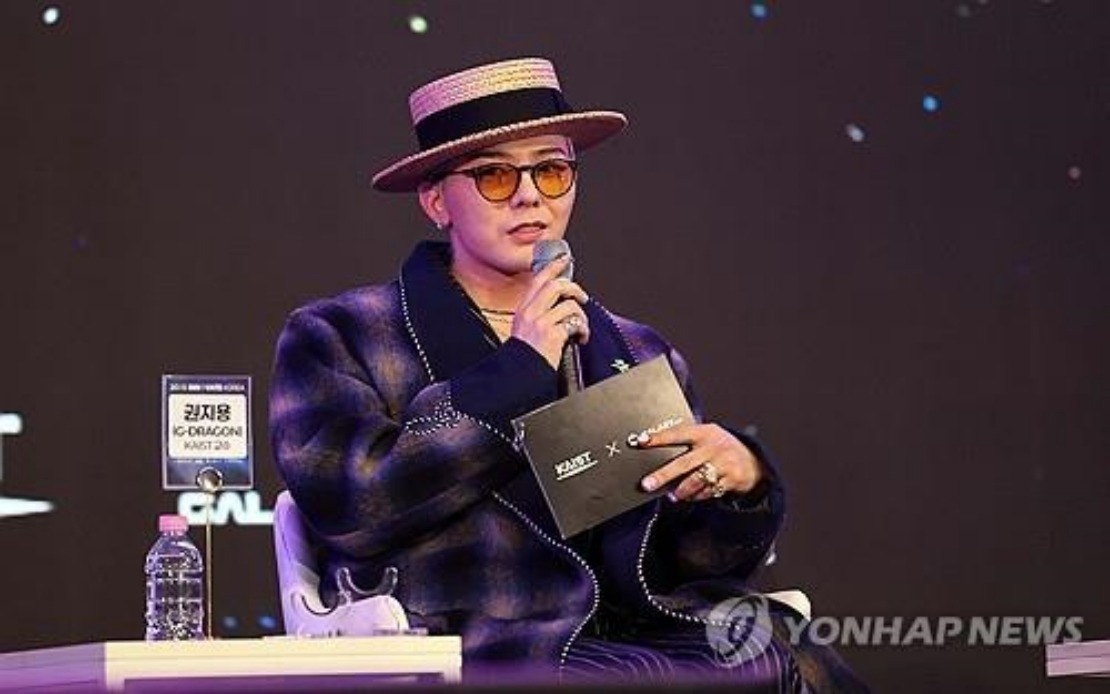
South Korea has appointed K-pop sensation G-Dragon, whose birth name is Kwon Ji-yong, as the honorary ambassador for the 48th UNESCO World Heritage Committee session set to take place in Busan from July 19 to 29. The Korea Heritage Service made the announcement on Friday, underscoring the importance the government places on the event and the role of cultural figures in amplifying its message to global audiences. The appointment represents a strategic choice to leverage the artist's considerable international standing and influence within the entertainment industry to elevate awareness of the World Heritage Committee's mission.
The decision to appoint G-Dragon reflects a broader recognition of his evolution from musician to cultural ambassador with demonstrated commitment to public causes. At 37 years old, the artist has gradually shifted focus toward philanthropic endeavours while maintaining his prominent position in global pop culture. The Korea Heritage Service characterised him as possessing "global influence extending beyond K-pop into the broader cultural and arts sphere," emphasising his track record of promoting initiatives that address social concerns through artistic expression. This positioning distinguishes him from celebrity appointments that might rely solely on popularity, instead highlighting his substantive engagement with meaningful causes.
A significant milestone underpins this event's importance for Seoul. South Korea will host the World Heritage Committee for the first time in 38 years, a considerable gap since the nation joined the World Heritage Convention in 1988. The committee serves as UNESCO's principal decision-making body, responsible for determining which cultural and natural sites warrant inscription on the World Heritage List and for ensuring their ongoing protection. For a country with rich cultural heritage spanning ancient kingdoms, temples, palaces, and archaeological sites, hosting this gathering represents both an honour and an opportunity to showcase domestic treasures while contributing to global preservation efforts.
G-Dragon's recent philanthropic activities have positioned him well for this role. In 2024, he donated his copyrights to establish the JusPeace Foundation, an organisation dedicated to public interest causes. The foundation's name intentionally merges the concepts of "justice" and "peace," reflecting the artist's stated values. G-Dragon currently serves as the foundation's honorary chairman, a position that extends his influence into governance and strategic direction-setting for meaningful charitable work. This institutional involvement demonstrates a level of serious engagement beyond symbolic celebrity partnerships.
Central to G-Dragon's ambassadorial duties will be his participation in a global campaign entitled "Heritage in Peace," which the JusPeace Foundation and UNESCO will jointly launch on July 12. The initiative seeks to mobilise widespread participation from individuals, corporations, and municipalities in the critical work of preserving World Heritage sites globally. Rather than functioning as a one-way promotional effort, the campaign aims to activate multiple stakeholders in concrete protective actions. This approach aligns with contemporary thinking about cultural preservation as a collective responsibility rather than the exclusive purview of governments and international organisations.
Revenue generated through the campaign will flow into the World Heritage Fund, designated specifically for safeguarding heritage sites confronting existential threats. These threats encompass armed conflict, which has devastated cultural sites in various regions, as well as the increasingly urgent dangers posed by climate change and natural disasters. Southeast Asian nations, including several UNESCO World Heritage sites in the region, face particular vulnerability to climate-related threats such as rising sea levels and extreme weather events. The campaign therefore carries regional relevance for countries like Malaysia, Thailand, and Cambodia, which harbour significant cultural sites requiring protection.
G-Dragon's expected contributions to the campaign will include appearances in promotional materials and participation in related events, with messaging centred on the concept of "peace through culture and participation." This thematic emphasis mirrors international efforts to position cultural exchange and heritage preservation as vehicles for conflict prevention and social cohesion. A representative for the artist stated that "World heritage is a shared asset that must be protected by all humanity," encapsulating the universalist philosophy underlying UNESCO's mission. Such framing resonates in a geopolitical context where cultural understanding and shared commitment to common goods offer counterweights to divisive forces.
The appointment builds upon G-Dragon's prior experience in high-profile ambassadorial roles. He previously served as honorary ambassador for the Asia-Pacific Economic Cooperation summit hosted by South Korea in the southeastern city of Gyeongju last year. During that gathering, he performed at a welcome dinner for participating economic leaders, combining cultural performance with diplomatic messaging. This track record suggests the artist possesses experience navigating the intersection of entertainment, culture, and official state representation, making him a tested choice for the present role.
For Southeast Asian observers, G-Dragon's appointment carries implications regarding the increasing prominence of cultural figures in international diplomacy and heritage preservation. The appointment signals how governments increasingly recognise that global challenges require engagement beyond traditional diplomatic channels. South Korea's deployment of its most recognisable cultural export as a vehicle for advancing UNESCO's agenda reflects a broader strategy by nations to weaponise "soft power" through entertainment and artistic influence. Malaysian policymakers and cultural institutions might similarly consider how domestic cultural ambassadors could amplify regional messages about heritage protection and cultural preservation within international forums.
The Busan session occurs at a moment when global heritage sites face intensifying pressures. Climate-related damage to World Heritage sites has accelerated dramatically over recent decades, with rising temperatures, changing precipitation patterns, and extreme weather events threatening sites from Southeast Asian temples to Pacific island ecosystems. The World Heritage Fund's focus on conflict-affected and climate-threatened sites reflects urgent contemporary realities. G-Dragon's visibility as ambassador will help maintain international attention on these challenges during a period when multiple crises compete for public consciousness and charitable resources.
The selection of a K-pop artist also acknowledges the demographic reality that younger audiences constitute critical constituencies for long-term heritage preservation commitment. Cultural heritage faces a well-documented challenge in capturing sustained engagement from younger generations in many societies. By appointing someone with enormous following among Gen Z and millennial audiences globally, UNESCO and South Korea are attempting to bridge the gap between heritage preservation and contemporary popular culture consumption. This strategic choice recognises that amplifying the World Heritage message through channels where younger audiences already congregate may prove more effective than traditional institutional communication approaches.
As the Busan gathering approaches, G-Dragon's role will likely shape how international media and global audiences perceive South Korea's stewardship of this significant responsibility. His participation transforms the World Heritage Committee session from a primarily technical gathering of heritage experts and government officials into an event with broader cultural resonance. For the region, the ambassador's profile and reach offer an opportunity to elevate awareness about Southeast Asian heritage sites worthy of protection and the importance of sustained international cooperation in preservation efforts. The appointment demonstrates how cultural soft power and institutional goals increasingly converge in contemporary international engagement.

