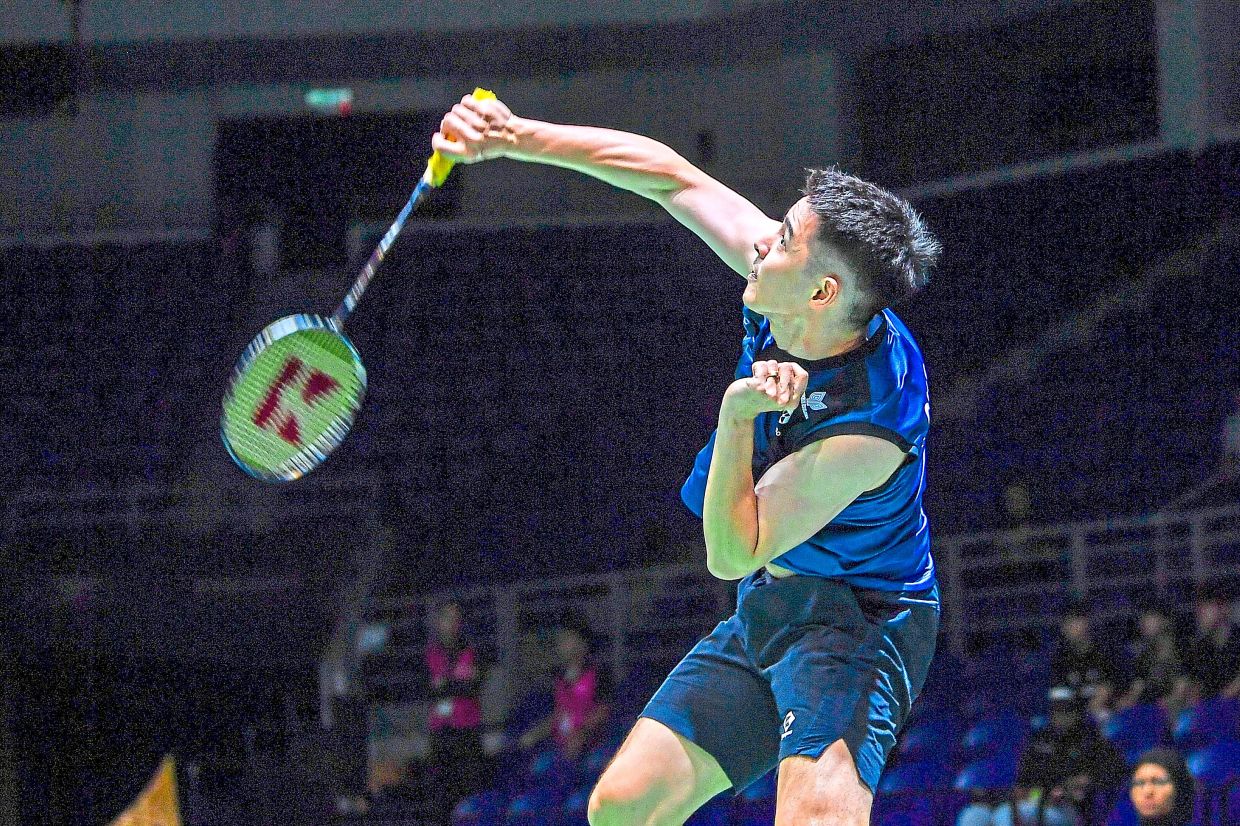
Cheam June Wei's unlikely journey through the Korean Masters took another dramatic turn on Friday when the Malaysian independent player dispatched Taiwan's Su Li-yang, the tournament's seventh seed, to secure a place in the semi-finals at Asan Yi Sun-sin Gymnasium. The encounter proved closely contested throughout, with June Wei ultimately prevailing 23-21, 10-21, 21-18 in a gruelling quarter-final that tested his stamina and tactical acumen.
June Wei's pathway to the semi-finals has been nothing short of extraordinary for a player without the backing of a major national federation. His opening-round scalp of Jason Teh, then ranked 29th globally, provided early notice of his potential, yet few observers anticipated he would maintain such momentum through successive rounds. The victory over world number 49 Dong Tianyao of China in the second round further underlined that his upset of Teh was no flash in the pan, but rather evidence of genuine tournament form.
The third-seeded player's comments after the match revealed a mental resilience that often separates knockout competition winners from the majority. June Wei's admission that he had not anticipated advancing this far, combined with his emphasis on enjoying the combative nature of elite-level badminton, suggests a player unshackled by the pressure of expectations. This psychological freedom, particularly for an independent athlete competing outside conventional team structures, frequently translates into improved decision-making during tight moments.
The quarter-final against Su Li-yang demonstrated the fluctuating momentum characteristic of modern men's singles badminton. June Wei's ability to secure the opening set by the narrowest margins—winning 23-21—indicated his capacity to remain composed when points carry maximum significance. His loss of the second set 10-21, however, revealed the mental and physical toll of competing at this level without the support infrastructure available to larger federations.
Malaysia's doubles contingent delivered mixed results throughout the quarter-finals. Man Wei Chong and Soh Wooi Yik advanced with commanding ease, disassembling India's Krishna Prasad Garaga and Pruthvi Krishnamurthy Roy with a dominant display that scorelines of 21-7, 21-8 only partially capture. The manner of this victory suggested a partnership functioning at peak efficiency, a promising indicator for their semi-final prospects.
The men's doubles segment also witnessed an all-Malaysian quarterfinal clash between Tee Kai Wun-Yap Roy King and Aaron Chia-Aaron Tai. Tee and Yap's convincing 21-12, 21-15 verdict over their compatriots illustrated the competitive depth within Malaysian doubles, though it also meant that only one Malaysian pair could progress from this domestic encounter. The victory advances Tee and Yap into contention for the title, though they now face opponents fresh from potentially easier routes through the draw.
The mixed doubles category proved considerably less rewarding for Malaysian participation. All three pairs representing the country fell at the quarter-final hurdle, a collective disappointment that raises questions about the strength of Malaysian preparation in this discipline. Jimmy Wong and Cheng Su Yin encountered South Korea's second seeds Kim Jae-hyeon and Jang Ha-jeong, losing 17-21, 18-21 in a match that suggests the Malaysian pair lacked the tactical refinement required at this level of competition.
The elimination of Loo Bing Kun and Noraqilah Maisarah Ramdan to China's third-seeded combination of Gao Jiaxuan and Wu Mengying represented another opportunity missed. The scoreline of 14-21, 15-21 indicates a significant gulf in standards, suggesting Malaysian development in the mixed doubles format may be lagging regional competitors. Chen Tang Jie and Clarissa San's narrow 20-22, 17-21 loss to Japan's Haruki Kawabe and Kokona Ishikawa offered greater encouragement, as their proximity to victory demonstrated technical competence even in defeat.
The contrasting performances across Malaysia's Korean Masters contingent reveal both encouraging progress and developmental areas requiring attention. June Wei's individual achievement stands apart as genuinely exceptional for an independent player, potentially opening conversations about alternative pathways to supporting elite athletes operating outside traditional federation structures. His semi-final appearance, however, also underscores the competitive elevation required when facing the world's very best, as even remarkable individual performances must ultimately compete against entire nations' programmes.
For Malaysian badminton observers, the tournament serves as both celebration and diagnostic tool. The strong showing in men's doubles, the unexpectedly deep run by June Wei, and mixed doubles vulnerabilities collectively paint a picture of a programme with distinct strengths and identifiable weaknesses. As Malaysian badminton continues its perpetual balance between consolidating current advantages and addressing competitive gaps, performances like these at major tournaments provide the data necessary for informed strategic planning.
June Wei's continuation into the semi-finals represents achievement transcending mere ranking points, embodying proof that individual excellence can flourish even without institutional backing, provided the player possesses the mental fortitude and technical skill to navigate tournament badminton's particular demands.

