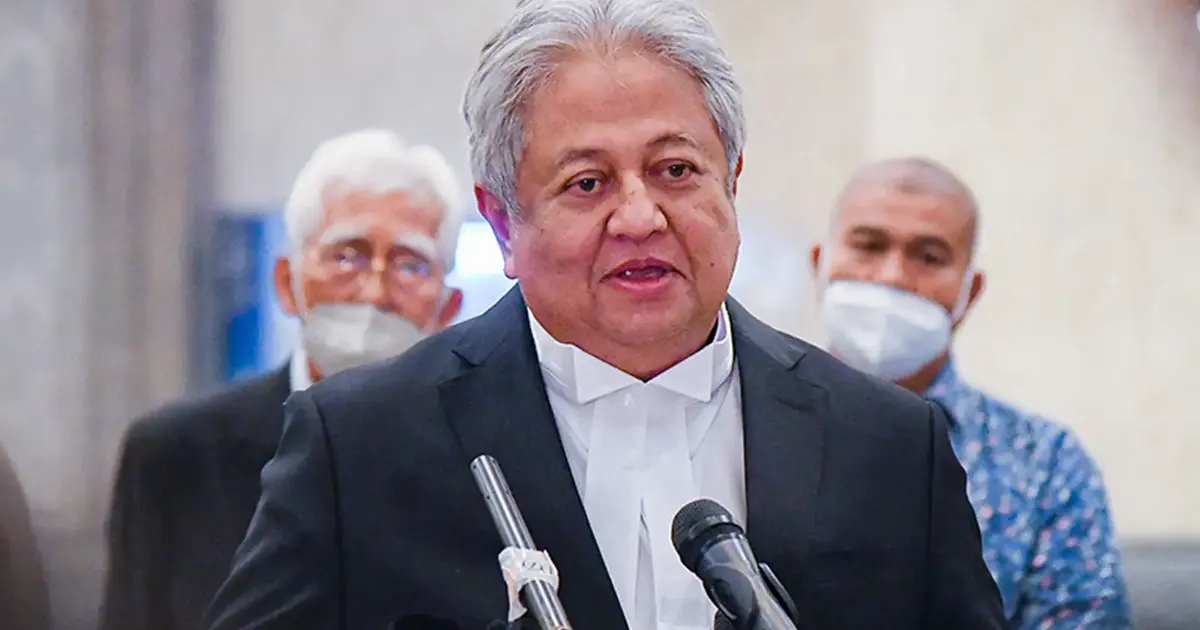
Justice Latifah Tahar has recused herself from presiding over an ongoing defamation appeal involving prominent lawyer and former Cabinet minister Zaid Ibrahim and the Malaysian Bar, prompting the Court of Appeal to schedule case management proceedings on July 13 to assign the matter to an alternative panel of judges.
The withdrawal came ahead of a scheduled hearing and represents a significant development in what has become a closely watched legal dispute within Malaysia's legal profession. The recusal, though not uncommon in the appellate process, signals that a fresh judicial approach will guide the remainder of the proceedings, potentially providing both parties an opportunity for proceedings before judges without prior exposure to the case details.
The Malaysian Bar and its affiliated lawyers had been engaged in legal proceedings with Zaid Ibrahim, creating a dispute that ultimately reached the appellate stage. The nature of defamation claims in such professional contexts often involves allegations of reputational harm arising from statements or actions, with considerable implications for the reputation and standing of those involved in Malaysia's legal community.
The July 13 case management session will serve as an administrative checkpoint where both the prosecution and defence will have opportunity to present submissions regarding procedural matters and scheduling constraints. During this hearing, the court will determine which judges from the available appellate bench will be assigned to hear the substantive arguments when the matter returns for full hearing.
In Malaysia's judicial system, the recusal of a judge—whether voluntary or requested—falls within established procedures designed to ensure impartiality and public confidence in the administration of justice. When a judge identifies circumstances that might give rise to an appearance of bias or conflict of interest, withdrawal represents an appropriate response that protects the integrity of the proceedings.
The appointment of a fresh panel introduces a degree of uncertainty regarding the ultimate outcome, as different judges may weigh evidence and legal arguments with varying emphasis. This is particularly significant in defamation cases, where establishing the truth of contested statements and assessing damages require careful judicial scrutiny of evidence and applicable law.
For the Malaysian Bar as an institution, the continuation of this dispute underscores ongoing tensions within the profession regarding governance, ethical standards, and the appropriate exercise of disciplinary authority. The appeal process allows higher courts to review lower court decisions on both procedural and substantive grounds, ensuring that justice is administered consistently with established legal principles.
Zaid Ibrahim's involvement in the case brings public prominence to proceedings that might otherwise receive limited attention. His prior service as a Cabinet minister and his continued presence in legal and political discourse mean that developments in his cases often attract media scrutiny and professional commentary within legal circles.
The defamation allegations themselves reflect broader questions about the boundaries of professional criticism, institutional authority, and individual rights within regulated professions. When lawyers and bar associations find themselves in litigation, the outcomes can influence how similar disputes are handled in future, establishing precedent or reinforcing existing legal doctrine.
The extended timeline resulting from the recusal and reassignment process means that final resolution of this matter will be delayed further. Parties have already invested considerable time and resources in the proceedings, and the prospect of additional delays may add to the overall burden on the court system and the individuals involved.
Once the fresh panel is assigned and a new hearing date scheduled, both sides will have opportunity to present comprehensive arguments supported by documentary evidence and legal authority. The appellate process typically focuses on whether the lower court applied law correctly and whether its findings were supported by admissible evidence, rather than conducting a complete retrial of factual matters.
The outcome of this appeal could have implications extending beyond the immediate parties. Other members of the profession will watch closely to understand how courts interpret professional conduct standards, the scope of institutional authority, and the boundaries of protected speech within Malaysia's legal community. These principles, once established through appellate judgment, can shape future professional disputes and regulatory actions.

