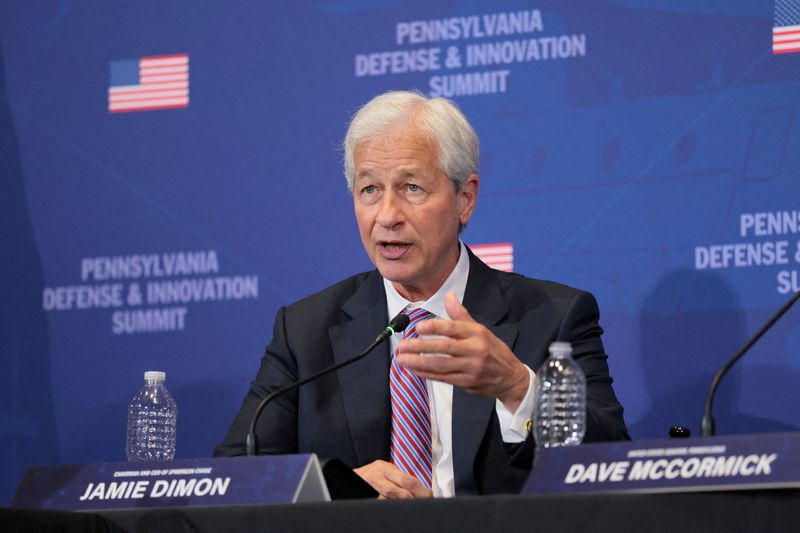
One of America's most influential financial leaders is mounting a significant push to bring corporate decision-makers together to confront the mounting dangers posed by artificial intelligence. JPMorgan Chase CEO Jamie Dimon has been personally contacting other chief executives across the banking sector, technology firms, and operators of essential infrastructure to participate in what is shaping up as a major industry-wide collaboration to manage AI-related threats. His initiative, being developed through the Alliance for Critical Infrastructure—a group that JPMorgan helped establish—represents a pivotal moment in how American corporate leadership is addressing the governance challenges presented by rapidly advancing AI systems.
The scale of Dimon's outreach is substantial. More than 40 organizations spanning banking, energy distribution, water management, utilities, telecommunications, aviation, and rail transportation have been engaged in preliminary discussions, with calls scheduled throughout August to explore partnership models. These sectors form the backbone of American economic activity and public services, making their collective attention to AI governance a matter of considerable importance. The inclusion of such diverse industries suggests a recognition that artificial intelligence presents cross-sectional risks that no single company or sector can adequately address in isolation.
Dimon occupies a particularly influential position within this conversation. As the chief of the United States' largest financial institution, his warnings about emerging technological threats carry substantial weight with both the corporate world and policymakers. He has publicly cautioned about the risks inherent in advanced artificial intelligence systems, positioning himself as one of a small cadre of major corporate leaders willing to speak candidly about these dangers rather than focusing exclusively on the technology's commercial potential. This stance has given him credibility as someone approaching AI governance from a position of genuine concern rather than protectionist business interests.
The Alliance for Critical Infrastructure itself was founded by JPMorgan alongside Mastercard and Berkshire Hathaway Energy, with the original mandate of coordinating resilience planning across vital economic sectors, facilitating information exchange, and preparing coordinated responses to threats spanning cybersecurity, physical security, and geopolitical risks. By expanding this existing institutional framework to encompass artificial intelligence specifically, Dimon and his partners are leveraging an already-functioning network rather than creating entirely new organizational structures. This approach suggests practical recognition that infrastructure protecting against AI risks must be layered atop existing resilience mechanisms.
The specific triggers for this initiative merit closer examination. Recent cyberattacks targeting water systems in Minnesota and other states have crystallized the vulnerability of essential infrastructure to malicious actors with sophisticated technical capabilities. These real-world incidents have underscored that artificial intelligence could magnify existing cybersecurity threats exponentially, either by enabling attackers with more powerful tools or by creating new vulnerability vectors in systems that were previously hardened against conventional threats. The initiative thus carries urgency rooted in concrete security incidents rather than abstract speculation.
The stated objectives of the effort focus on building shared understanding of how artificial intelligence is being deployed across different industries, identifying the particular risks this poses to each sector, and developing protective frameworks before incidents occur. Critically, the initiative also contemplates working directly with the Trump administration on these issues, suggesting that corporate leaders see government involvement as essential to meaningful progress. This collaborative government-industry approach reflects a broader recognition that artificial intelligence governance cannot be left to market forces or voluntary corporate initiatives alone.
Dimon's comments on this matter are illuminating and provocative. He has warned specifically about Anthropic's advanced AI capabilities, suggesting that providing access to powerful AI models to individuals without appropriate oversight and controls is akin to distributing sophisticated military weaponry to untrained or malicious actors. This vivid analogy captures the fundamental concern: that artificial intelligence capabilities are advancing faster than governance frameworks, creating a dangerous window where powerful technologies lack adequate guardrails. The urgency he conveys suggests this is not merely a long-term planning exercise but rather an immediate priority.
It is worth noting that the broader U.S. government has already begun mobilizing around this challenge. The Gold Eagle initiative, launched in July, brings together artificial intelligence developers, companies operating critical infrastructure, and federal agencies specifically to share information about vulnerabilities that advanced AI systems might create or exploit, and to coordinate remedial actions. The corporate initiative led by Dimon thus operates in parallel with and in potential coordination with government-led efforts, suggesting a multi-layered approach to managing AI risks.
For Malaysian and Southeast Asian observers, this development carries several implications. First, it demonstrates that leading global financial and technology companies view artificial intelligence risks as sufficiently serious to warrant executive-level attention and cross-sector coordination. Second, it suggests that the United States is moving toward a regulatory and governance framework for artificial intelligence that emphasizes collaboration between government and industry, rather than purely government-directed mandates. This approach may eventually influence how other major economies, including those in Southeast Asia, structure their own AI governance frameworks. Third, the focus on critical infrastructure security in the context of AI suggests that developing economies should pay close attention to how they are integrating artificial intelligence into their own essential services, as the vulnerabilities being identified in the United States may be even more acute in regions with less developed cybersecurity infrastructure.
The timeline for this initiative is relatively compressed. The Alliance for Critical Infrastructure aims to have the expanded effort fully operational by year-end, suggesting that Dimon and his colleagues view this as sufficiently urgent to move beyond planning stages quickly. This accelerated timeline reflects a belief that the window for shaping how artificial intelligence integrates into critical infrastructure is closing, and that proactive leadership now is preferable to reactive crisis management later.
The participation of other major corporations remains to be confirmed, as Mastercard and Berkshire Hathaway Energy have not yet publicly commented on their roles or endorsement of the initiative. Nonetheless, their previous involvement in founding the Alliance for Critical Infrastructure makes their participation in the expanded AI-focused effort highly likely. The inclusion of leaders from across the American economy would create a remarkably powerful coalition to shape how artificial intelligence is deployed and governed in the world's largest economy.

