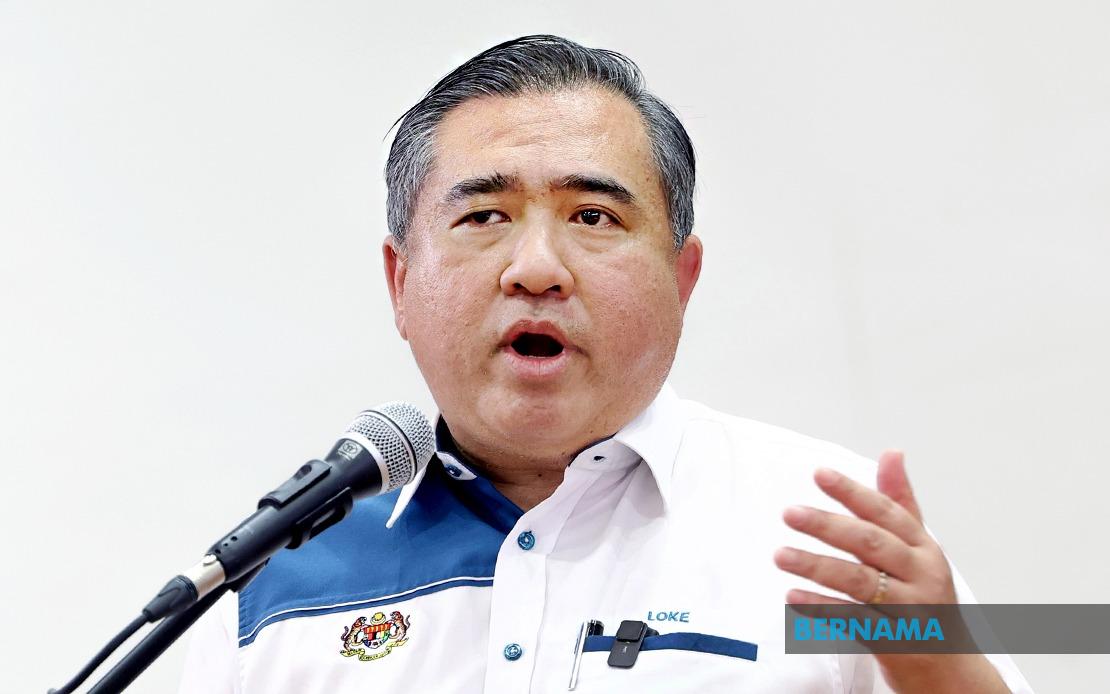
Transport Minister Anthony Loke has made clear that road safety enforcement will apply uniformly across all political parties during the Johor state election campaign, after the Ministry of Transport directed the Road Transport Department (JPJ) to issue summonses based on evidence from viral videos showing motorcyclists without proper head protection. The move represents an effort to bring accountability to campaign activities that have drawn public scrutiny through social media circulation of footage documenting unsafe riding practices.
Loke's statement underscores a commitment to impartial law enforcement that transcends party lines. He emphasised that the Transport Ministry views such violations as serious matters warranting investigation and appropriate legal action. The decision to pursue charges encompasses all campaign workers discovered breaching helmet regulations, including those affiliated with Pakatan Harapan, despite Loke holding the position of DAP secretary-general. This stance reflects a deliberate attempt to distance road safety compliance from political calculation.
The minister drew parallels to his position during the Slim by-election campaign nearly six years earlier, when he had similarly highlighted the importance of helmet compliance among campaign participants regardless of their political alignment. Loke's consistent messaging on this issue suggests it forms a core component of his transport policy philosophy rather than a selective enforcement measure tied to electoral advantage. His willingness to apply rules to his own party colleagues demonstrates an effort to establish credibility on the principle.
The underlying rationale for this enforcement approach rests on the principle that traffic laws function as universal regulatory instruments that do not distinguish between political affiliations. Motorcyclists campaigning for any party remain subject to the same legal obligations as ordinary commuters. By framing helmet compliance as a non-negotiable aspect of public conduct, Loke positions road safety as a matter of collective responsibility rather than party-specific adherence.
The viral videos that triggered this action had gained traction among social media users, creating reputational pressure on campaign organisations to address the safety lapses. Rather than treating such visibility as a temporary controversy, the Transport Ministry's response suggests an institutional commitment to using enforcement as a mechanism for behaviour modification. The documentation available through digital platforms provides evidence that authorities can use for investigation and legal proceedings.
For motorcyclists in Malaysia, this enforcement push carries practical implications regarding helmet usage during high-visibility activities like political campaigns. Riders who participate in election-related activities must ensure full compliance with Road Transport Act requirements, as their actions become subject to heightened scrutiny when documented and shared online. The decision effectively closes any expectation that campaign participation might shield individuals from standard traffic regulations.
The political dimensions of this enforcement pose an interesting challenge for campaign organisations across the electoral spectrum. Campaign managers must now incorporate road safety compliance into their operational protocols, ensuring that workers understand that participation in campaign activities does not exempt them from traffic laws. This represents a shift toward treating election campaigns as governed by the same regulatory framework as ordinary civic activities rather than as special circumstances warranting different standards.
Loke's emphasis on fairness reflects broader debates within Malaysia regarding selective law enforcement and political impartiality. By publicly committing to pursue violations involving opposition figures and his own party colleagues equally, he attempts to establish a model of consistent governance. Whether this principle translates into consistent implementation across different enforcement agencies and officials represents a separate question, as institutional capacity and individual discretion still shape real-world outcomes.
The timing of this enforcement initiative during an active election campaign also signals that the Transport Ministry views road safety as sufficiently important to warrant enforcement action even amid the heightened activity of electoral periods. Rather than deferring such measures until after polling concludes, the ministry has chosen to maintain active oversight. This approach potentially inconveniences campaign activities, but positions safety compliance as non-negotiable regardless of electoral schedules.
For Malaysian voters and observers, this enforcement action offers a test case regarding the government's capacity and willingness to apply regulations neutrally across political boundaries. Campaign conduct has often operated in grey zones where enforcement remains inconsistent or selective, and public commitments to impartial application face scrutiny when translated into actual practice. The specific cases pursued and outcomes achieved will indicate whether the minister's statement reflects genuine institutional change or rhetorical positioning.
The broader implications for Southeast Asian democracies operating in similar traffic safety environments remain relevant. Indonesia, the Philippines, and Thailand all grapple with motorcycle safety compliance during election periods, and Malaysia's approach may establish a regional precedent for treating campaign activities as subject to standard traffic regulations. The success or failure of this enforcement model could influence how other governments balance electoral activity with public safety compliance objectives.
Looking forward, the Transport Ministry's position creates expectations that enforcement will continue beyond the immediate election period, as backing away from these commitments would undermine the credibility established through public statements. Campaign organisations across the political spectrum should adjust their operational practices accordingly, recognising that modern documentation technologies make safety violations difficult to conceal and that enforcement authorities possess both the evidence and stated willingness to pursue such violations.

