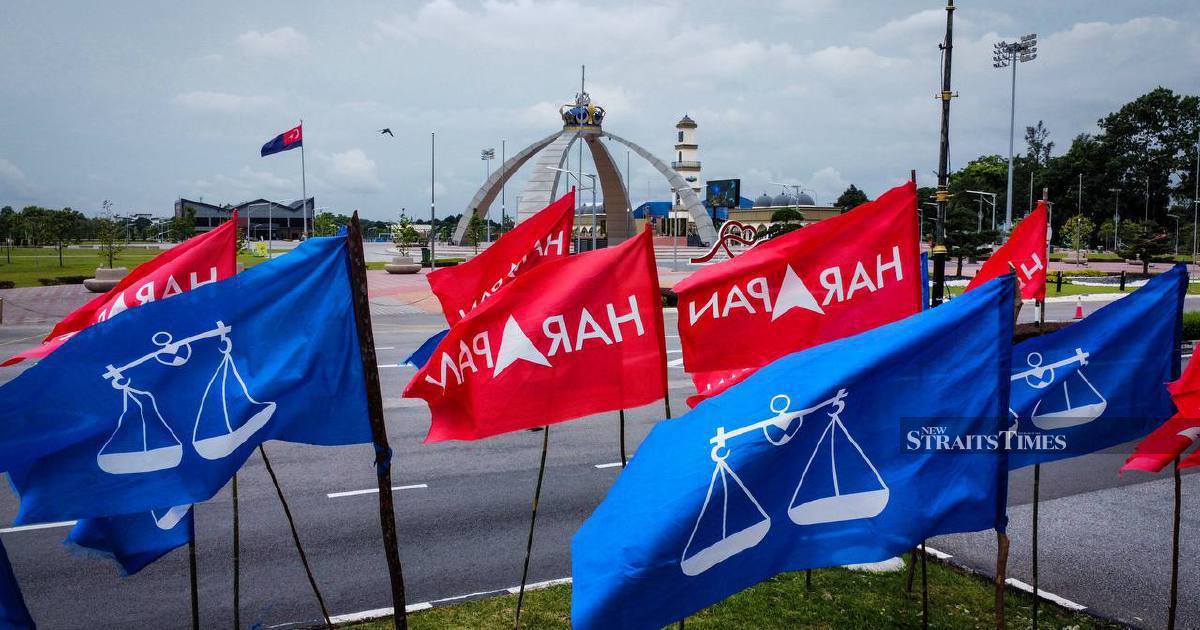
The campaign landscape across Johor's 56 state seats tells a compelling story of two major political coalitions locked in a closely contested battle for supremacy. Visual markers scattered throughout the southern Malaysian state—from campaign posters to party flags adorning roadsides and community centres—suggest a remarkably fluid electoral contest with no coalition enjoying overwhelming dominance in any particular region. This mixed picture underscores the unpredictability of what could be a defining moment for Malaysia's political future.
Barisan Nasional and Pakatan Harapan have emerged as the primary combatants in this electoral struggle, each bringing significant organisational resources and voter mobilisation machinery to Johor. The presence of both coalitions across virtually all constituencies indicates a statewide competition rather than a geographically fragmented one, where neither side can claim safe strongholds based on simple visual indicators. This pattern represents a departure from earlier electoral cycles when certain regions reliably supported particular coalitions, reflecting the gradual realignment of Malaysian voter preferences and growing electoral volatility.
Johor's political significance extends far beyond its borders. As Malaysia's second-most populous state and a major economic contributor, the outcome here will reverberate across the nation's political establishment. The state has historically served as a reliable base for Barisan Nasional, yet recent national trends suggest that this traditional dominance may be eroding. A strong Pakatan Harapan performance in Johor would signal a broader recalibration of Malaysian politics, potentially emboldening opposition efforts elsewhere and pressuring the federal government to reconsider its policy direction.
The campaign's visual elements—often dismissed as superficial—actually reveal important truths about ground-level political dynamics. Campaign materials represent investment of time, money, and volunteer effort, serving as proxies for organisational intensity and grassroots engagement. The scattered nature of posters and flags across Johor suggests both coalitions have deployed considerable resources throughout the state rather than concentrating firepower in specific constituencies. This broad-based approach reflects calculations that control over Johor's assembly requires not just winning a simple majority, but establishing legitimacy across diverse regions and communities.
Socioeconomic factors underpin this electoral competition in ways campaign visuals cannot fully capture. Johor's constituencies encompass urban centres, industrial zones, agricultural regions, and newer suburban developments. Different demographic groups within these areas—traders concerned about business regulations, manufacturing workers worried about employment, young professionals seeking better opportunities, and rural communities seeking infrastructure investment—respond to different political messages. Both coalitions recognise that a unified campaign message will not resonate equally across such diversity, necessitating locally tailored approaches even as they maintain broader ideological consistency.
The stakes for Barisan Nasional are particularly acute. Historically, the coalition dominated Johor decisively, leveraging this stronghold to buttress its federal position. However, electoral shifts in the 2018 and 2022 national elections raised questions about whether Johor remains as reliable. A disappointing performance here would represent a critical loss of face and practical power for a coalition seeking to maintain its position as Malaysia's dominant political force. Conversely, a resounding victory would provide psychological and numerical reassurance that reports of the coalition's decline have been greatly exaggerated.
Pakatan Harapan enters this contest seeking validation of its message that it represents genuine political renewal and competent governance alternatives. The coalition's previous federal government ended in 2021, and various setbacks followed. A strong showing in Johor, one of Malaysia's largest and most economically significant states, would demonstrate that the coalition retains genuine appeal beyond its traditional strongholds and can translate this into state-level control. Such success would strengthen the coalition's hand in future negotiations and national elections, potentially reshaping Malaysia's political trajectory for years to come.
Third forces—including Perikatan Nasional and smaller parties—appear relegated to secondary roles in this particular contest, though their presence in specific constituencies could prove consequential if results are tight. The regionalisation of Malaysian politics means that support for these entities remains concentrated in particular areas or communities rather than spread uniformly across the state. Their electoral performance may not directly determine who controls the state assembly, but they could influence seat distribution in marginal constituencies, particularly if voting remains fragmented across multiple parties.
The Johor campaign reflects broader transformations in Malaysian electoral behaviour. Voters increasingly base choices on specific policy performance, local governance records, and perceived competence rather than simply inheriting family or community voting patterns. This shift empowers campaigners who can articulate compelling visions for development and administration while penalising those relying on outdated rhetoric or accumulated institutional inertia. Both coalitions must therefore balance traditional approaches that mobilise loyal supporters with newer messaging designed to attract swing voters and younger, less partisan-identified citizens.
Infrastructure development, economic opportunities, and governance quality have become central campaign themes precisely because Johor's voters increasingly expect tangible improvements in daily life. Issues ranging from traffic congestion and public transportation, through education and healthcare provision, to manufacturing competitiveness and agricultural support feature prominently in candidate programmes. The state's role as a critical manufacturing hub and logistics centre means that business community concerns about regulatory environment and infrastructure investment significantly influence their political orientation and, by extension, contribute to broader coalition strength within Johor's commercial sectors.
The unpredictability evident in the visual campaign landscape reflects genuine uncertainty about voter intentions and coalition appeal across the state's diverse communities. Exit from previous electoral patterns means that traditional numerical projections and demographic assumptions may prove unreliable guides to actual results. This uncertainty benefits the campaign's credibility and engagement—voters recognise that their choices genuinely matter and could determine the outcome—while creating anxiety for political organisers who cannot safely assume particular constituencies or regions remain under their control.
As polling day approaches, both Barisan Nasional and Pakatan Harapan will intensify mobilisation efforts while fine-tuning messaging for different audiences and regions. The mixed signals evident in campaign materials across Johor's 56 constituencies suggest that this election will be decided by relatively narrow margins in multiple seats, meaning that organisation, turnout, and persuasion of marginal voters will prove decisive. The outcome will shape not only Johor's governance and development priorities but also carry profound implications for Malaysian politics at the national level, influencing coalition confidence, policy directions, and momentum heading into future electoral contests.

