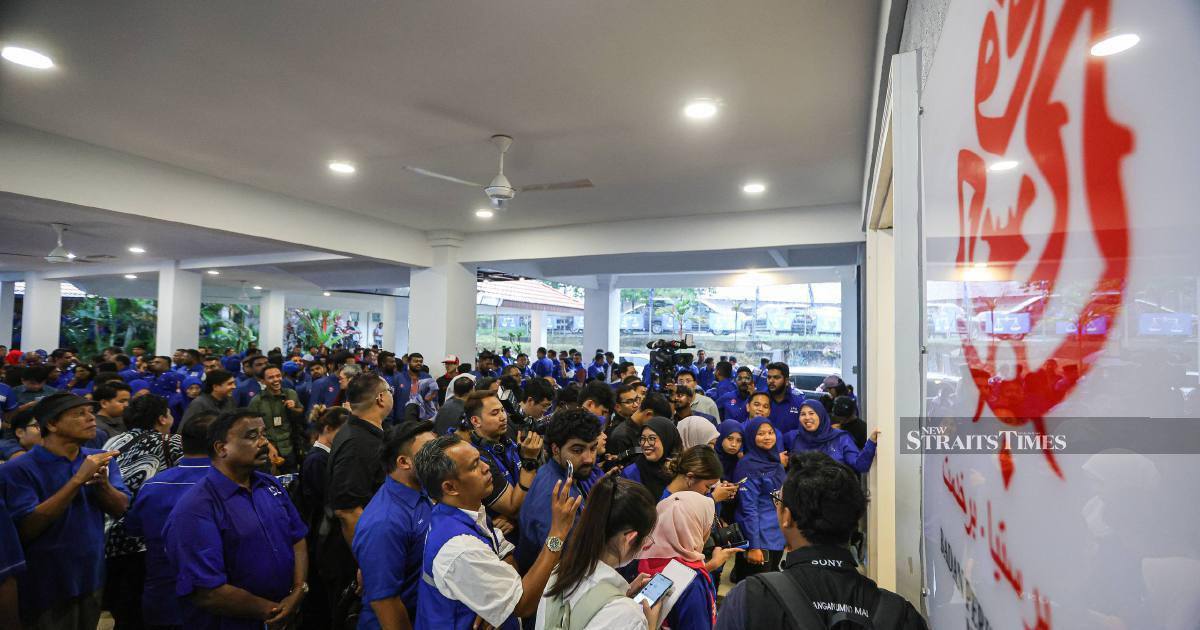
The political atmosphere in Johor has intensified as Barisan Nasional leaders converged on the Umno state headquarters in Johor Baru to formally present their chosen candidates for the state's 16th electoral cycle. The gathering represents a critical juncture in Malaysian state politics, with energy and anticipation visibly mounting among the coalition's grassroots machinery ahead of the official slate reveal.
The turnout of party stalwarts and ordinary members underscores the significance Barisan Nasional attributes to the Johor contest, long considered a bellwether of political sentiment in Malaysia's southern corridor. The coalition's strong organisational presence and mobilisation capability were on full display, reflecting the stakes involved in defending territorial gains and expanding influence across the state's constituencies.
Johor has historically served as a testing ground for national political shifts, given its substantial voter population and economic importance to Malaysia. The 16th state election carries particular weight as it occurs amid a broader reshaping of the country's political landscape, where coalitions compete aggressively for both urban and rural support bases. Barisan Nasional's decision to publicly announce candidates through a major gathering signals confidence but also acknowledges the need to energise its base in an increasingly competitive environment.
Candidate selection processes invariably generate considerable internal discussion within any political coalition, as party structures must balance factional interests, merit considerations, and demographic representation. The formal announcement ceremony serves multiple purposes: it legitimises the chosen representatives, demonstrates grassroots support, and sets the narrative for the campaign period ahead. For supporters gathered at the headquarters, the event provides an opportunity to assess the party's direction and the calibre of individuals tasked with contesting various seats.
The timing of these announcements occurs against a backdrop of evolving voter preferences in Malaysian state politics. Recent electoral cycles have demonstrated that traditional support bases cannot be taken for granted, with swing constituencies increasingly decisive in determining outcomes. Barisan Nasional's Johor machinery, therefore, faces the dual challenge of consolidating its existing voter coalition while appealing to younger and more fluid segments of the electorate that demand issue-based engagement rather than purely communal appeals.
For Malaysian political observers, the composition of Barisan Nasional's candidate roster offers crucial insights into the coalition's strategic priorities. Decisions regarding incumbent retention, fresh faces, and territorial reorganisation reveal which constituencies the coalition views as competitive versus secure. Such calculations frequently shape broader campaign narratives and resource allocation strategies during the electoral period.
The Umno headquarters gathering also represents an opportunity for the party hierarchy to communicate unified messaging to both supporters and the broader public. In coalition politics, such public shows of strength and organisational cohesion matter considerably, particularly when competitors may be projecting their own narratives about momentum and popular support. The visual spectacle of densely packed party members reinforces perceptions of organisational vitality.
Johor's electoral calendar intersects with Malaysia's national political rhythms in complex ways. State-level contests frequently attract national-level personalities and resources, elevating stakes beyond purely local considerations. The candidate announcements therefore warrant attention not merely as a Johor matter but as a barometer for national political health, coalition dynamics, and the trajectory of Malaysian democracy more broadly.
For the broader Southeast Asian region, Malaysian state elections continue to demonstrate how established coalitions navigate contemporary political pressures including generational change, urbanisation, and shifting economic expectations. Barisan Nasional's approach in Johor—combining traditional organisational strength with messaging adaptations—reflects patterns observable across mature democracies grappling with electoral competitiveness.
The candidate reveal process carries symbolic weight beyond immediate electoral calculations. It represents the moment when abstract party strategy transforms into flesh-and-blood representation, when ordinary citizens witness the individuals tasked with championing their concerns in state legislative debates. This transition from internal deliberation to public accountability begins the genuine campaign phase.
Looking ahead, the calibre and diversity of Barisan Nasional's chosen candidates will significantly influence how effectively the coalition can counter opposition narratives and mobilise its supporting constituencies. The enthusiasm evident at the Johor Umno headquarters will need translation into sustained campaign momentum, effective ground organisation, and persuasive engagement with voters across diverse demographics and geographical areas throughout the state.