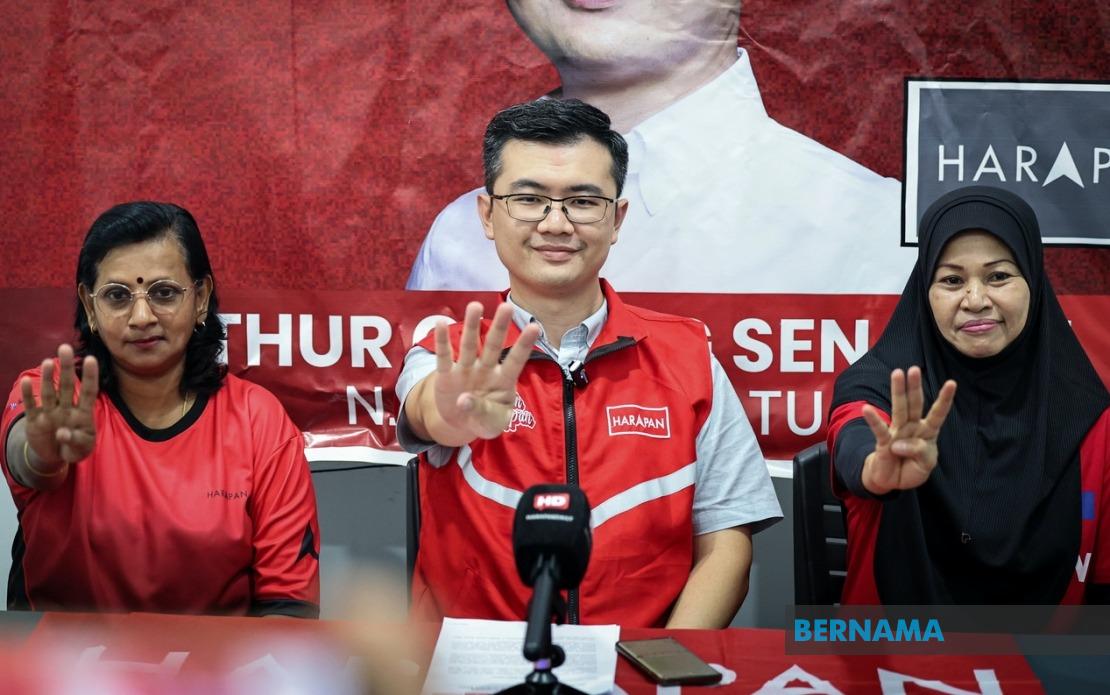
Arthur Chiong Sen Sern, the incumbent Bukit Batu state assemblyman representing Pakatan Harapan, is mounting an aggressive final push to mobilise voters as the Johor state election approaches on July 11. Speaking from his campaign operations room in Kulai, Chiong stressed that achieving a voter turnout above 60 per cent would significantly improve his prospects in defending the constituency, particularly given his razor-thin victory margin of just 137 votes during the 2022 state polls. With early voting scheduled for July 7, the coming days represent a critical window for the PH machinery to drive engagement across Bukit Batu's diverse electorate.
The narrow margin of Chiong's previous victory underscores the highly competitive nature of this seat and the pivotal role that voter participation will play in determining the outcome. In the 2022 Johor election, overall turnout reached approximately 54.9 per cent, suggesting substantial room for increased participation. Chiong's strategy centres on the belief that mobilising previously less-engaged segments of the electorate could tip the balance in his favour, particularly if supporters of his rival candidates opt to stay home on polling day. This calculation reflects broader patterns in Malaysian electoral politics, where turnout variations between constituencies can swing tight contests decisively.
During his press conference, Chiong highlighted the visible enthusiasm from residents across all ethnic communities in Bukit Batu, indicating that his campaign machinery has succeeded in generating receptive audiences for PH's policy platform. The positive reception from voters of different backgrounds suggests that Chiong's messaging has resonated beyond traditional party strongholds, a critical factor in a constituency where narrow margins demand coalition-building across demographic lines. His team's intensive daily campaigning has reportedly uncovered encouraging feedback, though ground sentiment in competitive constituencies often shifts rapidly in the final week before polling.
Chiong praised the tenor of electoral competition in the Bukit Batu contest, describing it as emblematic of mature politics in Malaysia. He noted that opposing candidates have conducted themselves with civility, even exchanging goodwill wishes during campaign encounters. This characterisation of competitive yet respectful campaigning reflects broader aspirations within the Malaysian political landscape to elevate discourse beyond personal attacks and divisive rhetoric. However, such observations must be contextualised within the reality that Bukit Batu remains a fiercely contested seat where substantive policy differences between candidates remain sharp.
Chiong's manifesto for continuity encompasses seven key areas of focus, each targeting specific community concerns. A data centre industry career bridge initiative aims to address youth employment by positioning Bukit Batu within Malaysia's digital economy expansion. The widening of FT001 road coupled with implementation of a smart traffic light system represents a practical response to congestion issues affecting commuters and commerce. Healthcare infrastructure upgrades through improved clinic facilities address medical access disparities, whilst youth-focused interventions against vape and drug abuse target an increasingly visible social problem affecting Malaysian communities. Tourism sector strengthening and expanded school facilities round out a platform that seeks to balance economic development with social wellbeing.
Chiong frames these commitments not merely as campaign promises but as extensions of work already undertaken during his current term. This positioning carries strategic importance, as it allows him to claim incumbent advantage through demonstrable results whilst distinguishing his approach from opposition candidates who lack comparable implementation records. In Malaysian state politics, where development delivery often determines re-election prospects, such claims of prior achievement carry considerable weight with voters evaluating whether their representative has effectively utilised government connections and administrative experience. However, opposition candidates will inevitably challenge claims of development success and highlight any unfulfilled previous pledges.
The PH candidate's emphasis on sustained development requiring experienced leadership and strong government relations underscores the significance of Bukit Batu's position within Johor's broader political configuration. As a state where Pakatan Harapan contests alongside other coalition partners, Bukit Batu's outcome contributes to the overall balance of state assembly composition and the stability of any resulting government. For Malaysian political observers, this constituency race exemplifies the increasingly competitive nature of Johor politics, where traditional strongholds have become genuinely contestable and voter mobility between parties has increased substantially.
The focus on voter turnout as a decisive variable reflects sophisticated electoral calculus within the PH campaign. Historically, higher turnout in Malaysian elections tends to favour incumbent governments and established parties with superior ground organisation, though this pattern has shown variation in recent years. Chiong's targeting of a 60 per cent threshold appears calibrated to a level achievable through intensive mobilisation whilst remaining ambitious enough to represent meaningful improvement over 2022's baseline. Whether this threshold proves predictive of electoral success will depend on turnout's demographic composition, as different voter segments may respond to opposing candidates' appeals in varied ways.
The Johor state election represents the latest in a series of electoral contests that have reshaped Malaysia's political landscape since 2022. Bukit Batu exemplifies microcosms of broader competition between Pakatan Harapan and opposition alliances, with seat-level outcomes aggregating into crucial shifts in state assembly control. For Malaysian observers monitoring democratic participation and institutional stability, electoral contests in economically developed states like Johor carry particular significance, as they often prefigure national political trajectories. The intensity of Chiong's campaign efforts and his confidence in voter receptivity suggest that PH views Bukit Batu as a winnable but vulnerable seat meriting sustained investment of campaign resources.
As Johor approaches its electoral date, Bukit Batu's contest will unfold within a broader competitive landscape encompassing diverse constituencies with varying demographic compositions and incumbent strength. Chiong's strategy of emphasising development continuity, cross-community appeal, and turnout mobilisation represents a template replicated across numerous marginal seats. The ultimate test will come on July 11, when actual voter participation and candidate performance translate campaign efforts into definitive electoral outcomes. For PH, retaining seats like Bukit Batu remains essential for maintaining Johor representation and preventing further erosion of its parliamentary position.

