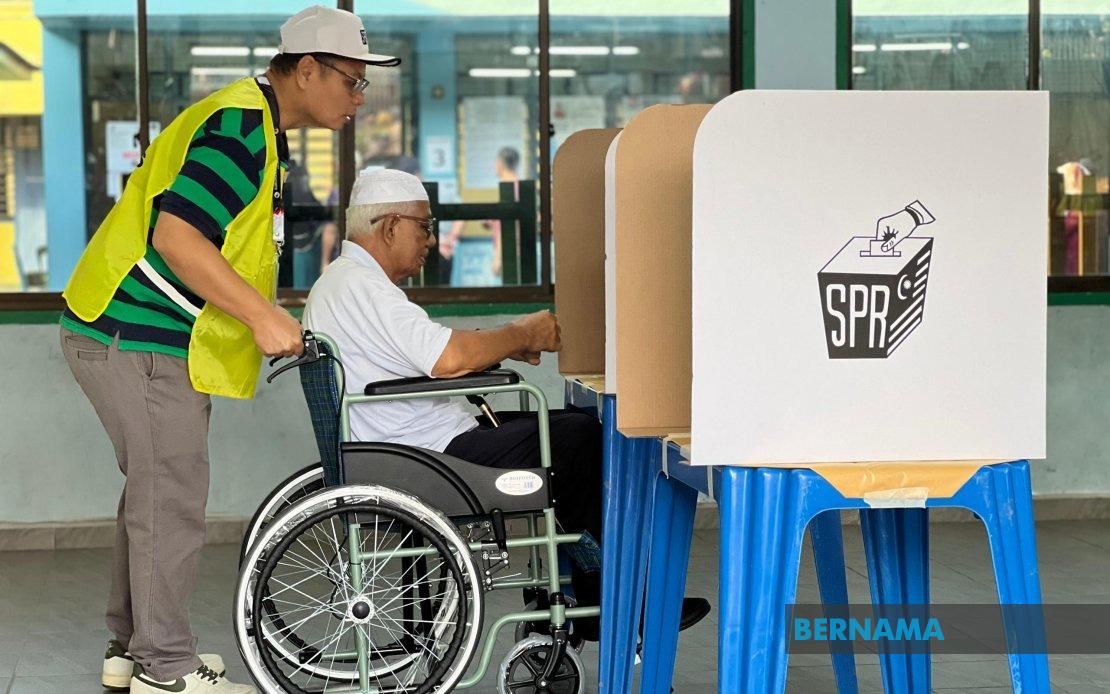
Johor's 16th state election officially began this morning as 1,076 polling centres unlocked their doors at 8 am sharp, setting the stage for what electoral officials are describing as a critical moment in the state's political landscape. The simultaneous opening across all constituencies represents a logistical achievement that involved meticulous coordination between the Election Commission and state authorities. With 4,889 individual polling streams activated and 172 candidates competing for 56 State Legislative Assembly seats, the exercise encompasses one of the most complex electoral contests in recent memory. The sheer scale of voter participation—2.7 million registered electors—underscores Johor's significance as a bellwether state whose outcome often influences political calculations throughout Malaysia.
The election structure reveals a diverse competitive landscape across the state. Twelve constituencies are witnessing four-cornered contests where support will fragment among multiple candidates, complicating both campaigning strategies and vote calculations. A further 27 constituencies feature three-cornered battles, representing the most common contest type, while 14 seats will be decided through direct confrontations between two candidates. This variety in contest configurations means that victory margins could swing dramatically on even modest swings in voter preference, amplifying the significance of ground-level campaign work and community mobilisation efforts undertaken throughout the 14-day campaign period that concluded at midnight yesterday.
The election authority has established an ambitious benchmark, targeting approximately 70 per cent voter turnout from the registered electorate. Should this target materialise, it would signal strong civic engagement despite the relatively short notice many voters had following the dissolution of the previous assembly. The Election Commission's confidence in achieving this participation rate suggests their assessment that public interest in the electoral process remains robust. Preliminary results are anticipated to emerge as early as 10 pm, though the full picture may not crystallise until considerably later depending on the closeness of individual contests and the time required to tabulate results across multiple constituencies.
Voting operations are structured to accommodate varying population densities across Johor's diverse geography. While most polling centres maintain the standard 8 am to 6 pm operating window, those serving constituencies with smaller voter populations will conclude their operations much earlier, with some closing as early as 11 am. This staggered arrangement reflects the practical reality that smaller constituencies finish processing their voters well ahead of the nominal closing time, yet the Election Commission's decision to allow early closure rather than impose artificial restrictions demonstrates an understanding of electoral efficiency. Such arrangements also reduce the burden on poll workers in less populous areas where extended hours serve no practical purpose.
Security considerations dominated the visible landscape at polling locations throughout the state. Ground observations revealed that election officials and security personnel had positioned themselves systematically to maintain order and ensure the voting process proceeded without disruption or irregularities. The deployment strategy appeared designed not merely to prevent incidents but to establish a visible framework of accountability that would instil public confidence in the electoral machinery. Media personnel descended on polling stations from early morning, with journalists positioning themselves by 7 am to capture developments and gather commentary from officials and observers, ensuring that the voting process would receive comprehensive coverage throughout the day.
Weather conditions proved largely favourable for voter turnout across most of the state, though Muar experienced rainfall during the morning hours. While isolated to a single constituency, such weather patterns can occasionally suppress voter participation in affected areas, particularly among elderly electors or those with mobility challenges. The clearing conditions in most other regions provided no meteorological impediment to those wishing to exercise their franchise, suggesting that environmental factors would not substantially distort participation patterns across Johor.
From a Malaysian political perspective, this election carries ramifications extending far beyond Johor's borders. The state has historically served as a political bellwether, and the outcome could reshape perceptions about government performance and voter sentiment heading toward potential federal electoral developments. Regional observers will scrutinise not only which coalition or party emerges victorious but also the magnitude of any swing, as dramatic shifts in support could presage broader realignments in Malaysian politics. For Southeast Asia's largest democracy by population, understanding voter preferences in a major state election provides valuable insight into the trajectory of national politics and the durability of current governance arrangements.
The competitive intensity varies markedly across constituencies, with some representing safe seats for established parties while others represent genuine contests where campaign organisation and candidate appeal could prove decisive. The presence of four-cornered and three-cornered contests throughout the state suggests that voters face genuine choices rather than predictable outcomes, creating an environment where constituency-level factors—local issues, candidate reputation, service delivery records—assume heightened importance. This granular level of competition typically generates higher levels of voter engagement, as electors perceive that their vote carries meaningful weight in determining outcomes.
The Election Commission's operational preparedness reflects lessons learned from previous state elections and federal parliamentary elections held across Malaysia. The simultaneous opening of all polling centres at precisely 8 am demonstrates the institutional capacity to execute complex logistics across dispersed geographic areas. This standardisation of procedures and timing reduces opportunities for irregularities while establishing clear benchmarks against which electoral observers can assess whether operations conform to established protocols. Such procedural reliability, though often taken for granted, forms an essential foundation for electoral credibility and public confidence in democratic processes.

