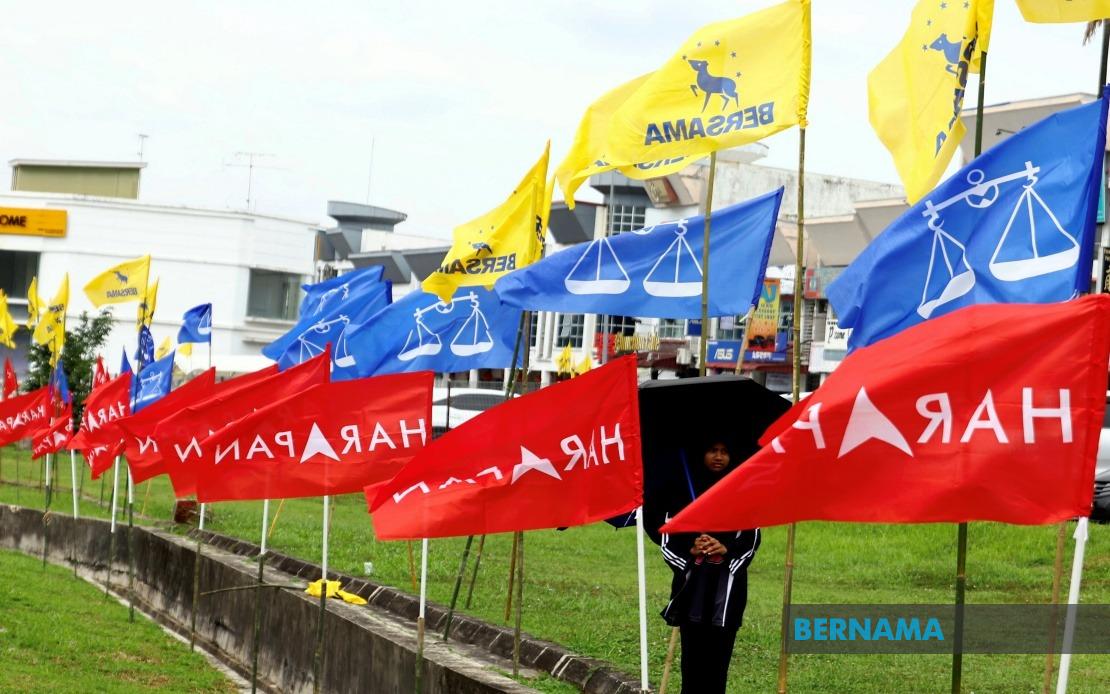
After an intensive fortnight of political campaigning across Johor, all canvassing activities will cease at 11.59 pm tonight, formally ending the contest for the state's 16th legislative assembly. Tomorrow morning at 8 am, approximately 2.7 million registered voters will exercise their franchise across 1,076 polling centres to select representatives for the 56 contested state seats, effectively determining the composition and direction of Johor's government for the next five years.
The campaign season, which commenced on June 27, has featured considerably fewer candidates than the previous electoral cycle. A total of 172 candidates are now seeking election, representing a notable reduction from the 239 candidates who contested in the previous state election. The Election Commission anticipates that final results will become available as early as 10 pm on election day, allowing for a relatively swift conclusion to the counting process.
Prior to the formal polling day, an early voting exercise was conducted last Tuesday, during which 20,607 members of the Malaysian Armed Forces, Royal Malaysia Police, General Operations Force and their spouses cast ballots. This mechanism ensures that personnel engaged in maintaining security during the election itself can participate in the democratic process without compromising their operational responsibilities on polling day.
Throughout the campaign period, the competing political coalitions and parties have centred their messaging around pressing concerns confronting ordinary Malaysians. Economic matters dominated the discourse, with particular emphasis placed on the escalating cost of living, strategies for economic revitalisation, employment generation and the enhancement of public welfare provisions. These issues reflect the pocketbook concerns that typically influence voter decision-making in contemporary Malaysian elections, transcending traditional party-based divisions.
The campaigns reached their crescendo last night with high-profile appearances from national leaders. Prime Minister Datuk Seri Anwar Ibrahim, who also chairs the Pakatan Harapan coalition, conducted final rally activities alongside Deputy Prime Minister Datuk Seri Dr Ahmad Zahid Hamidi, who leads the Barisan Nasional coalition. These senior figures symbolise the genuine competitive stakes at play in the Johor contest, which holds implications beyond the state's borders given Johor's economic and political significance within the Malaysian federation.
Political scientist Dr Nazreena Mohammed Yasin from Universiti Tun Hussein Onn Malaysia emphasises that voter turnout will serve as a critical barometer for understanding whether the campaign momentum generated by political parties translates into actual electoral participation. However, she cautions against oversimplifying turnout's significance, noting that its impact operates unevenly across different constituencies and demographic groupings. Higher participation rates may advantage certain parties in specific localities whilst producing minimal electoral consequences elsewhere. The previous 2022 Johor state election recorded an overall turnout of 54.92 percent, providing a historical baseline against which tomorrow's participation can be measured.
Dr Nazreena identifies the operational effectiveness of party machinery as equally consequential, particularly regarding how well each organisation mobilises its supporters and manages the logistics of polling day operations. In constituencies where victory margins are expected to be narrow, this organisational capability can prove decisive. She additionally highlights the pivotal role of fence-sitters and undecided voters, whose eleventh-hour choices frequently determine outcomes in marginal seats. Beyond the immediate question of who wins, she suggests that election results merit analysis regarding shifting victory margins, which reveal whether parties have consolidated, eroded or fundamentally altered their voter bases since the previous election.
Associate Professor Dr Mazlan Ali from Universiti Teknologi Malaysia characterises this election as one where the major coalitions have strategically emphasised political stability as their primary campaign narrative. This framing reflects broader concerns about governmental coherence and continuity, particularly following Malaysia's recent history of coalition shifts and political reorganisations. The dominance of Barisan Nasional and Pakatan Harapan in the campaign discourse correlates with their respective performance records at federal and state levels, as well as their current positioning within the Unity Government framework that has governed Malaysia since 2022.
Dr Mazlan observes that whilst parties have articulated comprehensive manifestos and specific pledges, voter behaviour increasingly reflects assessments of track records and demonstrated delivery capacity. Voters are evaluating parties less on their promises than on their ability to fulfil previous commitments, suggesting a maturation of electoral behaviour towards performance-based rather than rhetoric-based decision-making. This analytical lens transforms elections from popularity contests into accountability mechanisms, where incumbent and aspiring parties alike must demonstrate tangible results.
The candidate distribution across competing parties reflects the contemporary Malaysian political landscape. Barisan Nasional and Pakatan Harapan each field 56 candidates for the 56 available seats, indicating their positioning as the primary contenders. Perikatan Nasional presents 33 candidates, whilst Parti Bersama Malaysia offers 15 candidates. Smaller parties and movements—including Muda, Parti Orang Asli Malaysia and Parti Sosialis Malaysia—contribute a combined four candidates, alongside six independent contestants. The dissolution of the previous assembly on June 1 had left Barisan Nasional holding 40 seats, Pakatan Harapan with 12, Perikatan Nasional with three and Muda with one, establishing the baseline from which tomorrow's reallocation of representation will proceed.
Dr Mazlan anticipates that heightened public engagement with this election will contribute to elevated voter turnout compared to recent electoral patterns, rendering each individual vote more consequential in shaping Johor's governance trajectory. The convergence of these analytical factors—turnout dynamics, party machinery effectiveness, candidate credibility assessments and voter confidence evaluations—will determine whether electoral outcomes reflect continuity with existing power arrangements or constitute a significant realignment of Johor's political configuration.

