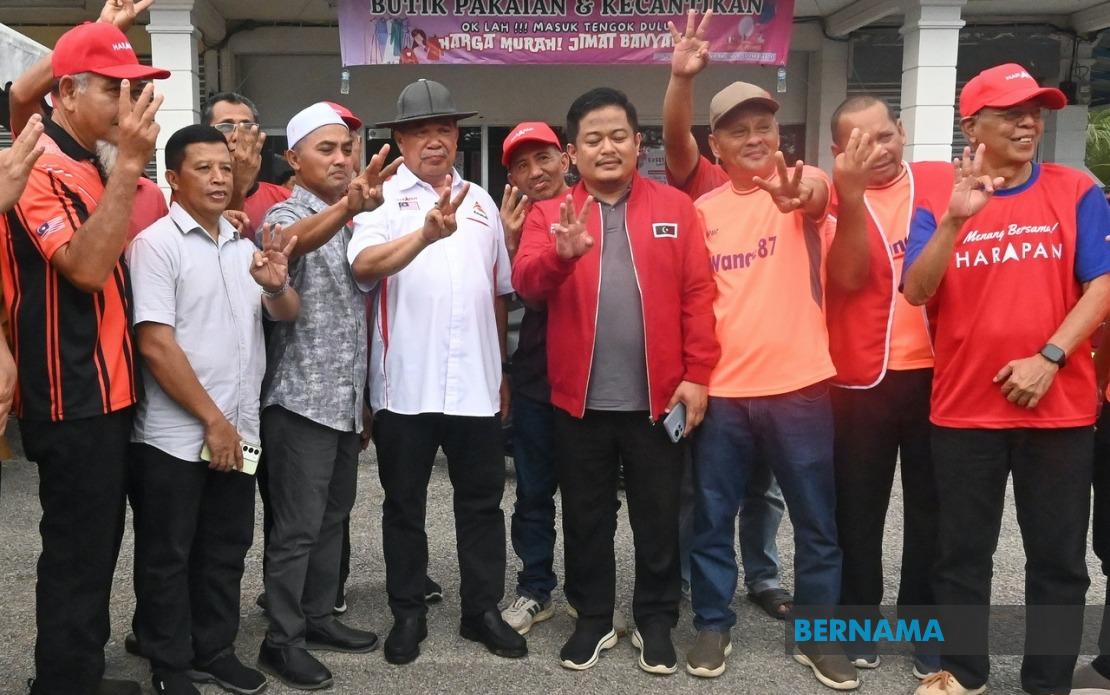
Amanah president Datuk Seri Mohamad Sabu has made a direct appeal to Johor voters ahead of this Saturday's state election, urging them to give Pakatan Harapan candidates the electoral mandate needed to translate policy promises into tangible results. Speaking during a campaign stop in Batu Pahat, Mohamad Sabu framed the upcoming poll as a test of whether voters trust the coalition's ability to move beyond rhetoric and actually implement the comprehensive platform it unveiled just days before the election.
The Agriculture and Food Security Minister acknowledged that opposition parties have dismissed the PH manifesto as mere political boilerplate, accusing the coalition of recycling empty pledges. Rather than deflect this criticism, Mohamad Sabu reframed the debate around implementation capacity. He contended that manifestos themselves carry limited value; what ultimately matters to voters is whether elected representatives follow through on their commitments once they hold office. This distinction between campaign promises and on-the-ground delivery has become increasingly central to how Malaysian voters evaluate political coalitions, particularly after the 2018 federal election and the subsequent political turbulence that undermined public confidence in PH's ability to govern effectively.
Mohamad Sabu emphasized that the manifesto represents more than top-down party ideology. He stressed that PH leaders conducted extensive grassroots engagement across Johor, listening to residents' concerns and tailoring policy positions around the problems communities face. This consultative approach, he argued, distinguishes the document from purely opportunistic political platforms. By anchoring the manifesto in direct community feedback, Mohamad Sabu sought to invest it with legitimacy grounded in genuine public needs rather than abstract party theory. This messaging strategy reflects a broader understanding that Malaysian voters, particularly in states like Johor with significant rural populations, respond more strongly to manifestos that demonstrate awareness of local conditions.
The timeline Mohamad Sabu outlined carries symbolic weight for PH's campaign narrative. He pledged that if the coalition wins, implementation will commence immediately on July 12, just one day after polling closes. This compressed timeline—moving from election victory to concrete policy action within 24 hours—positions PH as an administration ready to hit the ground immediately rather than engage in lengthy transitional periods. For voters skeptical of whether any party will actually deliver on election promises, such aggressive implementation schedules can signal serious intent. However, this approach also creates immediate accountability; if visible changes do not materialize quickly, public confidence could erode rapidly.
Significantly, Mohamad Sabu reported observing a marked shift in how rural voters respond to PH campaigners compared to 2018. He attributed this change to the coalition having become far more recognizable and accepted across Johor's villages and smaller towns. Six years ago, PH remained largely unfamiliar in rural constituencies, facing an uphill battle to build brand recognition in areas traditionally dominated by Barisan Nasional. The minister suggested that current enthusiasm—with voters spontaneously greeting PH representatives and requesting photographs—indicates genuine attitudinal change rather than mere polling fluctuations. This observation, if accurate, would suggest PH has successfully penetrated rural voter consciousness, a critical prerequisite for securing state-level majorities in Malaysia where rural seats remain electorally decisive.
The Johor state election holds particular importance within the broader Malaysian political landscape. As the nation's second-largest state by population and a historical stronghold of Barisan Nasional dominance, Johor represents contested terrain where the opposition coalition can demonstrate whether it has overcome structural disadvantages in rural campaigning and institutional consolidation. A PH victory would signal that the coalition has matured as a governing force beyond its 2018 peak, while defeat would reinforce narratives about PH's inability to sustain electoral momentum. For coalition partners like Amanah, state-level victories are especially significant given the party's relatively junior status within PH hierarchy and its need to demonstrate relevance beyond federal politics.
Mohamad Sabu's framing of the election as a confidence vote on implementation capacity reflects sophisticated political messaging. Rather than making sweeping promises or attacking opponents, he positioned voting for PH as enabling a philosophical commitment to following through. This approach appeals to voters fatigued by traditional campaign rhetoric and skeptical of whether any party genuinely cares about implementation. By explicitly acknowledging opposition skepticism about the manifesto's authenticity and then directly addressing it—not through defensive denials but through an argument about why implementation requires electoral support—he attempted to reframe doubts as reasons to vote for the coalition rather than against it.
The early voting date for security forces, scheduled for the day before the general poll, reflects standard electoral procedures but also ensures that military and police personnel, potentially more sympathetic to ruling coalitions, cast ballots with their votes counted before potential last-minute campaign developments. This administrative detail carries tactical implications for how results might unfold, with early voting tallies potentially influencing momentum perceptions and media narrative frameworks as Saturday's main polling concludes.
Looking ahead, Mohamad Sabu's messaging establishes clear parameters for evaluating PH's post-election performance in Johor. Should the coalition win, voters will have explicit expectations about rapid, visible policy implementation beginning July 12. This creates both opportunity and risk: successful early deliverables could consolidate electoral support and demonstrate governing competence, but missed implementation deadlines would immediately undermine the credibility Mohamad Sabu worked to establish during the campaign. For Malaysian voters increasingly demanding substantive governance rather than mere electoral participation, this focus on implementation represents a meaningful evolution in how political coalitions compete for support.

