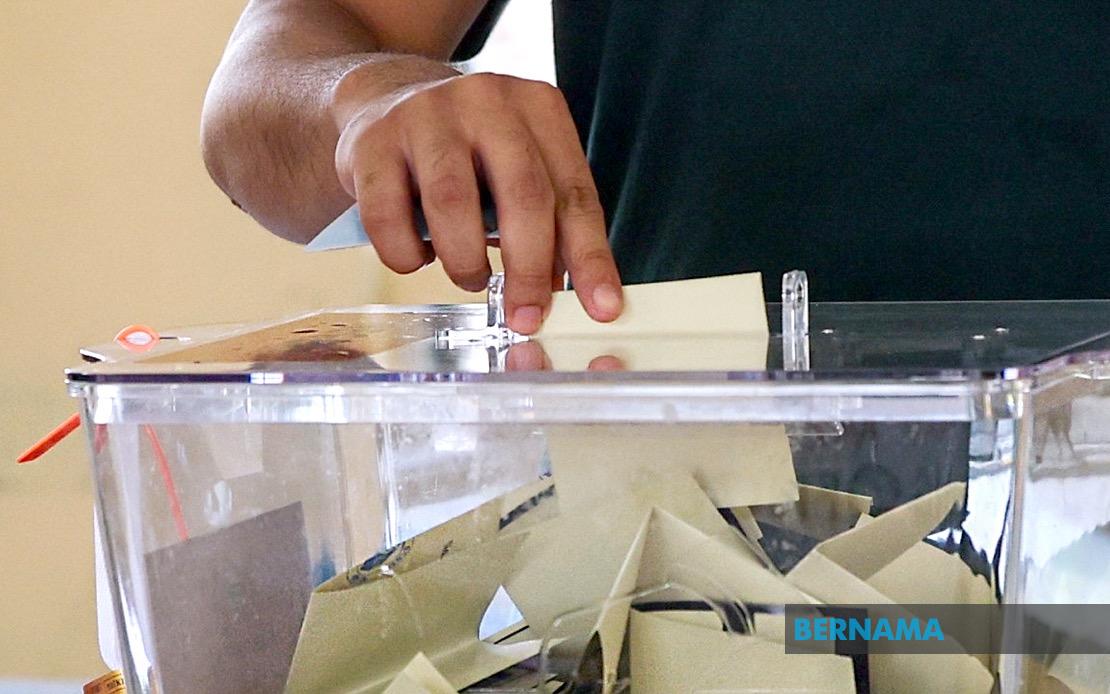
Rahmat Shukor's journey to cast his vote in the 16th Johor state election turned into a lesson in the cruel mathematics of democracy. The 57-year-old travelled 120 kilometres from his home in Sri Medan, Batu Pahat, only to find himself locked out of the polling centre at SJK (C) Foon Yew 4 in Johor Bahru—a single minute after voting officially ended at 6 pm. His disappointment was palpable as he recounted to media how circumstances beyond his control had conspired to rob him of his fundamental right to participate in the electoral process.
Rahmat's predicament began the night before, when exhaustion from days spent on plantation and contract work convinced him to remain at his late mother's house in Sri Medan rather than make the journey to Johor Bahru. His family had returned to the state capital on Friday and successfully voted, leaving him as the sole family member unable to exercise his franchise. This decision, made for rest and recuperation, would ultimately determine whether he could vote at all.
The blame for his late arrival, however, rested squarely with congestion on the roads. Beginning from Simpang Renggam Rest and Recreation Area and persisting through Sedenak towards Skudai, traffic movement deteriorated far beyond normal levels. Rahmat attempted multiple alternative routes to circumvent the blockage, but the unusual severity of the congestion caught him no matter which path he chose. He documented evidence of his predicament, including photographs proving he had been trapped in the traffic jam during crucial hours.
When Rahmat arrived at the polling centre and informed officials of his situation, showing them his proof of the traffic conditions, it made no difference to the outcome. Electoral regulations are unforgiving of late arrivals, regardless of the justification. The closure of polling stations at precisely 6 pm is non-negotiable, designed to ensure consistency and prevent accusations of irregular procedures across all 1,076 polling centres operating throughout Johor on election day.
For Malaysian voters, Rahmat's experience highlights an uncomfortable reality about exercising democratic rights in a geographically dispersed state like Johor. Those living in peripheral areas such as Batu Pahat, located roughly 180 kilometres southwest of Johor Bahru, face substantially greater logistical challenges when voting in state elections held in the capital region. Poor road conditions, unexpected congestion, or mechanical problems can easily translate into disenfranchisement, particularly for those without advance planning or flexible work schedules.
The timing of Rahmat's return to Johor Bahru also underscores how work obligations can intersect with electoral participation. His plantation and contract work—representative of informal economic activity widespread across Malaysia—had exhausted him to the point where staying overnight seemed prudent. Yet this decision, while prioritising personal wellbeing, inadvertently placed him in a vulnerable position regarding voting deadlines.
Rahmat's dignified acceptance of his circumstances—acknowledging that he could do nothing but hope the democratic process would proceed smoothly—demonstrates the resilience many Malaysians display when confronted with civic disappointment. He did not seek to blame officials or demand exceptions. Instead, he simply presented the facts of his situation: he had genuinely attempted to vote, been delayed by uncontrollable circumstances, and arrived moments too late through no fault of his own.
The episode raises implicit questions about accessibility and fairness in state electoral processes. Should voters from remote constituencies bear disproportionate risk of disenfranchisement due to geographic factors? Might advance voting provisions or early polling centres in major towns outside the state capital help mitigate such situations? These are not rhetorical questions but practical considerations for electoral administrators seeking to maximise legitimate voter participation while maintaining procedural integrity.
From a broader Southeast Asian perspective, Rahmat's experience reflects challenges common across the region where voting typically occurs on a single national day rather than over extended periods. Countries grappling with dispersed populations, inadequate infrastructure, or variable traffic conditions face similar tensions between procedural punctuality and inclusive access to the ballot. Solutions implemented elsewhere—mobile polling stations, weekend voting, or early voting periods—might offer models for consideration in future Malaysian electoral reforms.
Rahmat's family managed to cast their votes successfully, returning to Johor Bahru before the weekend rush on Friday. This suggests that voters with more flexible scheduling or those who prioritise voting early in the day can typically navigate the system successfully. However, those whose work schedules are inflexible, who live at considerable distances from polling centres, or who face unexpected delays remain vulnerable to the same fate that befell Rahmat on polling day.
The 16th Johor state election proceeded without incident at its 1,076 polling stations, which closed promptly and uniformly at 6 pm statewide. Electoral officials maintained discipline and consistency in adhering to the scheduled closure time. Yet from Rahmat's perspective standing outside that locked polling centre, the procedural success of the election system offered cold comfort. He had done everything within reason to participate and still found himself excluded from democracy's crucial moment.

