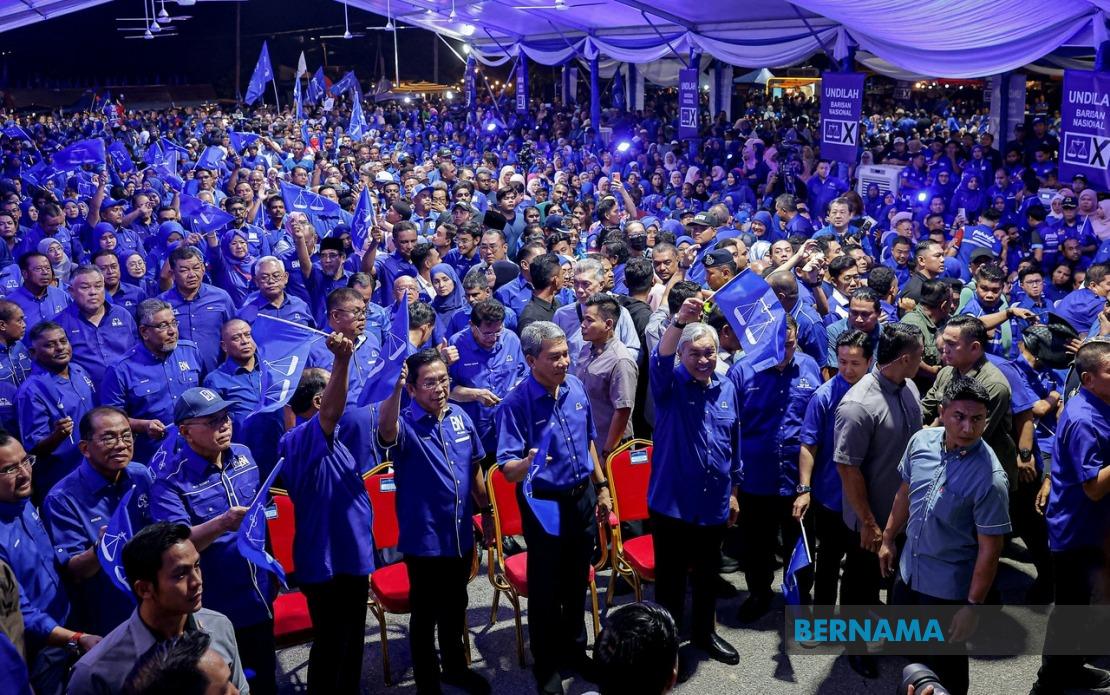
Barisan Nasional's overwhelming triumph in Johor last month has energised the coalition as it readies for another critical electoral battle, with BN chairman Datuk Seri Dr Ahmad Zahid Hamidi framing the Negeri Sembilan state election as the next opportunity to demonstrate public confidence in the governing alliance. Speaking at the launch of BN's electoral machinery in Seremban on Tuesday evening, Ahmad Zahid emphasized that the coalition's dominant performance in Johor—capturing 48 of 56 state seats and securing nearly 60 per cent of the popular vote—reflected voter appetite for political stability and economic competence. The victory marked BN's strongest showing in Johor's electoral history, a feat the BN chairman suggested should motivate party operatives to replicate similar success in Negeri Sembilan just weeks later.
The timing of BN's Johor victory has created momentum heading into a compressed campaign period in Negeri Sembilan, where nomination day arrives on July 20, early voting occurs on July 28, and polling takes place on August 1. Ahmad Zahid called for immediate ground-level mobilisation, urging party members to canvas voters systematically through door-to-door campaigns and sustained community engagement. This grassroots intensity, he argued, would rebuild the coalition's electoral fortitude in a state where it secured only 14 seats in the 2023 state election—a relatively modest haul that underscores the stakes in the upcoming contest. The compression of the electoral calendar means BN must accelerate its campaign operations compared to standard state election cycles, leaving little room for organisational missteps or coordination failures.
Ahmad Zahid attributed BN's Johor success explicitly to internal coalition cohesion and disciplined teamwork among member parties. He stressed that unity within the BN family transcended individual grievances or competitive jostling between parties, emphasising instead a collective commitment to electoral victory. This framing carries particular relevance for Negeri Sembilan, where internal tensions between BN component parties have periodically surfaced and candidacy allocation disputes could potentially fragment support during the campaign phase. By invoking the Johor formula, Ahmad Zahid signalled that Negeri Sembilan's BN machinery must subordinate factional considerations to the overarching objective of expanding the coalition's seat tally beyond its 2023 performance. The message implicitly cautions party members against allowing personal ambitions regarding candidacy to undermine broader campaign effectiveness.
The Deputy Prime Minister addressed a persistent challenge in Malaysian electoral politics: candidates and party workers becoming distracted by candidacy selection processes rather than concentrating on voter outreach and electoral operations. Ahmad Zahid explicitly warned against this pitfall, reminding BN operatives that organisational hierarchy and candidacy designation matter less than the fundamental responsibility to secure voter support at the constituency level. This directive attempts to inoculate the campaign against the demoralisation that occasionally affects party members disappointed by candidate selection outcomes. Whether fielded as a candidate or relegated to supporting roles, Ahmad Zahid suggested, every party member must maintain equivalent commitment to canvassing voters and strengthening BN's standing in their respective areas. The emphasis reflects awareness that internal discord over candidacy issues has previously hampered BN performance in state elections.
The presence of BN deputy chairman Datuk Seri Mohamad Hasan and other coalition leadership at the Paroi stadium event underscored the significance BN leadership assigns to the Negeri Sembilan contest. While not achieving the seismic impact of Johor's August 2023 victory—which represented a crucial BN recovery after the 2022 general election setback—a decisive win in Negeri Sembilan would further consolidate the coalition's resurgence at state level. The state election assumes particular symbolic importance given that it follows immediately after the Johor triumph, allowing BN to build on momentum and demonstrate that the Johor result reflected genuine voter realignment rather than a temporary anomaly. A Negeri Sembilan victory would suggest that BN's rehabilitation under Ahmad Zahid's stewardship has achieved broader traction beyond Johor's specific circumstances.
For Malaysian voters and political observers, the Negeri Sembilan election provides a barometer of whether BN's Johor recovery represents a durable shift in electoral preferences or a one-state phenomenon reflecting Johor-specific dynamics. The state's diverse demographic composition, incorporating urban, suburban, and rural constituencies, offers a more representative test of BN's nationwide appeal than Johor alone. A substantial BN victory would suggest the coalition has recaptured broad-based voter support following its traumatic 2022 general election performance. Conversely, underperformance relative to the Johor benchmark would raise questions about whether the coalition's recent resurgence has genuine staying power or remains confined to particular regions. The timing of the election, compressed into a tight campaign calendar, adds another variable affecting voter mobilisation and public attention levels.
Ahmad Zahid's public confidence regarding BN's prospects in Negeri Sembilan reflects internal coalition assessments about voter sentiment and organisational readiness. The statement that BN would improve on its 2023 result—which saw the coalition secure 14 of 36 state seats—sets a relatively achievable baseline, though genuine strategic ambition would target substantially larger gains. Negeri Sembilan's political landscape has shifted since 2023, with developments at federal and state level potentially reshaping voter preferences and coalition dynamics. The Johor precedent suggests BN possesses the organisational capacity and voter appeal to exceed previous performances, provided campaign execution matches the Johor template of unified coalition operations and intensive voter engagement.
The Negeri Sembilan campaign will test whether BN's Johor formula—emphasising unity, dismissing internal grievances, and focusing relentlessly on electoral performance—translates effectively across different state contexts. Johor's specific circumstances, including its economic dynamism and the personal political standing of key state leaders, may not replicate identically in Negeri Sembilan. The state's political history, demographic composition, and existing voter alignments differ from Johor, potentially complicating efforts to mechanically apply the Johor success template. BN campaign strategists must calibrate their approach to Negeri Sembilan's particular conditions while maintaining the operational discipline and internal discipline that characterised the Johor victory. The challenge lies in adapting rather than simply copying the previous formula.
Regionally, the Negeri Sembilan result will influence broader Southeast Asian perceptions of Malaysian political stability and the durability of BN's political recovery. A successful BN performance would reinforce narratives about the coalition's capacity to govern effectively and adapt to electoral challenges, enhancing Malaysia's political predictability for foreign investors and regional partners. The compressed election timeline and high-stakes nature of the contest add drama to what might otherwise be regarded as a routine state election. For Malaysian political practitioners across the coalition and opposition, the Negeri Sembilan outcome will generate strategic lessons about voter mobilisation, candidate selection, and the portability of electoral success across different state contexts. Ahmad Zahid's emphasis on unity and discipline suggests BN leadership recognises that internal coherence, more than any single leader or campaign message, underpins the coalition's recent electoral recovery.

