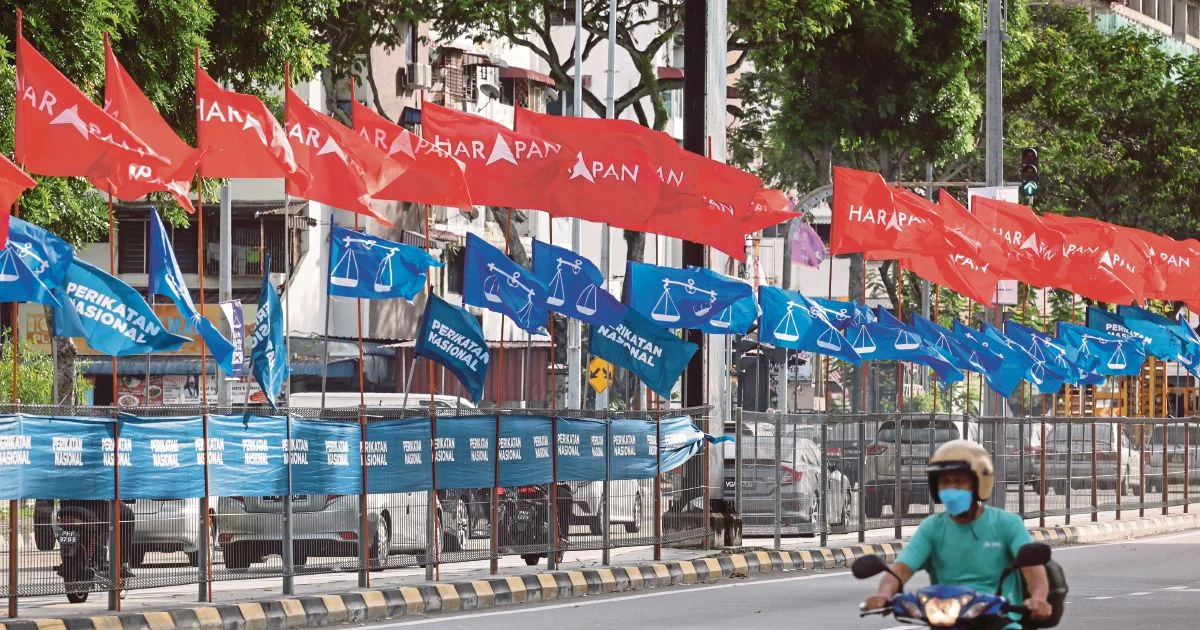
Malaysia's Johor state braces for a politically fractured election next month, with three major coalition blocs preparing for direct contests across nearly 60 per cent of the 56 available legislative seats. Barisan Nasional, the long-dominant ruling coalition, Pakatan Harapan, the reform-minded opposition alliance, and Perikatan Nasional, the Islamist-leaning federal partner, will simultaneously field candidates in 33 constituencies, creating a genuinely competitive electoral environment across much of the state.
The configuration of three-way races across such a significant portion of Johor's electoral map represents a fundamental shift in the state's political dynamics. Historically, Johor has been a BN stronghold, delivering consistent majorities for the federal government's preferred coalition. The emergence of such widespread triangular contests suggests that neither PH nor PN views the state as a secondary theatre, and both are confident enough to challenge BN's dominance directly rather than cede ground through strategic non-contestation.
For Malaysian voters, the Johor outcome carries implications far beyond the state capital. As Malaysia's second-most populous state and a historic powerbase for BN's component parties, particularly UMNO, any significant shift in voting patterns here would reverberate through national politics. A strong PH performance would vindicate the coalition's continued relevance after its 2022 electoral setback, while any gains by PN would signal growing traction for its federal partnership strategy outside its Malay-heartland strongholds.
The decision by PN to contest so aggressively in Johor reflects the coalition's broader ambitions to translate its federal role—as part of Prime Minister Anwar Ibrahim's coalition—into state-level influence. However, this strategy risks internal coalition tensions, since PN's Keadilan Rakyat component and other partners may prioritise cooperation with PH at the state level while maintaining broader national partnership arrangements. The three-way dynamic means that second-place finishes could easily determine which coalition ultimately forms the state government.
Pakatan Harapan's aggressive positioning across 33 seats indicates the coalition remains committed to challenging BN's traditional dominance despite losing federal power in 2022. The alliance's performance in Johor will test whether its reform agenda retains appeal after its controversial 2018-2020 tenure, when internal bickering and policy missteps eroded public confidence. A strengthened PH presence in the state assembly could serve as a platform for rebuilding the coalition's fractured image, particularly in the peninsula's southern economic corridor.
Barisan Nasional's willingness to contest all 33 three-way races suggests the coalition is not retreating defensively but rather accepting that the era of unopposed BN dominance in Johor has ended. This fighting posture reflects confidence among BN strategists that the coalition can retain sufficient seats despite split opposition votes. UMNO and its BN partners will likely emphasise developmental achievements and administrative continuity, contrasting these with what they portray as PH's and PN's unproven state-level credentials.
The concentration of three-way contests in particular areas of Johor likely reflects demographic and political realities. Urban constituencies with younger, more educated voters may feature all three coalitions, while rural traditional strongholds might see bilateral contests. The Johor Strait regions facing Singapore, the port cities, and industrial zones surrounding Kuala Lumpur's metropolitan reach typically display more fluid voting patterns than rural interior constituencies where communal networks and traditional patronage networks remain influential.
Election observers across Southeast Asia are watching Johor closely as a barometer for coalition stability in Malaysia. The competitive landscape demonstrates that despite Malaysia's recent move towards grand coalitions at the federal level, state-level politics remains fundamentally contested terrain. The three-way configuration also illustrates how Malaysian politics has become increasingly dealignment-prone, with voters showing less automatic loyalty to inherited party preferences and more willingness to switch between coalitions across different electoral levels.
The stakes for Johor's business community and industrial zones are particularly high, since state government policies on land development, infrastructure investment, and licensing decisions shape commercial activity across this economically vital region. Investors watching from neighbouring Singapore and international trade partners operating in Johor's ports and manufacturing clusters will be assessing which coalition's victory offers the most stable and pro-business governance framework for the five-year term ahead.
As campaigning intensifies, the three-way nature of the contest means traditional election narratives about government versus opposition may blur considerably. Voters in the 33 competitive seats will face genuine choices rather than binary decisions, potentially increasing both turnout and volatility. Whichever coalition emerges as the plurality winner will need coalition-building skills equal to their campaign effectiveness, since governance will require negotiating support from other elected representatives even beyond their direct seat count.

