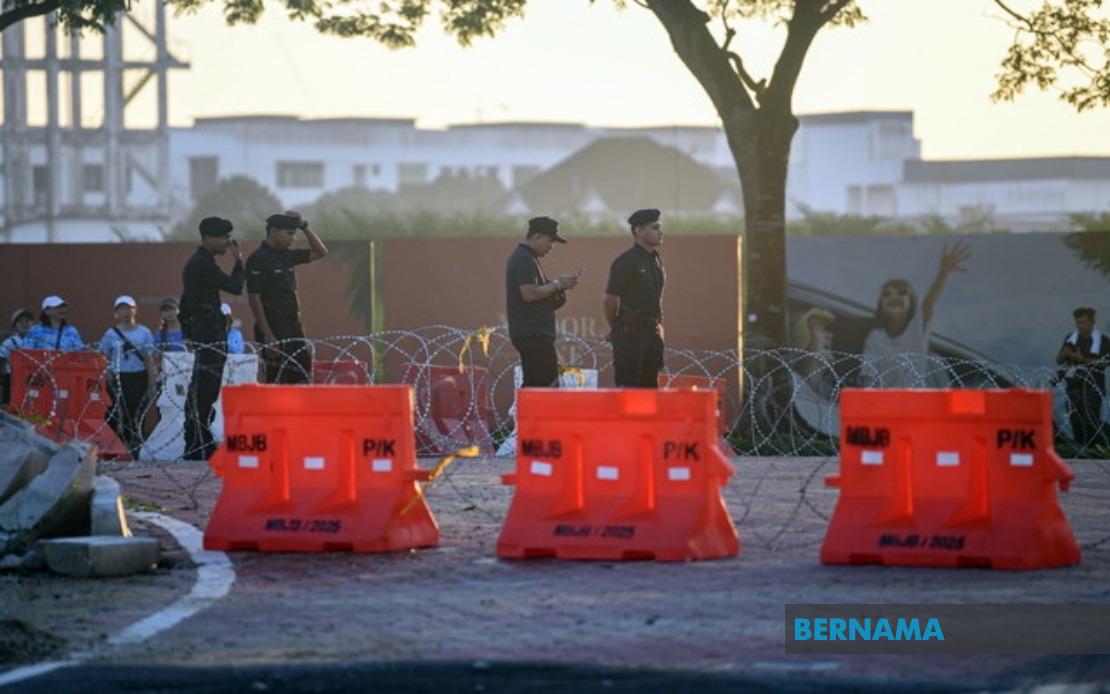
The nomination process for Johor's 16th state election unfolded without disruption on June 27, as clear morning skies and favourable weather conditions provided an ideal backdrop for the significant democratic exercise. Across 56 nomination centres distributed throughout the state, election officials began receiving nomination papers from candidates at 9am, with the process continuing through 10am, while security personnel maintained vigilant presence to ensure orderly proceedings at each venue.
The steady weather conditions that greeted nomination day reflected forecasts from the Malaysian Meteorological Department, which had predicted predominantly dry morning conditions across most Johor districts. However, the weather agency warned of afternoon thunderstorms in scattered areas, a seasonal pattern typical for the peninsula during this period. The clement morning conditions nonetheless facilitated smooth operations, allowing both election officials and candidates to conduct their business without weather-related complications.
Antipation for the electoral contest was evident hours before official proceedings began, with party supporters assembling at numerous centres as early as 7.30am to demonstrate backing for their preferred candidates. The gathering of grassroots supporters underscored the competitive nature of the state election and the enthusiasm mobilised by the participating political parties across Johor's diverse constituencies. The visible turnout of party faithful at nomination venues signalled early momentum building ahead of the formal campaign period.
Election Commission staff undertook methodical final preparations at each centre before the nomination window opened, ensuring all procedural requirements were satisfied and documentation systems were in place. The careful coordination reflected the commission's determination to maintain electoral integrity and transparency throughout the nomination process. Election officers reviewed nomination papers to verify completeness and compliance with legal requirements, a fundamental step in filtering candidates who would proceed to the campaign phase.
The Johor State Legislative Assembly, comprising 56 seats, had been dissolved on June 1 following normal constitutional processes. The Election Commission subsequently announced key dates for the election cycle, designating July 7 for early voting to accommodate personnel unable to vote on polling day, with the main election scheduled for July 11. This timeline provided a focused campaign window of roughly two weeks for candidates and parties to present their platforms to voters.
The registered voter population for this election reflects Johor's substantial size and demographic diversity. According to Election Commission statistics, the state encompasses 2,727,926 registered voters, comprising 2,703,175 ordinary citizens eligible to vote, supplemented by 12,041 military personnel and their spouses, and 12,710 police personnel and their spouses. This composition demonstrates how special voting categories are integrated into state elections, ensuring that uniformed personnel and their families maintain democratic participation despite operational commitments.
For Malaysian observers, the Johor state election represents a significant political barometer given the state's historical importance as a powerhouse within peninsular politics. The state has traditionally served as a testing ground for emerging political trends and coalition dynamics at the national level. The nomination day's smooth execution suggested the Election Commission's operational readiness for the full electoral exercise, though the true test would come during the campaign period itself.
The orderly atmosphere at nomination centres contrasted with occasional contentious nomination days in past elections, reflecting either improved electoral management or perhaps a settling of political tensions compared to previous volatile periods. The professional conduct of election officials and the disciplined behaviour of party supporters indicated a maturing democratic culture, even as competition between parties remained clearly evident.
As Johor moves toward July 11, this state election will be closely monitored not only by local observers but also by the broader Southeast Asian region, given Malaysia's status as a regional democracy. The conduct of electoral processes in major Malaysian states like Johor influences perceptions of institutional quality and democratic health across the region. The smooth nomination proceedings have set a positive tone for what promises to be a contested and significant election.

