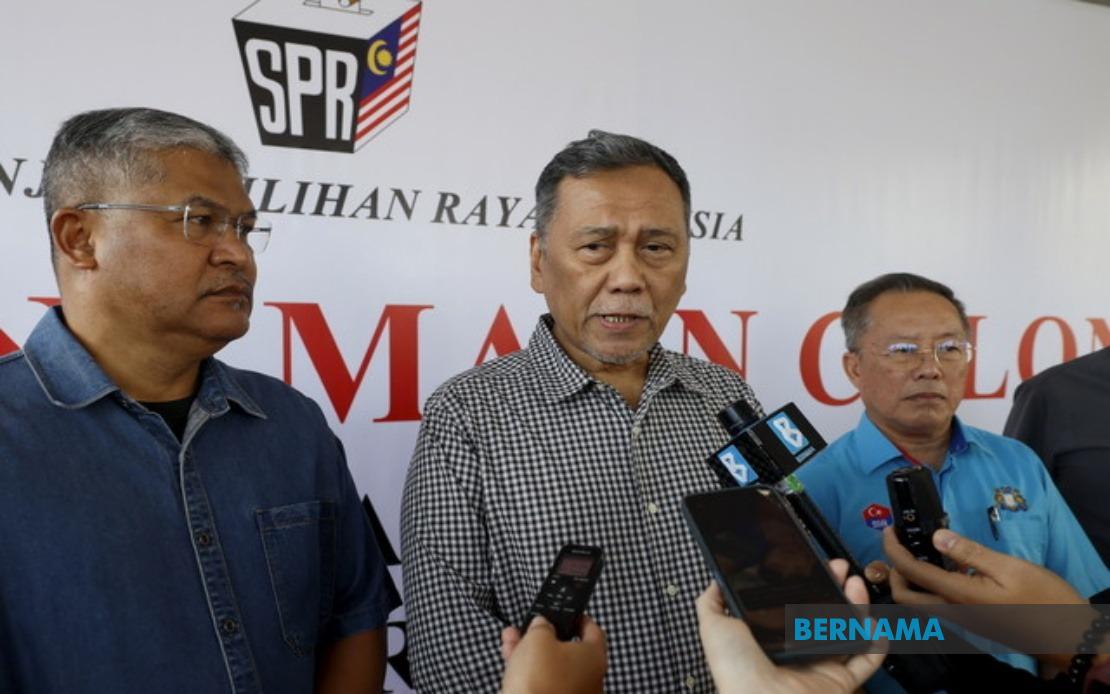
The machinery for Johor's sixteenth state legislative election is moving into high gear, with the Election Commission confirming that one-fifth of prospective candidates have formally committed to their campaigns through deposit payments. The numbers paint a picture of significant political activity across the southern state, though Election Commission chairman Datuk Seri Ramlan Harun cautioned that final candidate registrations would likely swell before the window closes. As of mid-morning on June 26, the EC had distributed 593 nomination forms across returning officer offices throughout Johor, but only 133 individuals had followed through with the mandatory deposit required to lock in their candidacy. The gap between forms distributed and deposits paid underscores the distinction between casual interest and genuine campaign commitment—a pattern familiar in Malaysian electoral cycles where the gap narrows sharply in the final hours before nomination closes.
Ramlan's remarks to reporters reflected the EC's confidence in its preparedness while acknowledging that the real test would come in the final push. He indicated that prospective candidates still had approximately twenty-four hours to finalise their registrations, and the EC expected additional deposits to flow in before the nomination window shut on June 27. The chairman's appeal for early action was not merely procedural; it reflected institutional experience with nomination day congestion and the logistical challenges posed by compressed timelines. The framing of his statement—encouraging candidates to "come earlier"—subtly underscored that delays in the final hours could compromise the smooth operation of the nomination machinery. This has particular relevance for smaller parties and independent candidates, who often lack the organisational infrastructure of larger coalitions and may find themselves scrambling in the closing moments.
Securing the physical and procedural integrity of the nomination process has clearly preoccupied the EC. The agency conducted two consecutive trial runs at all fifty-six nomination centres across Johor before the process commenced, a measure of its determination to minimise friction and prevent the kind of operational mishaps that can generate political recriminations. At the Maharani constituency nomination centre in Muar, returning officer Zainal Eran elaborated on the detailed protocols established to prevent confrontation between rival camps. The designated supporter zones separated by physical barriers represent an institutional response to Malaysia's occasional history of charged nomination day atmospheres. By restricting each nomination team to the candidate, proposer, and a single additional supporter inside the centre, while sequestering broader supporter contingents in demarcated external areas, the EC has attempted to minimise flash points whilst permitting parties to maintain visible presence and demonstrate grassroots support.
Ramlan explicitly urged all political organisations, candidates and supporters to respect these regulations and avoid provocative conduct, a reminder that election administration in Malaysia remains sensitive to the potential for disruption. The emphasis on orderly and peaceful nomination procedures carries particular weight in Johor, a state with significant multicommunal populations and a history of closely-contested electoral battles between the major coalitions. The EC's precautionary approach reflects institutional learning from past elections and an awareness that nomination day incidents, though rare, can establish negative atmospherics that influence broader campaign dynamics.
The battlefield is comprehensively contested. Pakatan Harapan is fielding a complete slate across all fifty-six seats, distributing candidates among its three component parties: PKR, Amanah and DAP. Barisan Nasional is equally committed to contesting every seat, with UMNO providing the bulk of candidates alongside its MCA and MIC partners. Perikatan Nasional, operating through multiple parties including PAS, Bersatu, Malaysian Indian People's Party and Pejuang, is mounting a substantial challenge though not contesting every seat. The Malaysian United Democratic Alliance, Parti Sosialis Malaysia, and the debut electoral contestant Parti Bersama Malaysia will together contest a further twenty seats, adding meaningful complexity to the electoral landscape.
The configuration reveals important strategic calculations. Perikatan Nasional's decision to concentrate resources rather than contest all seats suggests either party capacity limitations or deliberate focus on winnable constituencies. Parti Bersama Malaysia's decision to debut in a state election rather than a federal contest is noteworthy and warrants scrutiny as to whether it reflects confidence in specific regional dynamics or broader positioning ahead of potential national electoral contests. The relatively modest presence of left-leaning and independent voices through Parti Sosialis Malaysia's single candidacy highlights the continuing dominance of Malaysia's ethnic and religious-based party structures, even within Johor's competitive environment.
The electoral calendar established by the Commission provides minimal space for campaigning. With nomination day on June 27, early voting scheduled for July 7, and polling on July 11, candidates have roughly two weeks to mobilise support. This compressed timeframe advantages incumbents and well-resourced organisations while posing challenges to newer entrants and grassroots-dependent campaigns. It also limits the possibility of major campaign momentum shifts and suggests that groundwork conducted prior to the dissolution of the state assembly on June 1 will weigh heavily on outcomes. For voters, the schedule provides little extended exposure to candidate platforms or policy differentiation, potentially concentrating attention on party brand and leadership narratives rather than detailed policy debate.
Johor's electoral significance for Malaysian politics extends beyond the state itself. The peninsula's second-most populous state has historically been contested territory, with Barisan Nasional holding the state for decades before Pakatan Harapan's breakthrough in 2018. The subsequent fluid political dynamics, including transitions in state government and shifting coalition arrangements, have made Johor a bellwether for broader shifts in Malaysian electoral preferences. The participation of multiple coalitions and the comprehensive candidate fielding suggest that all major players view this election as consequential, whether for direct state-level control or as a proving ground for tactics and messaging ahead of potential federal contests.
The EC's role as an institutional actor deserves emphasis. Ramlan's public statements and the Commission's procedural preparations have positioned the EC as actively managing electoral competition to ensure legitimacy and stability. This differs from more minimalist regulatory approaches and reflects a conception of election administration that encompasses not merely technical implementation but also the creation of conditions for peaceful political competition. Whether the designated barriers, trial runs, and explicit behavioural reminders prove sufficient will become apparent over coming weeks, but the Commission has clearly signalled that maintaining electoral integrity encompasses securing the nomination process itself, not merely polling day procedures.

