%22%2F%3E%3C%2Fpattern%3E%3C%2Fdefs%3E%3Crect%20width%3D%22100%25%22%20height%3D%22100%25%22%20fill%3D%22url(%23ph2kn7rg)%22%2F%3E%3Crect%20width%3D%22100%25%22%20height%3D%22100%25%22%20fill%3D%22url(%23ph2kn7rp)%22%2F%3E%3Ctext%20x%3D%2250%25%22%20y%3D%2250%25%22%20text-anchor%3D%22middle%22%20dominant-baseline%3D%22central%22%20fill%3D%22rgba(255%2C255%2C255%2C0.95)%22%20font-family%3D%22Georgia%2C%20'Times%20New%20Roman'%2C%20serif%22%20font-weight%3D%22700%22%20font-size%3D%22272%22%20letter-spacing%3D%22-0.02em%22%3EJohor%3C%2Ftext%3E%3C%2Fsvg%3E)
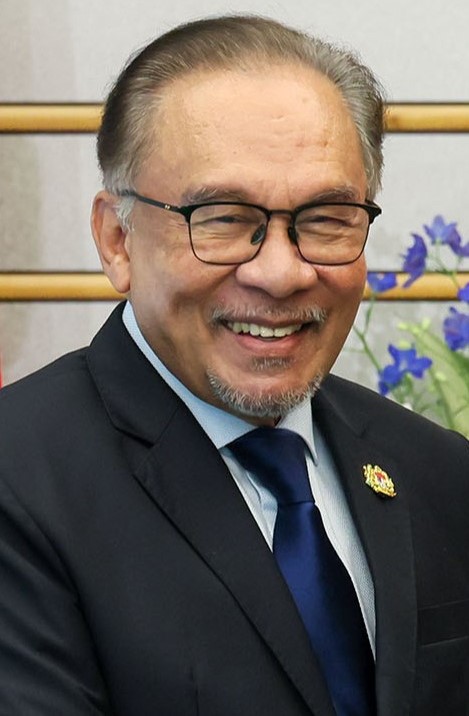
The Regent of Johor, Tunku Mahkota Ismail, received Prime Minister Datuk Seri Anwar Ibrahim in an official audience held in Kuala Lumpur on June 22, marking another significant moment in the deepening relationship between Putrajaya and the nation's most economically vibrant state. The meeting highlighted the collaborative approach both leadership have been pursuing in recent months, signalling unified governance across the federal and state levels at a time when economic recovery and development remain priority concerns for the nation.
Such high-level engagements between the federal executive and royal representatives of major states are carefully choreographed affairs that carry symbolic weight beyond their immediate agenda. In the Malaysian constitutional framework, the Regent serves as the holder of sovereignty within the state during the Sultan's absence or incapacity, making audiences granted by this office an opportunity to formally acknowledge important bilateral matters and policy directions. The timing of this meeting reflected ongoing dialogue between Putrajaya and Johor on matters of mutual interest spanning infrastructure, economic zones, and administrative cooperation.
The relationship between the current federal administration and Johor has evolved considerably over the past two years. The state, home to approximately 4.2 million people and contributing significantly to Malaysia's GDP through its ports, petroleum operations, and manufacturing sectors, commands considerable political and economic influence. Any strengthening of ties between the Prime Minister's office and Johor's leadership carries implications extending far beyond the state's borders, affecting regional development strategies and Malaysia's competitive positioning in Southeast Asia's broader economic landscape.
Prime Minister Anwar's administration has prioritized state-level engagement as a cornerstone of its governance approach, recognizing that effective federal-state collaboration is essential for delivering on its economic and social reform agenda. Johor, in particular, has emerged as a testing ground for several national initiatives, including efforts to modernize port operations and enhance logistics infrastructure. These practical working relationships require consistent reinforcement at the highest levels, which meetings such as this one provide.
The audience served to reaffirm mutual commitment to several ongoing projects and policy frameworks affecting the state's trajectory. Among persistent concerns are the development of greater Kuala Lumpur-Johor economic corridors, optimization of the Port of Tanjung Pelepas as a regional shipping hub, and coordination on cross-border issues with Singapore. Each of these matters benefits from clear communication and alignment between federal and state authorities, reducing bureaucratic friction and accelerating implementation timelines that ultimately determine competitiveness in attracting regional investment.
For Malaysian observers, such meetings also carry broader constitutional significance. The strength of ties between federal leadership and major states influences the stability of Malaysia's complex federal structure, in which significant powers are constitutionally devolved to state governments. When federal-state relations are cordial and collaborative, as they appear to be in this case, it creates an enabling environment for coherent national policymaking. Conversely, tensions between these spheres can create gridlock that harms ordinary citizens through delayed projects and conflicting regulatory environments.
The economic dimensions of strengthened Johor-Putrajaya relations are particularly pertinent for Malaysia's medium-term development strategy. Johor accounts for approximately 9 percent of national GDP and handles a disproportionate share of maritime trade flowing through Malaysian waters. Infrastructure improvements in the state, whether port expansion or railway connectivity enhancements, generate spillover benefits for suppliers and service providers throughout the wider region. Federal investment decisions increasingly consider state-level readiness and support, making regular dialogue essential for mobilizing capital toward productive projects.
International dimensions also underpin the importance of such engagement. Johor's proximity to Singapore creates unique opportunities and challenges in Malaysia's external relations. The state serves as a crucial gateway for regional trade and serves as home to several major multinational corporations' Southeast Asian operations. Federal coordination with state authorities on matters touching international commerce, cross-border logistics, and diplomatic engagement ensures Malaysia projects a coherent face to foreign investors and trading partners who view the country as an integrated economic entity rather than a collection of autonomous regions.
The meeting also reflects the pragmatic evolution of Malaysian politics toward stability-focused governance, moving beyond the zero-sum factional competition that characterized earlier periods. When different political parties or power centers can maintain functional relationships based on shared national interests, the entire system benefits from reduced institutional friction. Johor's development trajectory and Malaysia's overall progress toward high-income status depend fundamentally on this kind of collaborative federalism in practice, not merely in constitutional theory.
Looking forward, such regular consultations between Prime Minister Anwar and Johor's leadership are likely to continue as both seek to demonstrate effective governance and tangible development outcomes to their respective constituencies. The audience granted on June 22 represents neither a novel occurrence nor a particularly contentious negotiation, but rather a normal expression of ongoing cooperation between two critical power centers within Malaysia's political system. How effectively this partnership translates into concrete improvements in state infrastructure, job creation, and quality of life will ultimately determine whether such high-level engagement translates into meaningful progress for Johor's residents and Malaysia's broader economic aspirations.