%22%2F%3E%3C%2Fpattern%3E%3C%2Fdefs%3E%3Crect%20width%3D%22100%25%22%20height%3D%22100%25%22%20fill%3D%22url(%23ph5u8mhg)%22%2F%3E%3Crect%20width%3D%22100%25%22%20height%3D%22100%25%22%20fill%3D%22url(%23ph5u8mhp)%22%2F%3E%3Ctext%20x%3D%2250%25%22%20y%3D%2250%25%22%20text-anchor%3D%22middle%22%20dominant-baseline%3D%22central%22%20fill%3D%22rgba(255%2C255%2C255%2C0.95)%22%20font-family%3D%22Georgia%2C%20'Times%20New%20Roman'%2C%20serif%22%20font-weight%3D%22700%22%20font-size%3D%22272%22%20letter-spacing%3D%22-0.02em%22%3EJohor%3C%2Ftext%3E%3C%2Fsvg%3E)
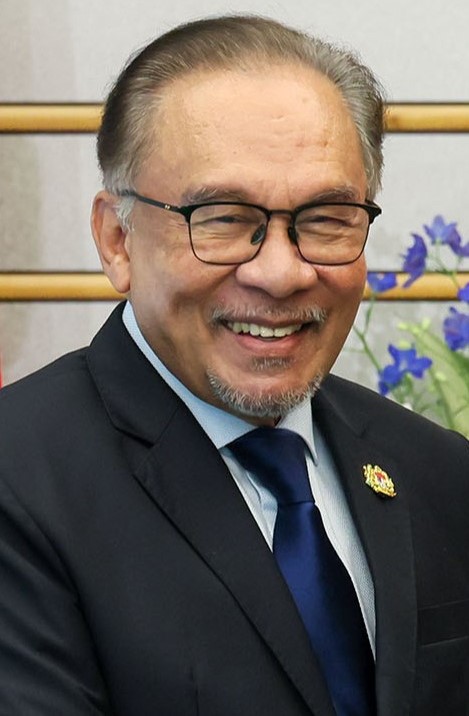
Prime Minister Datuk Seri Anwar Ibrahim has put forward figures suggesting that Johor has benefited substantially from federal redistribution, receiving RM16 billion more from Putrajaya than the state has contributed to the national coffers. The assertion, made during a visit to Tangkak, underscores the government's position on how centralised revenue is being deployed to address regional disparities across the country.
Anwar's statement reflects a broader narrative within the current administration regarding fiscal federalism and intergovernmental transfers. By highlighting positive flows of capital into one of Malaysia's most economically significant states, the Prime Minister seeks to demonstrate that even wealth-generating regions benefit from federal support mechanisms. This approach attempts to position the government as committed to nationwide development rather than favouring certain areas at the expense of others.
The RM16 billion figure carries particular weight in the Malaysian political landscape, where questions about fair resource distribution have long been contentious between federal and state authorities. Johor, as a major contributor to national GDP through its manufacturing, logistics, and petrochemical sectors, might ordinarily be expected to see net outflows to the federal centre. Anwar's claims suggest that despite these economic contributions, the state is receiving substantial developmental funding and welfare allocations that exceed its direct tax base submissions.
This narrative has implications for how other states perceive their standing within the federal system. States with smaller revenue bases have long argued that they require proportionally greater support to meet basic service delivery needs, particularly in rural and underdeveloped areas. Conversely, developed states have sometimes contended that their contributions are disproportionately large relative to the services they receive. Anwar's emphasis on Johor's net receipts attempts to reconcile these competing interests by suggesting that federal mechanisms are functioning to address such imbalances.
The timing of these remarks, made during a state visit, indicates political messaging directed at Johor voters and stakeholders. The state remains strategically important for the federal government's electoral prospects and economic policy agenda. By illustrating tangible fiscal benefits flowing into Johor, Anwar reinforces arguments that federal investment serves the state's development priorities. This becomes particularly relevant given ongoing discussions about infrastructure projects, manufacturing expansion, and the state's role in the broader Southeast Asian regional economy.
Context surrounding federal allocations reveals that distribution mechanisms involve multiple pathways beyond simple revenue transfers. These include development grants, infrastructure financing, educational funding, healthcare provision, and subsidies for essential services. When aggregated, such allocations often significantly exceed direct tax collections from any given region. Understanding Anwar's claim requires recognising that the Prime Minister is likely referencing comprehensive federal spending rather than narrowly defined cash transfers.
The government's emphasis on such figures also reflects efforts to counter perceptions of favouritism or regional neglect that periodically surface in Malaysian politics. Opposition parties and rival administrations occasionally characterise federal allocations as politically motivated or inadequate for their respective areas. By publicising positive transfer data for an economically significant state, Anwar attempts to preempt such criticism and demonstrate systematic, equitable distribution principles.
Interpreting these financial flows requires caution, however. Different methodologies for calculating contributions and receipts can yield substantially varying results. Questions arise about whether figures account for indirect benefits from federal spending on national infrastructure that serves multiple states, how costs are apportioned between state and federal budgets, and whether all federal expenditures within a state are counted toward its receipt total. These technical details significantly influence the narrative surrounding any state's net position.
For Malaysian observers monitoring federal-state relations, Anwar's claim provides one lens through which to examine current fiscal arrangements. The statement suggests the government prioritises demonstrating balanced treatment across regions, at least rhetorically. Whether this translates into sustained policy adjustments that address long-standing grievances about regional inequality remains a question for ongoing evaluation.
The broader context includes Malaysia's development disparities, where certain states maintain significantly higher per capita incomes and infrastructure quality than others. Federal redistribution mechanisms theoretically work to narrow such gaps, though effectiveness remains subject to debate among economists and policymakers. Anwar's invocation of Johor's position implicitly endorses the federal redistribution model while suggesting it is functioning as intended.
For Southeast Asian observers, Malaysia's federal system and revenue distribution practices offer instructive parallels to comparable federal arrangements across the region. How Malaysia manages intergovernmental fiscal relations influences broader regional perspectives on federalism and state autonomy. Anwar's statements contribute to ongoing regional discussions about balancing central authority with state interests while ensuring equitable development outcomes.
Moving forward, the sustainability and equity of Malaysia's federal transfer mechanisms will likely remain subject to political debate and technical scrutiny. Anwar's emphasis on Johor's positive fiscal position establishes a baseline against which future allocations may be measured, potentially constraining future flexibility in distribution decisions. The statement simultaneously reflects confidence in current approaches while signalling the government's commitment to defending federal spending decisions against potential criticism from states seeking greater allocations.