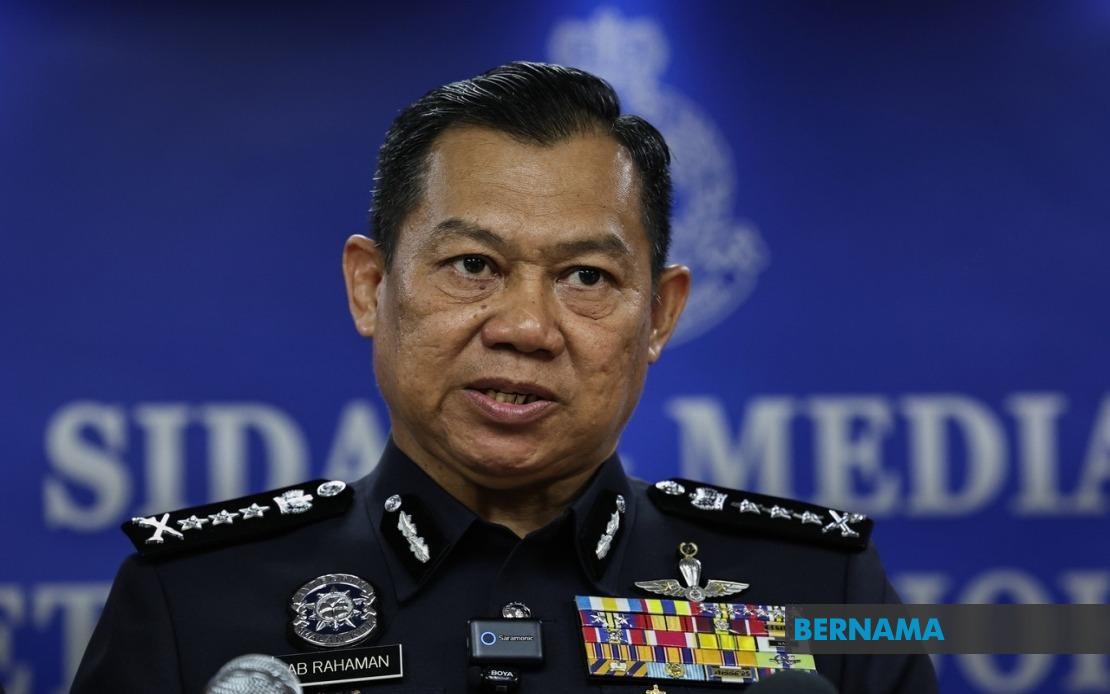
Police in Johor have processed the vast majority of permit applications for campaign activities ahead of the 16th state election, approving 4,053 out of 4,368 requests submitted between June 27 and July 8. The high approval rate reflects the smooth administrative handling of an event that typically generates intense political activity and public engagement across the southern state.
According to Johor police chief Datuk Ab Rahaman Arsad, the force received a concentrated surge of applications in the final stretch of the permit approval window. Between July 7 and 8 alone, police processed 884 applications, clearing 838 of them after verification that they met all stipulated requirements. The rapid processing in these final two days underscores the administrative pressure mounted as the election campaign entered its crucial phases, with political parties and candidates scrambling to secure formal clearances for planned activities.
The rejection of 315 applications—roughly 7 percent of the total—suggests that police applied consistent standards in evaluating compliance with election regulations and public order considerations. While the force did not publicly itemise reasons for rejections, the existence of a filtering mechanism indicates that authorities were actively screening for potential violations before campaign activities could proceed. This gatekeeping function is particularly important in a state like Johor, where political competition remains intense and the potential for disorder must be carefully managed.
Beyond administrative approvals, police enforcement activity during the same period revealed ongoing concerns about election law violations. Between July 7 and 8, authorities received 17 formal reports relating to electoral misconduct and opened four separate investigation files. One investigation centred on alleged promotion of ill-will or hostility under Section 4A(1) of the Election Offences Act 1954, a provision designed to prevent inflammatory rhetoric that could undermine social harmony during politically sensitive periods. Such charges carry particular weight in Malaysia's multi-ethnic context, where inflammatory statements about religion, race, or community relations are treated with urgency by law enforcement.
Additional investigations highlighted the evolving nature of election-related violations in the digital age. Police opened a file under Section 500 of the Penal Code and Section 233 of the Communications and Multimedia Act 1998, addressing alleged defamation and improper use of network facilities. The invocation of the Communications and Multimedia Act reflects authorities' recognition that modern campaigns increasingly operate through social media and digital platforms, where statements can spread rapidly and allegations of misconduct are difficult to contain. The convergence of defamation law with telecommunications regulation suggests police are attempting to establish accountability frameworks for online campaign conduct.
Property crimes also featured in the enforcement tally. Two investigation files were opened under Section 427 of the Penal Code for alleged mischief causing loss or damage to property. These offences, while less politically charged than allegations of incitement, may relate to vandalism of campaign posters, disruption of campaign events, or destruction of election materials—activities that sometimes escalate during periods of political fever.
When aggregated over the entire twelve-day approval window, the enforcement picture becomes clearer. Police received 73 reports of election-related offences and initiated 22 investigation files, figures that translate to roughly six investigations per day. This rate of detected violations is neither trivial nor catastrophic, suggesting that while transgressions occurred, the overall security environment remained manageable. Datuk Ab Rahaman explicitly stated that the security and public order situation throughout the election process had "remained under control," an assessment that carries weight given the police's frontline position in monitoring campaign activities.
The police chief emphasised that all political activities had been continuously monitored to ensure compliance with applicable law and to protect public safety. This assertion is significant because it implies that the police deployment was not passive but actively engaged in surveillance and prevention. The approval process itself became a mechanism for intelligence gathering, with permit applications creating administrative records of planned activities that police could then target for monitoring. The fourteen-day approval period thus served dual purposes: facilitating legitimate campaign activity while simultaneously constructing a surveillance architecture around the election process.
Datuk Ab Rahaman's pledge to address violations "firmly, fairly and with integrity, without compromise" reflects the politically sensitive nature of election law enforcement in Malaysia. Police must project sufficient strength to deter violations and reassure the public that rules are being enforced equally, yet must also avoid perceptions of partisan enforcement that could delegitimise the election itself. The stated commitment to fairness attempts to walk this difficult line, though public confidence in impartial enforcement remains a perennial challenge in Malaysian electoral politics.
For Malaysian voters and observers monitoring election administration, the permit approval figures offer cautionary optimism. The approval of over ninety percent of applications suggests that campaign activities proceeded largely unobstructed, a positive indicator for democratic participation. Yet the existence of investigation files reminds that elections remain spaces where tempers flare, rules are broken, and authorities must maintain vigilance. The Johor experience offers insights for other states planning electoral exercises, demonstrating both the logistics required to manage large-scale campaign activity and the persistent monitoring needed to protect election integrity.

