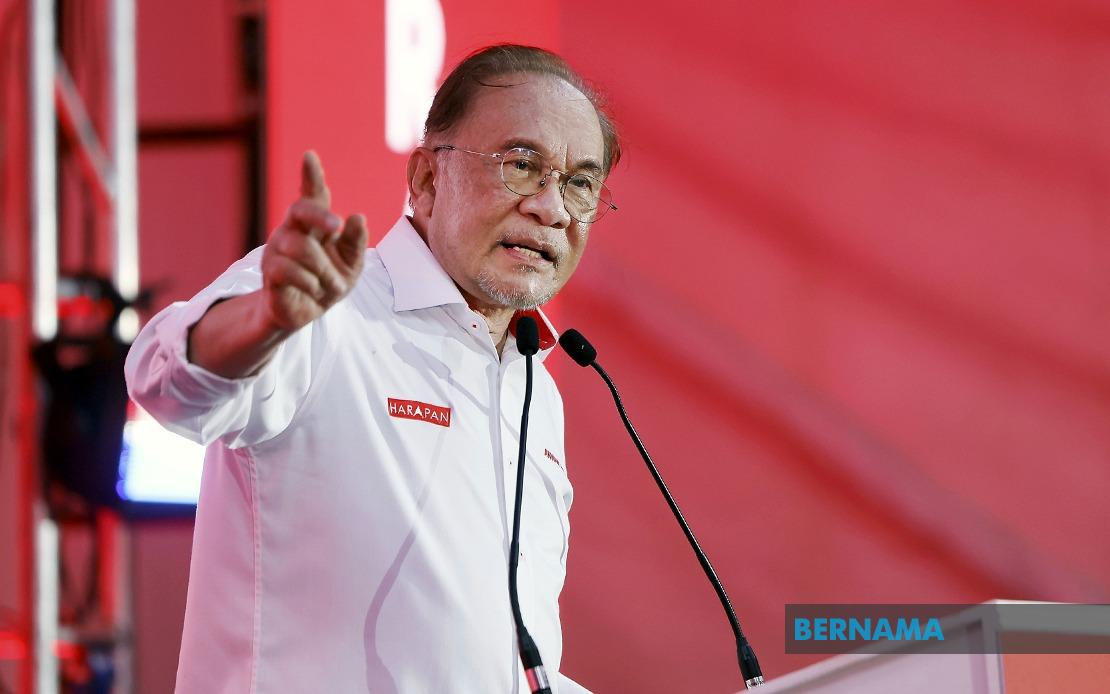
Prime Minister Datuk Seri Anwar Ibrahim has emphasised that Johor's voters require a different calibre of elected representative—individuals combining intellectual rigour with decisive action and genuine empathy for constituent concerns. Speaking in Johor Bahru on July 4, the Pakatan Harapan chairman argued that the coalition remained best positioned to amplify the voice of ordinary Johoreans while championing the state's development agenda and advancing its regional standing within Malaysia.
Anwar's remarks came as PH formally began its election campaign across the state, with the coalition determined to demonstrate that it can deliver both effective governance and inclusive growth. The messaging reflected a deliberate pivot away from conventional partisan rhetoric towards a focus on competence, integrity, and the practical skills required to navigate complex policy decisions that affect Johor's 4.1 million residents. His appeal resonated across demographic lines, stressing that successful development depends on leaders capable of building consensus among Malays, Chinese, Indians and other communities while advancing shared prosperity.
The 16th Johor state election will determine representation across 56 constituencies, with voting scheduled for July 11 and early voting on July 7. PH has mounted a comprehensive challenge by fielding candidates in every seat, fielding 20 from PKR, 19 from Amanah, and 17 from DAP. This strategy contrasts with a highly fragmented overall ballot, where 172 candidates in total are competing—indicating the diversity of political forces contesting for influence in Malaysia's southern industrial heartland.
Anwar's campaign strategy involved an intensive opening day, during which he participated in seven separate community engagements throughout Johor. These events were designed to bypass traditional media structures and establish direct connections with voters through town halls, informal discussions, and local organisation activities. The emphasis on grassroots presence reflects PH's understanding that state elections in Malaysia increasingly turn on local issues—infrastructure quality, employment opportunities, environmental management, and the responsiveness of district representatives—rather than national narratives alone.
The composition of PH's candidate slate carries particular significance for Johor's political dynamics. The inclusion of substantial representation from PKR, Amanah, and DAP signals that the coalition views the state as genuinely competitive and worthy of substantial organisational investment. For a state that has oscillated between different political coalitions and where Barisan Nasional maintained dominance for decades until recent shifts, PH's full-slate approach represents confidence in its ability to challenge entrenched power structures and offer voters a credible alternative.
Johor holds outsized importance within Malaysian politics due to its economic weight, population, and historical role as a political bellwether. The state accounts for roughly 12 percent of Malaysia's population and serves as a crucial manufacturing and logistics hub connecting Malaysia to Singapore. Its political trajectory therefore influences national coalitional mathematics and signals broader patterns of voter sentiment. A strong PH performance would reinforce the coalition's claim to legitimacy and strengthen its negotiating position ahead of potential federal developments.
The campaign's emphasis on leadership quality reflects deeper concerns about the standard of representation in Malaysian politics. Anwar's call for elected representatives who combine analytical capability with courage to make unpopular decisions, and genuine connection to constituent sentiment, implicitly critiques both the technical capacity and responsiveness of existing political structures. This messaging appeals particularly to younger, educated voters and urban constituencies increasingly frustrated with performative politics and seeking substantive solutions to issues like rising cost of living, inadequate public transport, and deteriorating environmental conditions.
Johor's electoral dynamics have shifted considerably in recent years, with the rise of competing political forces and declining voter alignment with traditional parties. The 172 candidates competing for 56 seats reflects this fragmentation, with independent candidates, smaller parties, and insurgent movements challenging the binary choice between BN and PH that once dominated state politics. PH's decision to field comprehensive coverage indicates recognition that even second-place or third-place finishes in multiple constituencies could cumulatively prevent it from assembling a government.
The coalition's messaging strategy also attempts to reframe the election around governance outcomes rather than identity politics or factional disputes. By highlighting the need for leaders who understand how to set priorities, make difficult choices, and build consensus across different communities, Anwar positions PH as the pragmatic choice for voters concerned with developmental issues. This approach carries particular resonance in Johor, where the state government's capacity to attract investment, develop infrastructure, and create employment remains contested between different political coalitions.
Anwar's personal campaigning presence signals the national government's commitment to the Johor contest, despite PH controlling federal power. This suggests internal coalition calculations indicate that losing Johor would carry significant political and symbolic costs, potentially emboldening opposition forces and complicating the national parliamentary landscape. The Prime Minister's direct involvement in seven campaign events on the opening day demonstrates that PH treats this election as higher-stakes than a routine state poll.
Looking beyond the July 11 polling date, the Johor election will provide early indicators of whether PH can consolidate support in key states or whether its federal government status has provoked voter backlash. The results will also clarify whether the coalition's emphasis on competence-based campaigning resonates with Johor voters or whether traditional demographic and factional considerations remain predominant. For Malaysian politics broadly, the election represents a test of whether contemporary voters prioritise governance quality and pragmatic representation over party loyalty and historical voting patterns.

