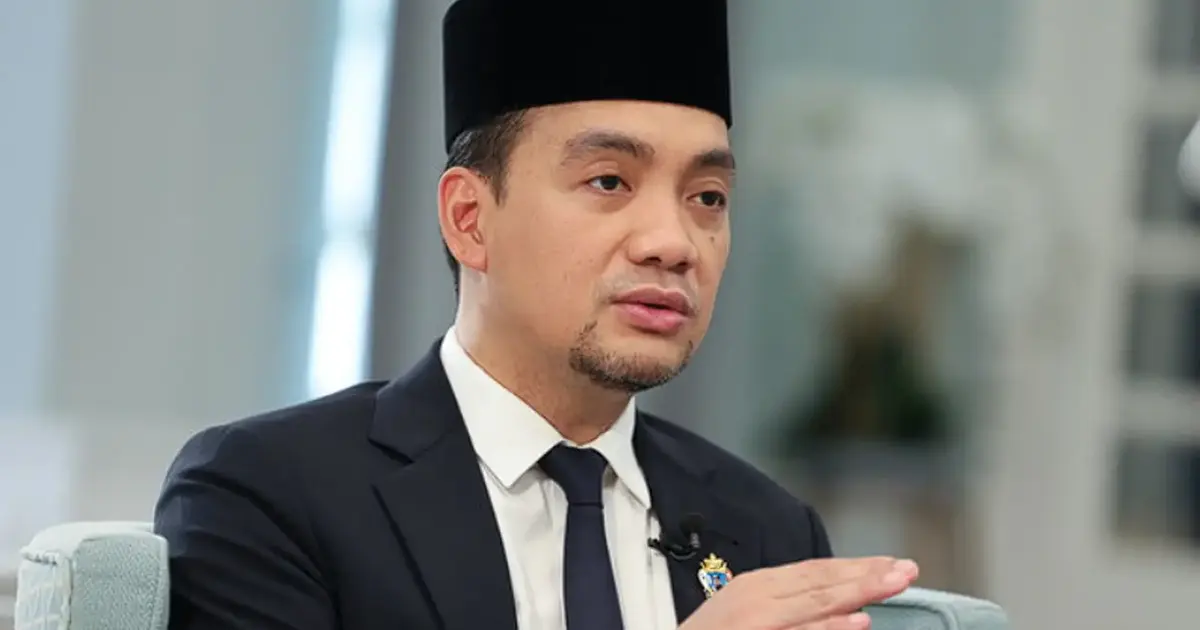
Johor's caretaker menteri besar Onn Hafiz has moved to reassure stakeholders that the palace's role in approving the state assembly's dissolution adheres strictly to constitutional boundaries and does not constitute political meddling in the electoral process. His statement addresses lingering concerns about the scope of royal authority in matters of parliamentary procedure, a sensitive topic in Malaysian politics where the balance between institutional powers remains closely watched.
The distinction Onn Hafiz draws between constitutional duty and political interference carries particular weight in the Malaysian context, where royal institutions occupy a unique constitutional position. Unlike executive interventions that blur democratic processes, royal assent to parliamentary dissolution represents a formal, legally required step mandated by the Federal Constitution and state-level constitutional provisions. This procedural clarity becomes especially important when public discourse sometimes conflates ceremonial approval with substantive decision-making power.
In Malaysia's federal system, state assemblies operate within constitutional frameworks that allocate specific roles to different branches of government. The menteri besar, as the chief executive of a state, holds the authority to advise the ruler on matters including the dissolution of the assembly. However, the ruler's formal assent, though typically a constitutional formality, remains a necessary legal requirement for such actions to take effect. Onn Hafiz's clarification underscores that this requirement reflects the constitutional architecture rather than indicating unilateral palace authority over legislative timing or political outcomes.
The timing of Onn Hafiz's remarks suggests an awareness of potential misconceptions circulating among political observers and the public. In recent years, Malaysian politics has witnessed instances where royal involvement in state-level decisions attracted scrutiny and commentary about institutional boundaries. By emphasizing the constitutional dimension of royal assent, the menteri besar appears to preempt criticism that might frame the palace's involvement as overstepping its designated role. This proactive communication strategy reflects professional governance practice in managing public perception of institutional interactions.
Johor's political landscape adds contextual significance to this statement. As the country's second-largest state by population and a crucial economic hub, developments within its political framework carry implications for broader Malaysian governance. The state has historically served as a testing ground for constitutional and political precedents, making clarifications about institutional roles particularly noteworthy. Onn Hafiz's position as caretaker menteri besar adds another layer of relevance, as his tenure represents a transitional administrative phase where established procedures become especially important for legitimacy.
The constitutional framework governing state assemblies involves multiple layers of procedure, each serving distinct purposes within the democratic system. A menteri besar seeking dissolution must first formally advise the ruler that the assembly should be dissolved. The ruler then grants or withholds assent based on constitutional grounds, not political preferences. This multi-stage process creates checks and balances preventing any single actor from unilaterally determining electoral timing. Onn Hafiz's emphasis on this procedural integrity highlights how constitutional monarchies function precisely to prevent concentration of power in executive hands.
From a Southeast Asian perspective, Malaysia's constitutional monarchy model differs from neighboring democracies in ways that bear examination. While some regional peers operate as fully elected democracies with no hereditary elements in their constitutional frameworks, Malaysia's system deliberately incorporates the Malay sultans as constitutional safeguards. This design reflects historical compromises and current political realities, requiring all significant actors to respect institutional boundaries. Onn Hafiz's statement essentially reaffirms this constitutional bargain by demonstrating how institutions work within their prescribed limits.
The menteri besar's communication also addresses potential confusion between formal power and substantive influence. While royal assent is constitutionally required, it operates within defined parameters. A ruler cannot, for instance, refuse assent arbitrarily or for partisan political reasons—doing so would constitute a breach of constitutional duty. The formal nature of this approval actually constrains rather than expands palace power, as it ties the institution to constitutional obligations rather than permitting unfettered discretion. Onn Hafiz appears to be underlining this paradox: precisely because royal assent is required, it cannot be used as a tool for political manipulation.
The distinction between constitutional process and political interference extends beyond abstract principle to practical governance. Elections carried out following proper constitutional procedures enjoy legitimacy stemming from procedural correctness, regardless of outcomes. When public figures like Onn Hafiz explicitly confirm adherence to these procedures, they contribute to public confidence in electoral integrity. This becomes increasingly important in contemporary Malaysia, where trust in institutions faces challenges from various quarters. Reassuring the public that dissolution follows constitutional pathways rather than backroom arrangements strengthens democratic norms.
Onn Hafiz's statement also implicitly addresses opposition voices that might otherwise characterize the assembly's dissolution in more sinister terms. By framing the process as routine constitutional procedure, he removes ammunition from those seeking to present it as an irregular or concerning development. This rhetorical positioning reflects sophisticated political communication, where shaping how events are perceived constitutes an important dimension of governance. For observers in other Southeast Asian nations watching Malaysian politics, such explanations offer insight into how constitutional monarchies balance tradition with contemporary democratic expectations.
Looking forward, the clarification may establish a precedent for how Johor and other Malaysian states handle such situations. As future menteri besars navigate the dissolution process, Onn Hafiz's explicit confirmation that royal assent represents constitutional requirement rather than political intervention provides a template for transparent governance. This approach potentially reduces future disputes about institutional propriety by establishing clear parameters from the outset.
Ultimately, Onn Hafiz's defense of royal assent as constitutional process reflects a broader Malaysian commitment to institutional frameworks that have evolved since independence. While these frameworks occasionally generate debate about the precise balance of powers, state-level officials reaffirming their operation contributes to political stability. The menteri besar's statement thus serves multiple audiences simultaneously: reassuring those concerned about institutional overreach, reinforcing proper procedure among officials, and signaling to the broader public that Malaysia's system of checks and balances remains functional.

