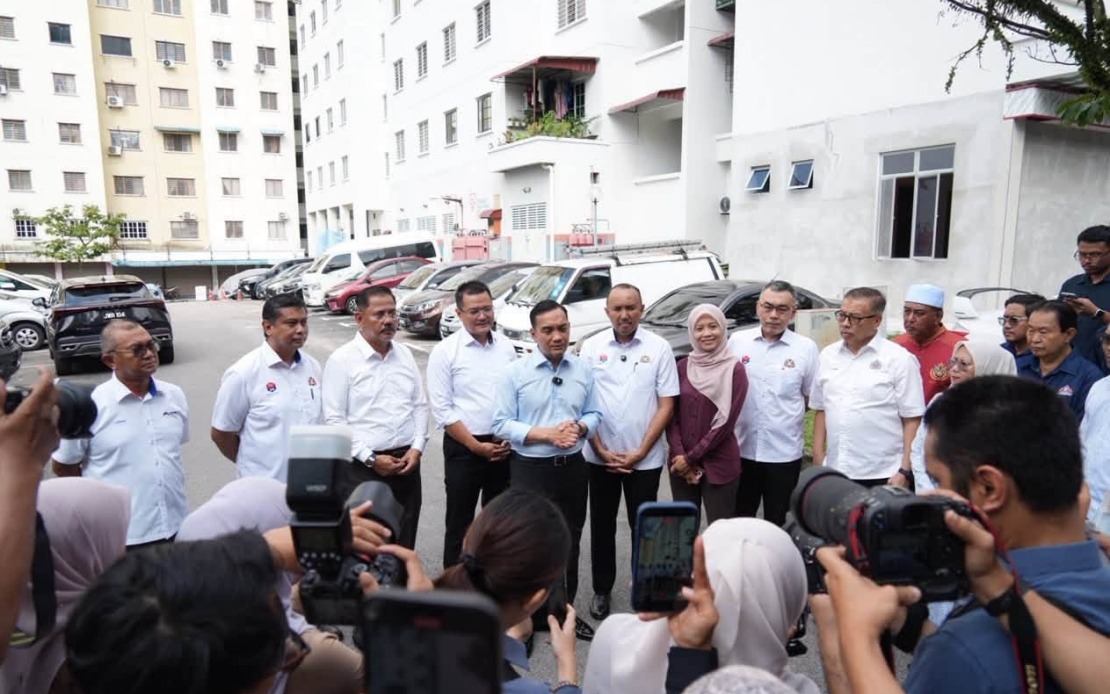
The Johor state government has unveiled an ambitious RM50 million programme to refresh low-cost and public housing estates throughout the state, marking a significant commitment to enhancing the residential environment for economically disadvantaged communities. The initiative targets 170 housing blocks containing 11,693 residential units situated at 26 strategic locations across Johor, with the work expected to directly improve living conditions for approximately 46,772 residents. Housing and Local Government Committee chairman Datuk Mohd Jafni Md Shukor, who oversaw the project's launch at Desa Muafakat Apartments alongside Menteri Besar Datuk Onn Hafiz Ghazi, framed the initiative as part of a broader state strategy to demonstrate tangible commitment to lower-income households.
While the project may initially appear to focus on cosmetic improvements, state officials argue that the environmental and psychological benefits extend considerably beyond surface-level aesthetics. Mohd Jafni emphasised that a well-maintained, visually appealing residential environment contributes meaningfully to residents' sense of dignity and belonging, strengthening communal bonds while signalling that their welfare remains central to government priorities. This framing reflects a growing recognition among Malaysian policymakers that investments in housing aesthetics and maintenance can yield returns in social cohesion and community satisfaction that transcend purely material metrics. The programme represents a deliberate investment in intangible dimensions of quality of life that often influence residents' perceptions of state responsiveness.
Implementation of the repainting initiative has been entrusted to a coordinated network of state agencies and municipal authorities, including the Johor State Housing Development Corporation (PKPJ), the Local Government Division of the Johor State Secretary's Office, and four city and municipal councils: Johor Bahru City Council (MBJB), Iskandar Puteri City Council (MBIP), Pasir Gudang City Council (MBPG), and Kulai Municipal Council (MPKu). This multi-agency approach acknowledges the complexity of managing housing maintenance across geographically dispersed locations with varying administrative jurisdictions. The distributed implementation structure also creates opportunities for knowledge-sharing and coordination between state-level planning bodies and municipal-level execution teams, potentially improving efficiency and reducing duplication of efforts.
Beyond the repainting initiative itself, officials identified additional infrastructure concerns requiring attention at the inspected site. During their visit to Desa Muafakat Apartments, Mohd Jafni and the Menteri Besar were briefed on slope subsidence issues affecting the apartment parking area and deterioration of internal road networks within the housing complex. These concerns underscore how residential compounds frequently face multiple overlapping maintenance challenges that demand coordinated responses spanning aesthetic improvements, structural remediation, and infrastructure repair. The identification of these issues during the programme launch suggests that the state government is adopting a more holistic approach to housing maintenance rather than addressing isolated problems in isolation.
The inspection also included a visit to a construction site for Tabika KEMAS Bangsa Johor, another facility within the Desa Muafakat Apartments complex. This broader engagement with community infrastructure development demonstrates that housing improvement efforts increasingly encompass complementary social services and childcare facilities that enhance overall residential quality. The proximity of educational and care facilities to residential units has become an important consideration in assessing living conditions for lower-income families, many of whom depend on affordable childcare options to enable workforce participation.
State authorities have established explicit quality standards for all contracted work, with officials emphasising that completed projects must demonstrate sustained durability rather than superficial finish. Mohd Jafni cautioned against accepting work that appears satisfactory upon completion but rapidly deteriorates or generates additional problems for residents, a concern that reflects previous experiences with maintenance projects that failed to deliver lasting benefits. All implementing agencies and contractors have been instructed to adhere strictly to stipulated schedules, technical specifications, and quality benchmarks, with emphasis on maintaining rigorous safety protocols and site cleanliness throughout project execution.
This programme carries particular relevance for Southeast Asian housing policy as a case study in low-cost residential maintenance. Malaysia's housing sector has long grappled with managing the deterioration of aging low-cost and medium-cost housing estates, many of which were constructed during rapid urbanisation periods with limited budget allocation for subsequent maintenance and renewal. The RM50 million Johor initiative suggests growing recognition that preventative maintenance and periodic aesthetic renewal programmes constitute cost-effective approaches to extending the functional lifespan of public and semi-public housing stock.
For Malaysian property owners and residents in lower-income housing, the programme offers practical reassurance that state governments remain engaged in maintaining residential infrastructure beyond initial construction. The visibility of such initiatives, particularly when accompanied by high-level government participation and media coverage, can strengthen public confidence in institutional responsiveness to community needs. This psychological dimension of housing policy has received insufficient attention in housing literature, yet clearly influences residents' satisfaction and civic engagement.
The Johor initiative also reflects broader trends in Malaysian state governance toward outcomes-based measurement and community-centred policy framing. Rather than emphasising procedural compliance or financial expenditure alone, officials articulated the programme's objectives in terms of tangible impacts on residents' lived experience and social cohesion. This shift toward outcomes-oriented communication may signal evolving expectations among both policymakers and citizens regarding government accountability for delivering measurable improvements in quality of life.

