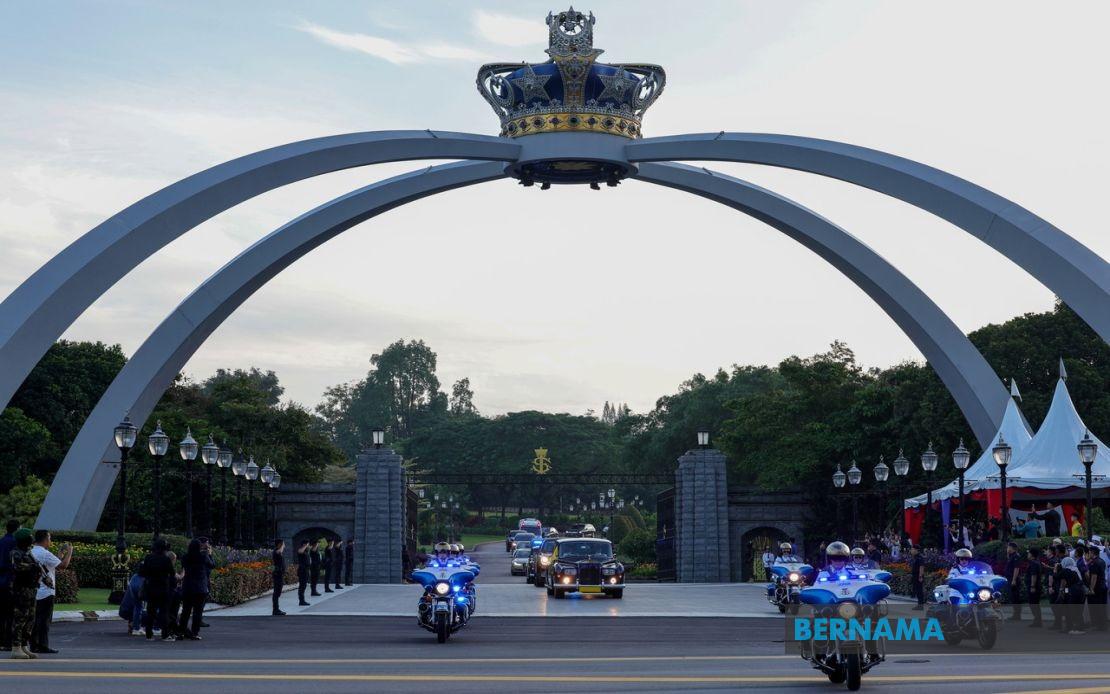
The highly anticipated swearing-in ceremony for Johor's State Executive Council members has been shifted from Friday to Saturday, in a move that caught observers off guard as the newly-formed administration under returning Menteri Besar Datuk Onn Hafiz Ghazi prepares to take office. The formal proceedings, which would have taken place at the iconic Istana Bukit Serene in Johor Bahru, were announced through an early morning notice to the press with no explanation provided for the last-minute change of schedule.
The delay comes just days after Onn Hafiz's swearing-in ceremony last Sunday, where he secured his second consecutive term as Johor's chief minister following Barisan Nasional's commanding performance in the state election held the previous Saturday. The electoral outcome delivered a decisive mandate to the coalition, which captured 48 of the 56 available seats in the Johor State Legislative Assembly, reinforcing the BN's grip on one of Malaysia's most economically significant states. The scale of this victory provides Onn Hafiz with considerable political capital as he forms his new cabinet, though the postponement suggests potential administrative complexities behind the scenes.
The ceremony was originally scheduled to proceed under the presence of Tunku Mahkota Ismail, the Regent of Johor, reflecting the constitutional significance accorded to such proceedings in Malaysia's federal structure. Beyond the regent's attendance, the event was expected to draw other senior figures instrumental in state governance, including Johor Royal Council president Datuk Dr Rahim Ramli and State Secretary Datuk Mohammed Ridha Abd Kadir. These participants represent the institutional pillars that bridge the royal establishment with the civil service, a relationship that remains foundational to Malaysia's constitutional monarchy system.
For Malaysian political watchers, the postponement raises subtle questions about the mechanics of state-level administration during transitions. While such delays occasionally occur due to logistical considerations or coordination challenges between multiple government offices and royal offices, the absence of any official clarification reflects a pattern of minimal transparency that has become routine in Malaysian politics. Whether the postponement stems from scheduling conflicts, last-minute changes to the cabinet composition, or procedural considerations remains unknown to the public domain.
The Johor state election result represents a significant political realignment in the peninsula's southern corridor. Barisan Nasional's resounding victory—capturing nearly 86 percent of available seats—stands in sharp contrast to the coalition's turbulent years nationally, where it faced serious electoral challenges at the federal level. Onn Hafiz, who represents the Machap state assembly seat, has become a flagship figure for BN's state-level resilience, particularly following Datuk Seri Ismail Sabri Yaakob's decision to step back from leading the coalition after its federal election losses.
The formation of a new executive council carries practical implications for Johor's developmental trajectory and federal-state relations. As one of Malaysia's primary economic engines, Johor's state administration influences investment flows, infrastructure development, and commerce affecting the broader Southeast Asian region. The specific composition of the new Exco—information that will be publicly revealed once the swearing-in concludes—will signal Onn Hafiz's governing priorities and his approach to balancing different factions within the BN coalition at the state level.
The timing of this postponement also underscores the coordination challenges inherent in Malaysia's system of constitutional monarchy combined with democratic governance. Royal ceremonies must accommodate the schedules and preferences of members of the sultanate while ensuring they align with administrative processes controlled by the elected government. The relatively brief delay from Friday to Saturday suggests these coordination issues were manageable, though they were significant enough to warrant a change in timing.
For the broader Malaysian political landscape, Johor's stability under BN represents a counterweight to shifting dynamics in other states where opposition coalitions have gained ground. The state's consistent support for the ruling coalition has made it a reliable source of parliamentary seats and a platform for developing national leaders. Onn Hafiz's return for a second term, achieved with such a commanding majority, positions him as a rising figure within BN's increasingly important state-focused leadership structure as the coalition rebuilds its national presence.
The new Exco members themselves—whose identities and portfolios will become clear after Saturday's ceremony—represent a critical bridge between electoral promises and on-ground implementation. In Malaysian governance, the executive council structure serves as the primary mechanism through which state-level policy is formulated and executed, handling matters ranging from land and agriculture to local government and community development. The calibre and experience of those appointed to these positions will significantly influence how effectively the state government translates its electoral mandate into tangible outcomes.
The postponement, while administratively minor, occurs against the backdrop of heightened political competition across Malaysia's states. As the federal government grapples with coalition dynamics and factional tensions, state governments have become increasingly important laboratories for political innovation and policy experimentation. Johor's choice of governance approach under Onn Hafiz's second term may therefore carry implications extending well beyond the state's own borders, influencing how BN conceptualizes state governance and federal-state relations more broadly.

