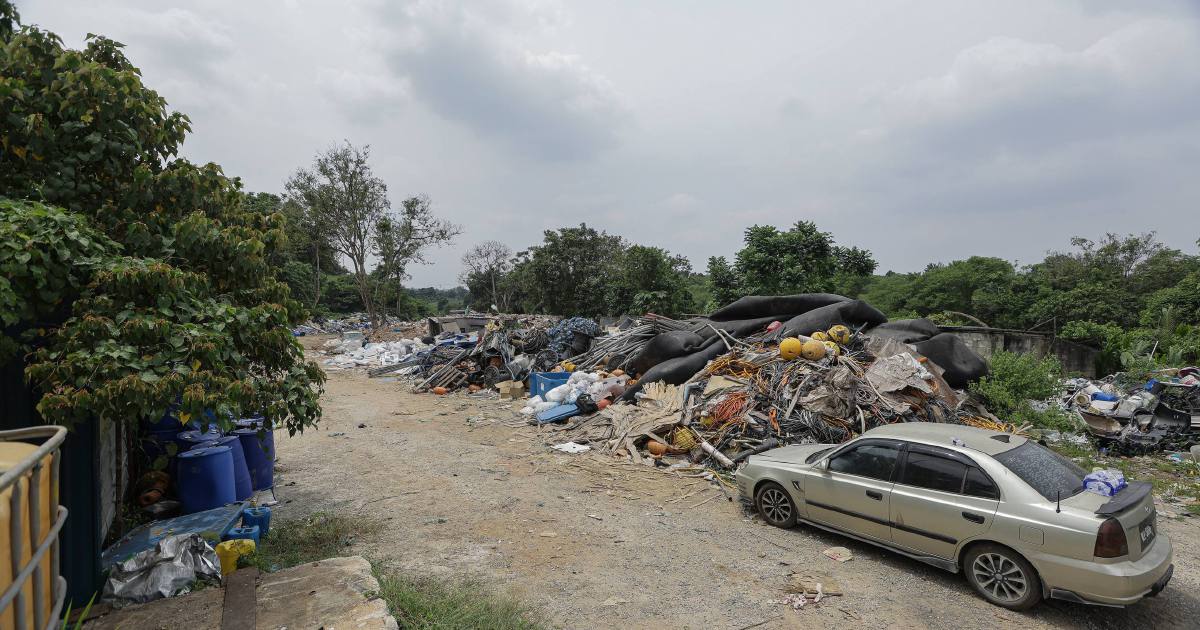
Johor authorities are stepping up enforcement action following allegations that Singapore construction waste has been illicitly disposed of within Pontian district, prompting the formation of a dedicated multi-agency task force to conduct thorough investigations across multiple locations in the southern state.
The establishment of this coordinated investigation unit reflects growing concern among Malaysian environmental and local authorities about potential cross-border waste trafficking. Such arrangements typically bring together representatives from state environmental departments, local council enforcement teams, customs, immigration, and policing units to share intelligence, coordinate surveillance, and compile evidence that could withstand legal scrutiny.
Pontian, positioned strategically along Malaysia's southern border, has historically featured as a focal point for environmental enforcement efforts, given its proximity to Singapore and the volume of commercial activity that flows across the two jurisdictions. The district's location makes it vulnerable to both legal waste management challenges and illicit disposal schemes that exploit regulatory gaps between neighbouring authorities.
Construction waste trafficking represents a persistent headache for environmental regulators across Southeast Asia. Unlike conventional hazardous materials, construction debris—including concrete, timber, metals, and mixed rubble—can appear innocuous but often contains contaminants that pose risks to soil quality, water systems, and public health. The economics of proper disposal in a densely developed city-state like Singapore, where landfill capacity commands premium pricing, create incentives for cost-cutting operators to seek cheaper dumping alternatives in neighbouring jurisdictions.
The allegations in Pontian occur against a backdrop of mounting bilateral scrutiny of environmental management practices. Malaysia and Singapore have increasingly emphasised formal cooperation on transboundary pollution issues, recognising that environmental degradation in one jurisdiction inevitably affects the other through soil seepage, water movement, and atmospheric circulation. Task forces of this nature serve both symbolic and practical purposes—they signal political commitment to enforcement whilst gathering the multidisciplinary expertise required to trace waste origins and establish liability.
For Malaysian businesses and waste management operators in Johor, the investigation carries significant implications. Legitimate construction waste handlers fear reputational damage through guilt-by-association effects, whilst genuine compliance costs become magnified if enforcement pressure creates uncertainty about which disposal channels remain permissible. Industry participants therefore have strong incentives to cooperate with investigations, both to clear their names and to level competitive playing fields against operators cutting corners through illegal dumping.
The investigation's scope—encompassing several dumping locations rather than isolated incidents—suggests a pattern rather than opportunistic malpractice. Systematic disposal at multiple sites typically indicates involvement of sophisticated actors with established networks, transportation capacity, and financial incentives to continue operations. Task force investigators will likely focus on tracing supply chains, identifying financial transactions, and reconstructing the movement of waste shipments across the border.
Successful prosecution of construction waste trafficking typically hinges on documentary evidence—shipping manifests, invoices, electronic records—rather than reliance on site contamination analysis alone. The multi-agency model enables cross-jurisdictional comparison of records and coordination with Singapore authorities if that becomes necessary. Such cooperation, whilst sometimes complicated by bilateral protocols, has become increasingly common where clear environmental violations occur.
The timing of this investigation also reflects broader Malaysian policy directions. Recent administrations have signalled commitment to strengthening environmental governance and reducing Malaysia's vulnerability to becoming a dumping ground for neighbouring regions' waste. Johor, as the state most directly affected by cross-border waste movements, faces particular pressure to demonstrate effective enforcement.
For Pontian residents and agricultural stakeholders in surrounding areas, the investigation offers potential relief from ongoing contamination concerns. Construction waste dumping can impair land values, complicate agricultural productivity, and create long-term soil management challenges. Successful investigation and enforcement could restore confidence in local environmental stewardship and establish deterrents against future illegal disposal attempts.
The task force's investigations will likely require several months to yield concrete findings. Authorities will need to establish waste origins definitively, identify responsible parties, gather sufficient evidence for prosecutorial action, and potentially coordinate with Singapore counterparts. The success of this initiative will serve as a barometer for Malaysia's capacity to combat sophisticated transboundary environmental violations and protect its territory from becoming an easy disposal destination for waste originating from wealthier neighbouring jurisdictions.

