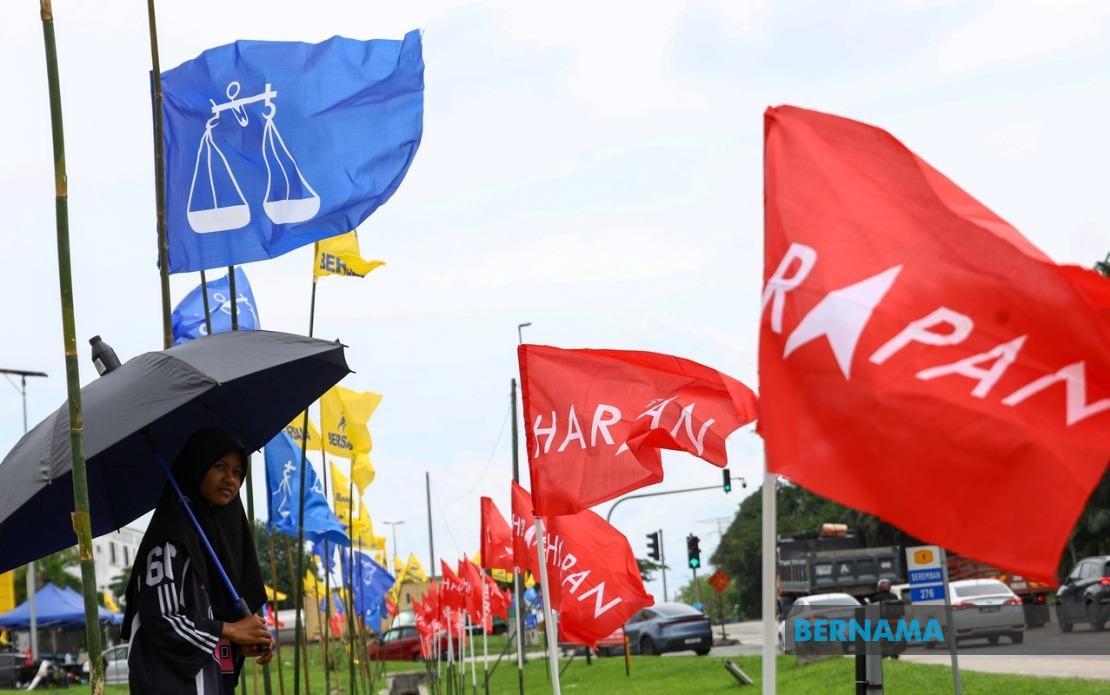
Democratic safeguards depend on competitive electoral outcomes that distribute political power across multiple parties, according to DAP secretary-general Anthony Loke, who underscored the significance of Pakatan Harapan's performance in the forthcoming Johor state election. Speaking at a party gathering in Kluang on July 3, Loke framed the contest as a referendum on institutional accountability, warning that unchecked political hegemony creates governance vulnerabilities that weaken democratic oversight mechanisms.
Loke's argument centres on a fundamental principle of parliamentary democracy: that alternating power between coalitions, or maintaining meaningful opposition strength, forces governing bodies to remain answerable to voters and to institutional constraints. When a single political formation claims overwhelming electoral dominance, he contended, the resulting administration operates without credible legislative opposition to scrutinise decisions, interrogate budget allocations, or hold ministers to account through formal parliamentary mechanisms. This absence of competitive challenge, Loke suggested, frequently leads to unaccountable governance and diminished transparency in state administration.
The Johor contest carries particular weight because it represents one of Malaysia's most politically significant states, historically a powerbase for the ruling Barisan Nasional coalition. A strong performance by Pakatan Harapan across multiple assembly constituencies would represent a material shift in the state's electoral dynamics and signal voter appetite for alternative governance approaches. The composition of the incoming state assembly will determine not merely which coalition governs Johor but also the vigour with which legislative scrutiny operates within the chamber.
Pakatan Harapan's three-party coalition structure itself reflects the political partnership's commitment to pluralism. The grouping, comprising PKR, DAP, and Amanah, contends that ideological and programmatic diversity within a ruling coalition creates internal pressure for consensus-building and moderates the exercise of executive power. This contrasts with single-party administration, where disciplinary mechanisms within one organisation's hierarchy determine policy direction without external institutional counterweight.
The election scheduled for July 11, with early voting commencing July 7, encompasses all 56 state assembly constituencies, representing a comprehensive statewide contest. Pakatan Harapan has committed resources to fielding candidates across every seat, signalling confidence in territorial penetration and a deliberate strategy to contest every available district rather than conceding seats to rivals. The competitive intensity appears substantial: a total of 172 candidates are contesting the 56 seats, indicating multiple three-way and four-way contests in numerous constituencies.
Institutional checks and balances function through overlapping mechanisms that collectively constrain executive authority. Opposition parties in the legislature can initiate questions, propose alternative budgets, demand investigations, and frame public debate around governmental performance. Backbenchers within ruling coalitions may voice concerns about party direction, though less formally than opposition members. State-level electoral competition also creates accountability pressures because state governments remain answerable to voters who can withdraw electoral mandates periodically. When single coalitions approach near-monopolistic seat counts, these democratic pressure valves operate weakly.
Loke's emphasis on preventing single-coalition dominance reflects DAP's broader strategic positioning as a party committed to institutional pluralism and competitive democracy. For DAP, which holds substantially fewer seats than Barisan Nasional historically, advocating for competitive electoral dynamics and robust opposition roles represents both a principled democratic position and a reflection of the party's legislative status. The party frames this as benefit to voters rather than partisan interest, arguing that citizens receive superior governance when multiple viewpoints operate within state assemblies.
Johor's electoral significance extends beyond state boundaries because it influences national political dynamics. As Malaysia's third-most populous state and a major economic contributor, Johor's political complexion affects how national parties distribute resources, how they position themselves for federal elections, and how they calibrate ideological appeals. A Pakatan Harapan breakthrough in Johor would reorder the national political calculus and potentially strengthen opposition parties for subsequent federal contests. Conversely, if Barisan Nasional consolidates existing advantages, it signals continued resilience despite electoral setbacks elsewhere in Malaysia.
The attendance at the Kluang event by senior DAP figures including deputy national chairman Nga Kor Ming and deputy secretary-general Steven Sim Chee Keong demonstrated the party's investment in the campaign and the stakes party leadership attaches to the outcome. Such senior-level engagement in state-level campaigning indicates that national party structures view Johor as strategically pivotal rather than a routine state election.
For Malaysian voters observing electoral politics across the federation, Johor's 2023 election embodies fundamental questions about how democratic systems function when power concentrates in single coalitions versus distributes across competitive blocs. Loke's framing appeals to voters concerned about governance accountability and legislative vitality. Whether voters prioritise checks-and-balances arguments or other considerations including economic performance, development promises, and local candidate quality will determine how they cast votes across the 56 constituencies on July 11.

