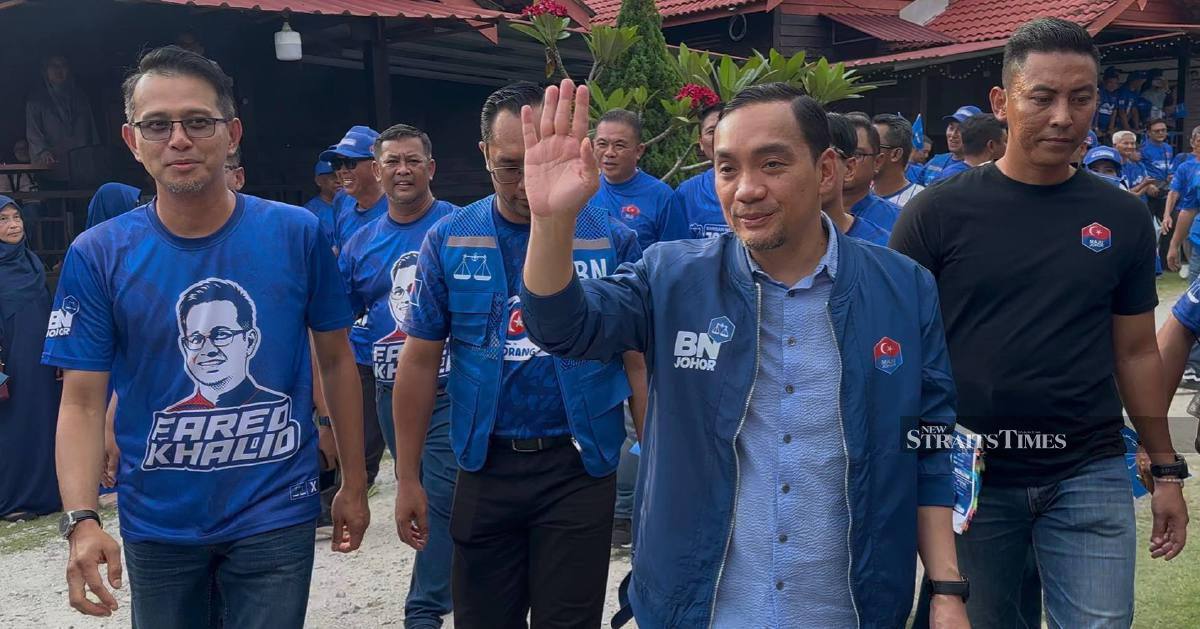
Johor's caretaker Menteri Besar Datuk Onn Hafiz Ghazi has moved to clarify the primary purpose of the state election, emphasizing that the exercise exists fundamentally to grant the voting population an opportunity to determine who leads their government in the coming term. Speaking in Batu Pahat, Onn Hafiz pushed back against broader narratives that might suggest the election serves ancillary political aims beyond the straightforward matter of securing a fresh democratic mandate from Johor voters.
The clarification from the caretaker leadership comes at a moment of heightened political sensitivity within Malaysia's electoral calendar. Johor, the nation's second-largest state by population and a traditional stronghold for United Malays National Organisation-backed governments, occupies considerable symbolic weight in the broader Malaysian political landscape. The timing and conduct of state elections typically attract scrutiny from multiple political factions, each attempting to frame the election narrative in ways favourable to their particular interests and ambitions.
Onn Hafiz's intervention addresses underlying speculation within political circles that certain factions might harbour ulterior motives in pursuing the election at this particular moment. Such speculation, whether well-founded or otherwise, can damage public confidence in the electoral process itself and create unnecessary cynicism about the democratic machinery. By grounding the election squarely within its democratic function—allowing citizens to exercise their fundamental right to choose representatives—the caretaker Menteri Besar attempts to refocus attention on what should be the election's central purpose.
The explicit distancing from any suggestion that the election might facilitate the rehabilitation or advancement of particular high-profile figures demonstrates an awareness of how electoral legitimacy can become compromised when voters perceive that elections serve narrow factional interests rather than the broader public good. In Malaysia's recent political history, instances where elections or political manoeuvres have been perceived as designed primarily to benefit specific individuals or groups have often sparked considerable public disquiet and challenged confidence in democratic institutions.
Johor's electoral significance extends beyond state boundaries. As a major economic contributor to Malaysia's overall prosperity, with a substantial manufacturing base and significant port facilities, the state's governance directly influences regional economic performance and investor confidence across Southeast Asia. A state government perceived to possess genuine democratic legitimacy would likely prove more effective in implementing policy and attracting investment than one shadowed by doubts about its foundational mandate.
The caretaker administration's positioning also reflects sensitivity to international perceptions of Malaysian democracy. Foreign observers and business partners increasingly examine whether electoral processes in Malaysia conform to recognised democratic standards. When political actors emphasize that elections serve their intended constitutional purpose—returning power to the people's hands—they reinforce Malaysia's standing as a nation committed to democratic governance, an asset of considerable importance in an increasingly competitive regional context.
For Johor's diverse electorate, which encompasses significant Malay-Muslim, Chinese, and Indian communities alongside indigenous populations in certain areas, the framing of the election as fundamentally about democratic choice carries practical implications. Voters who perceive elections as genuine opportunities to influence governance are more likely to participate actively, producing higher turnout and more representative outcomes. Conversely, when voters suspect elections primarily serve other purposes, participation often declines, potentially skewing results and undermining governmental legitimacy.
The broader opposition coalition in Malaysia will likely scrutinize how the election campaign develops, watching whether the ruling coalition's conduct matches its stated commitment to pure democratic principles. Should election machinery or campaign practices appear to benefit certain outcomes disproportionately, such observations would immediately invite accusations that rhetoric about democratic mandates masks less principled intentions. This structural reality means the caretaker administration must ensure campaign conduct lives up to stated commitments.
Historically, Johor has demonstrated swings in electoral support when governance performance disappointed voters or when campaigns successfully mobilised specific constituency concerns. The state's political trajectory cannot be predetermined by institutional advantages alone; voters ultimately decide outcomes through the ballot. This fundamental reality renders Onn Hafiz's emphasis on returning decisions to the people not merely rhetorical but actually descriptive of how Malaysian democracy functions in practice.
Looking forward, the election campaign will reveal whether political actors across the spectrum genuinely respect the principle that elections exist to serve popular sovereignty. The caretaker leadership's framing creates a standard against which campaign conduct can be measured. Should candidates or officials pursue strategies that appear inconsistent with the commitment to democratic choice, such inconsistencies would become immediately visible and politically costly.
Ultimately, Onn Hafiz's clarification serves multiple functions simultaneously. It addresses specific speculation that animated political commentary, it reaffirms the government's commitment to democratic legitimacy, and it establishes a framework within which electoral conduct can be evaluated. Whether Johor's election campaign will honour these principles in practice remains to be seen, but the caretaker Menteri Besar has now positioned the fundamental question where it belongs—with the voters themselves.

