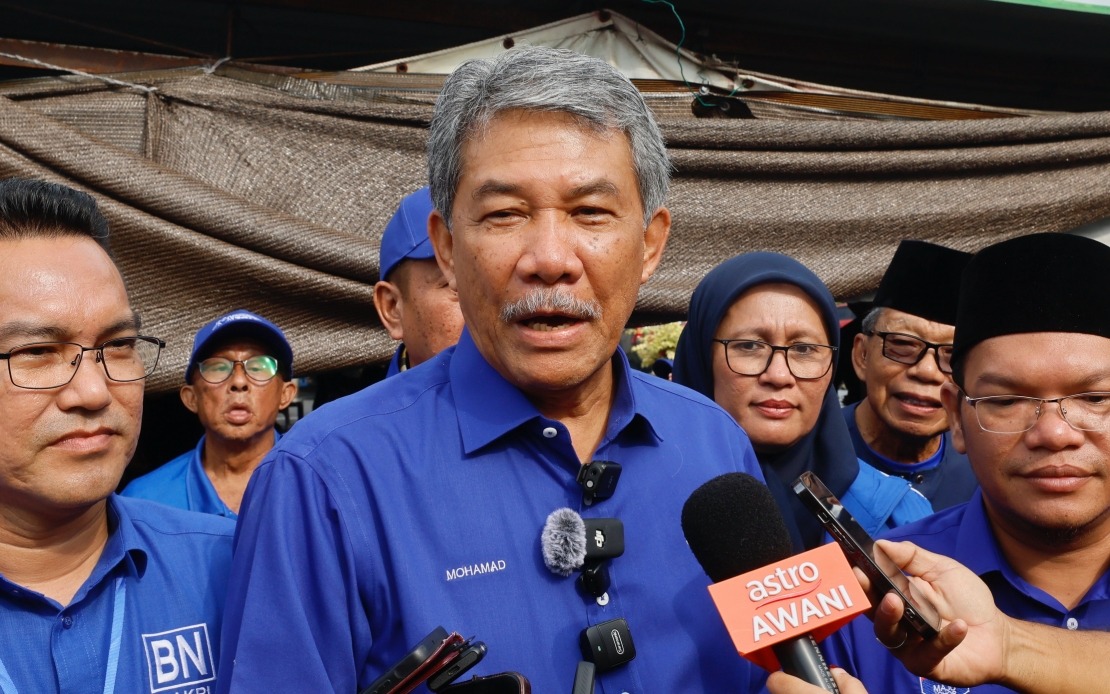
The Johor state election campaign should proceed with maturity and restraint, avoiding personal attacks that could destabilize the country, according to UMNO deputy president Datuk Seri Mohamad Hasan. Speaking during a public engagement in Johor Bahru on July 6, Mohamad stressed that while competing parties may freely promote their respective policies and electoral platforms to voters, the campaign must not undermine the collaborative framework that underpins the federal government's operations. His remarks come as polling preparations advance for what is shaping up to be a significant test of political sentiment in the country's second-largest state.
Mohamad, who holds the portfolio of Foreign Minister in the federal administration, distinguished between robust policy debate and personal vilification in campaign discourse. He acknowledged that political parties may engage in good-natured banter and competitive rhetoric without crossing into territory that damages inter-party relations or affects governance at the national level. The distinction he drew reflects growing sensitivity within the coalition about maintaining cohesion amid electoral contests that could exacerbate factional tensions. The Foreign Minister's intervention suggests UMNO leadership is conscious of risks posed by campaign rhetoric that might strain the delicate balance of the Unity Government coalition.
A persistent allegation that has circulated during the campaign cycle links the Johor state election to efforts to secure the release of former Prime Minister Datuk Seri Najib Tun Razak. Mohamad directly addressed this narrative, dismissing such claims as lacking foundation. He pointed to the constitutional framework governing Malaysia's political system, noting that a state election contests the formation of a state government rather than the federal administration. This distinction carries practical significance for understanding both the campaign's scope and the limits of what a Menteri Besar, or state chief minister, could theoretically accomplish regarding matters that fall under federal jurisdiction.
The Foreign Minister elaborated on the constitutional separation of powers that renders state-level electoral outcomes irrelevant to federal prerogatives, particularly those involving executive clemency. Malaysia's system vests pardon powers exclusively with the Yang di-Pertuan Agong, the constitutional monarch, meaning that even a change in state government would possess no mechanism to influence such decisions. Mohamad emphasized that respecting this constitutional arrangement protects the integrity of the monarchy's role and reinforces the principle of rule of law that he said UMNO consistently upholds. His emphasis on constitutional propriety underscores how political actors in Malaysia must navigate competing imperatives of electoral competition and institutional preservation.
The timing of Mohamad's intervention reflects the practical demands of managing a coalition government while conducting state-level elections. The Unity Government framework, which brings together UMNO, DAP, and other parties at the federal level, creates unique pressures when coalition partners compete directly in regional contests. A badly managed campaign could generate grievances that ripple upward and destabilize federal cooperation. By advocating for measured campaign conduct and emphasizing the separation between state and federal electoral dynamics, Mohamad signals an effort to contain potential spillover effects from Johor's electoral competition.
The Johor state election represents a substantial political undertaking, with 172 candidates competing for 56 seats in the State Legislative Assembly. Polling is scheduled for July 11, with early voting procedures commencing the day before. The scale of the contest means that campaign messaging will reach a significant cross-section of voters and could have broader implications for political positioning ahead of future national elections. The election therefore carries importance beyond state politics, potentially influencing perceptions of which parties have momentum and which face erosion of support among crucial demographic groups.
Mohamad's emphasis on prudence in campaign conduct carries particular resonance given Malaysia's recent political history. The country has experienced periods of intense factional conflict within and between major coalitions, and voters have shown willingness to punish parties perceived as excessively divisive or corrupt. By urging restraint, Mohamad appears mindful that excessive personal attacks could backfire electorally and reinforce negative public perceptions of political culture more broadly. His framing of campaign decorum as linked to national stability suggests a desire to elevate the discussion beyond tactical electoral advantage.
The Foreign Minister's remarks also implicitly address concerns that might exist among coalition partners about the direction of UMNO's campaign. DAP and other Unity Government partners might worry that an overly aggressive UMNO campaign could increase partisan tensions or lead to rhetoric that alienates support from particular communities. By publicly advocating for restraint, Mohamad provides assurance that UMNO intends to compete vigorously without resorting to divisive tactics. This messaging serves both internal coalition management and external electoral positioning.
From a broader Southeast Asian perspective, Mohamad's call for mature electoral conduct reflects regional concerns about democratic backsliding and the erosion of institutional norms. Malaysia's ability to maintain constitutional frameworks and rule-of-law principles while managing competitive elections influences perceptions of stability across the region. The Johor election and how various parties conduct their campaigns will be observed by regional observers as an indicator of Malaysia's democratic health. Mohamad's intervention, therefore, carries significance not merely for state politics but for Malaysia's broader standing as a functional democracy operating under constitutional constraints.
The campaign period ahead will test whether political actors can balance electoral ambitions with commitment to institutional preservation and coalition maintenance. Mohamad's statement sets a benchmark against which campaign conduct can be assessed. Should parties subsequently engage in personal attacks or cross rhetorical lines he has identified, such departures would contradict a senior UMNO figure's public position and potentially draw criticism from observers monitoring campaign standards. His remarks thus establish a framework for accountability that extends beyond internal party discipline.
Looking forward, the election results on July 11 will reveal whether voters respond to the kind of measured, policy-focused campaign Mohamad has advocated. Should parties that adhere to such standards perform well, it could encourage similar approaches in future contests. Conversely, if campaigns that venture into personal territory demonstrate electoral success, political actors may calculate that Mohamad's counsel, however sound institutionally, carries limited practical benefit. The electoral outcome will therefore shape how seriously political parties weight appeals for campaign decorum in subsequent contests.

