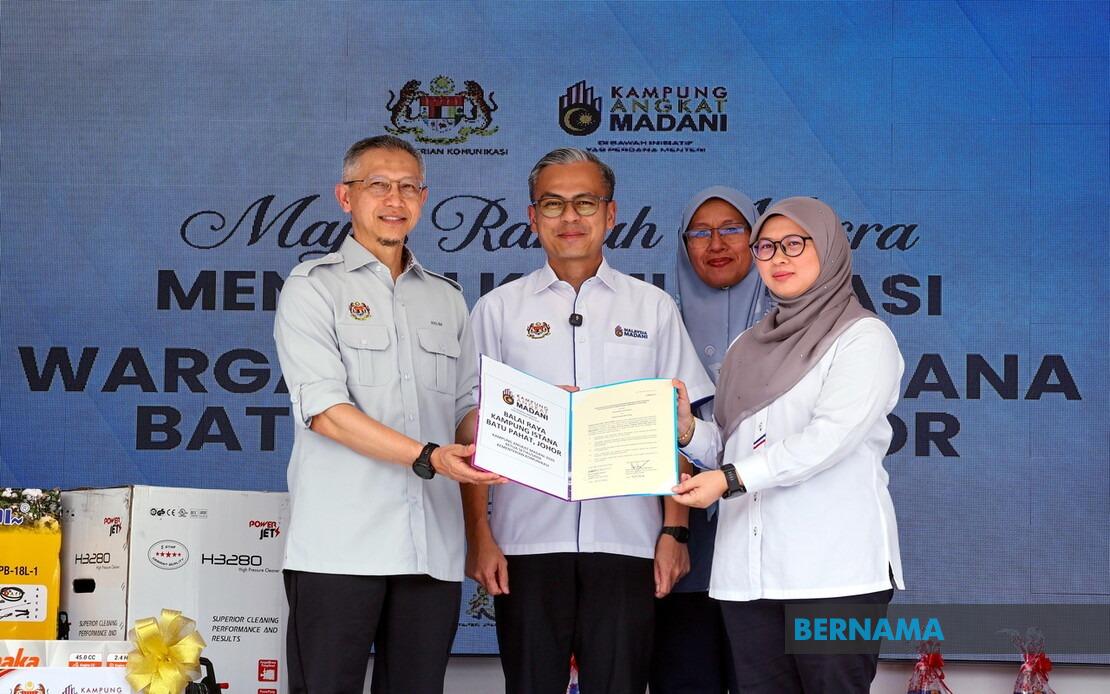
The upcoming Johor state election represents a pivotal moment for voters to choose leaders capable of charting a better course for the state, rather than serving as a verdict on any single personality, according to Pakatan Harapan Communications Director Datuk Fahmi Fadzil. Speaking during a campaign visit to Kampung Istana in Batu Pahat, the Communications Minister directly addressed attempts to frame a potential Barisan Nasional victory as public endorsement of clemency for a former prime minister, calling such narratives potentially misleading and a cause for concern among the electorate.
Fahmi's remarks came in response to earlier statements by Datuk Nazifuddin Mohd Najib, who had suggested that a BN triumph in the July 11 election would demonstrate public backing for his father Datuk Seri Najib Razak to receive a pardon. The PH official emphasised that voters operate on a fundamentally different calculus when making electoral decisions, prioritising substantive governance matters rather than personal considerations affecting individual political figures. This distinction, he argued, should resonate with the broader electorate as they contemplate their voting intentions.
The Communications Minister elaborated on the risks of taking voter loyalty for granted, a concern that has gained particular resonance in the context of shifting electoral patterns across Malaysia. He stressed that no political coalition can assume permanent support from any demographic group, including the non-Malay voting communities traditionally aligned with the Democratic Action Party. Political parties must earn and continuously strengthen their relationship with voters through demonstrated competence, accountability, and responsive governance rather than relying on historical voting patterns.
Fahmi highlighted what he characterized as a growing groundswell of support for Pakatan Harapan, evidenced by public endorsements from individuals with established ties to opposition parties and other political factions. The defection of figures such as former Rengit assemblyman Datuk Dr Mohd Puad Zarkashi from UMNO's traditional camp to supporting PH candidates suggests that the political landscape in Johor is more fluid and dynamic than conventional assumptions might suggest. This development carries significant implications for how both major coalitions should calibrate their campaign strategies and messaging.
The backing extended by Datuk Puad Zarkashi to the PH candidate in Rengit is particularly noteworthy given his historical alignment with UMNO and the broader Barisan Nasional coalition. His public shift represents a potential crack in what UMNO had long regarded as its reliable electoral stronghold in Johor, undermining assumptions about immutable voting blocs. Similarly, Fahmi pointed to supportive statements from Bersatu members favouring the PH candidate in Sri Medan, Hishamuddin @ Misrin Ishak, as further evidence of a widening coalition of support that transcends traditional party boundaries.
Fahmi interpreted these cross-party endorsements as reflections of growing confidence in Pakatan Harapan's leadership and governance approach, particularly regarding economic recovery initiatives that directly benefit Johor's development trajectory. The convergence of support from diverse political backgrounds signals to voters that choosing PH leadership need not represent an ideological abandonment of their previous political affiliations but rather a pragmatic reassessment of which coalition can deliver superior outcomes for the state and its constituents.
The broader context for this election involves 172 candidates competing across 56 state seats, with polling scheduled for July 11 and early voting opportunities available on July 7. This significant electoral contest carries implications extending beyond Johor's borders, as political analysts across Southeast Asia view state-level elections in Malaysia as important barometers of public sentiment and political momentum heading into potential federal contests. The coalition that emerges victorious will set the tone for political developments across the wider region and influence perceptions about effective governance models.
Fahmi's characterization of the election as fundamentally about collective futures rather than individual political rehabilitation reflects a strategic repositioning by Pakatan Harapan toward issue-based campaigning. Rather than engaging directly with narratives about personal clemency or vindication, PH has chosen to elevate discourse toward substantive policy questions about economic growth, infrastructure development, and administrative effectiveness. This approach attempts to shift voter attention away from potentially divisive personality-focused debates toward evaluating competing visions for Johor's development.
The timing of the election, occurring during an economically sensitive period when Malaysian households grapple with cost-of-living pressures and employment concerns, underscores the resonance of Fahmi's argument that voters prioritize material welfare and governance competence over personal political matters. Johor residents facing inflation and economic uncertainty are likely to evaluate candidates and coalitions based on concrete plans for job creation, business development, and social services rather than abstract questions about political rehabilitation or vindication.
As the campaign intensifies toward polling day, the fundamental tension Fahmi identified—between personality-driven and governance-focused electoral discourse—will likely define how both coalitions attempt to mobilize supporters and persuade undecided voters. The Communications Minister's emphasis on voter agency and the invaluable nature of electoral choice implicitly acknowledges that Johor voters possess sufficient sophistication to see through attempts at political manipulation or distraction from substantive issues affecting their daily lives.
The cross-party endorsements that Fahmi highlighted gain additional significance when viewed through the lens of Malaysia's evolving political ecology, where rigid party boundaries have increasingly softened in favour of more flexible coalition arrangements based on issue alignment and governance performance. These defections and supportive statements suggest that voters and political figures alike are reassessing traditional loyalty structures in light of changed circumstances and new possibilities for political cooperation.

