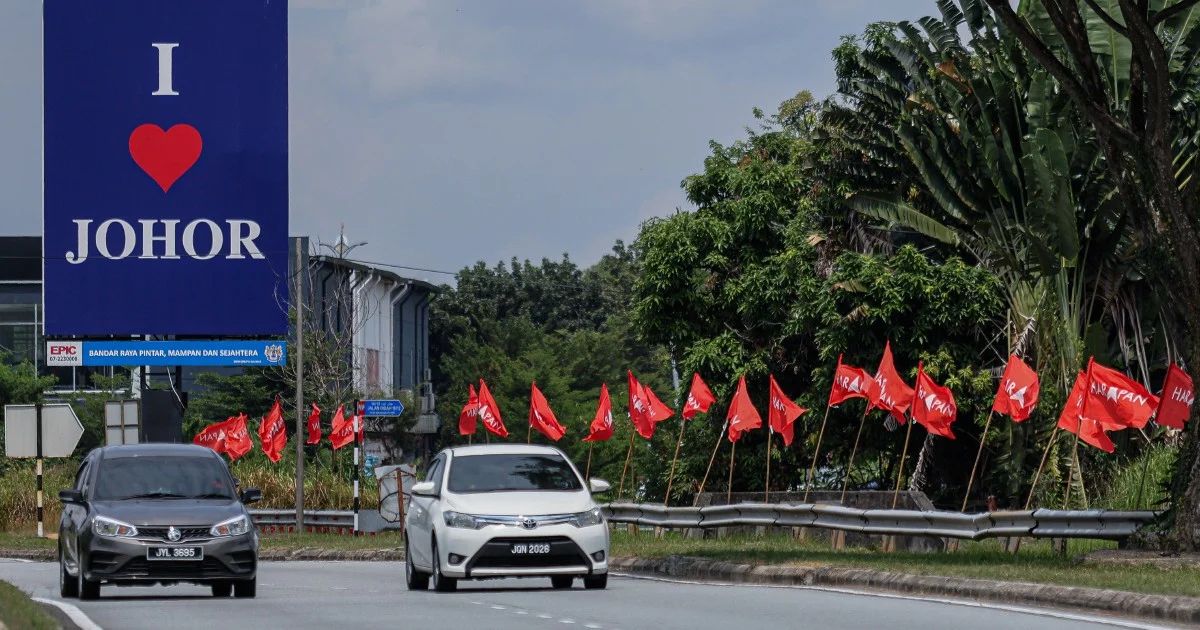
The imminent Johor state election represents far more than a personalised contest for the chief minister's office, according to prominent figures within PKR's youth wing, who are urging voters to assess the competing coalitions on the strength of their entire leadership structures and policy platforms rather than narrowing their focus to individual candidates. The framing is significant because it reflects a strategic attempt to shift discourse away from personality-driven politics—a pattern that has dominated Malaysian electoral conversations for decades—and instead position the race as a substantive examination of governance capability and development priorities.
This intervention from the youth faction of the Pakatan Harapan coalition highlights growing recognition within opposition politics that Malaysian voters are increasingly sophisticated in their electoral preferences. Rather than allowing the narrative to settle into a conventional battle over which politician will occupy the top job, PKR's youth leadership is articulating a vision in which the election functions as a democratic referendum on competing policy frameworks and administrative competence. The approach acknowledges that menteri besar elections, while important for state governance, should ideally reflect broader questions about whose team possesses the talent, experience, and strategic clarity to navigate Johor's complex economic landscape and address pressing social needs.
Johor's significance to Malaysian politics and economics cannot be overstated. As the nation's second-largest state by population and a crucial economic powerhouse featuring major industrial zones, port facilities, and agricultural sectors, the direction set by state leadership has substantial ripple effects across Southeast Asia's broader commercial and investment environment. Elections in Johor thus carry implications that transcend parochial state politics, influencing investor confidence, infrastructure investment priorities, and the state's competitive positioning relative to other Malaysian regions. This economic dimension undergirds the argument that voters should evaluate competing teams' comprehensive development strategies rather than focusing exclusively on the designated chief ministerial candidate.
The emphasis on coalition strength rather than individual candidacy also speaks to a structural reality within Malaysian state politics. Menteri besar roles, while symbolically significant, operate within cabinet systems where numerous other elected representatives and appointed officials shape policy outcomes. A coalition that fields multiple capable leaders across different portfolios and constituencies arguably delivers better governance outcomes than one personality, however accomplished, working in isolation. PKR's youth perspective implicitly challenges the long-standing Malaysian tradition of personalising politics around individual leaders—a pattern that has sometimes elevated charismatic figures over substantive governance records or policy clarity.
Economic development planning represents a particularly crucial dimension for Johor voters assessing their choices. The state has historically benefited from manufacturing investments, petrochemical operations, and port-related commerce, yet faces evolving competitive pressures from other regional jurisdictions and technological disruption affecting traditional industries. Which coalition offers more credible, detailed, and implementable visions for economic diversification, skills development, and attraction of high-value investments becomes a legitimate electoral question. Similarly, questions of urban planning, affordable housing, transportation infrastructure, and environmental sustainability differ meaningfully between different coalitions' stated priorities and track records.
Social development considerations extend beyond economic metrics to encompass education quality, healthcare access, social services delivery, and community engagement mechanisms. Johor's substantial rural populations and diverse demographic composition require tailored approaches to service delivery that reflect local conditions. The depth and specificity with which competing coalitions address these challenges—rather than generic pledges to improve matters—should reasonably factor into voter calculations. PKR's youth framing invites voters to scrutinise which teams have demonstrated competence in managing such programmes previously and which possess realistic budgetary and administrative capacity for effective implementation.
The timing of such messaging also reflects political realism within opposition coalition strategy. Rather than present themselves as having obviously superior individual candidates for the menteri besar role—a claim difficult to substantiate objectively—opposition figures concentrate on emphasising superior team composition and programmatic vision. This rhetorical strategy allows competing coalitions to contest the election on broader ground while minimising personalised attacks that often characterise Malaysian electoral campaigns and risk alienating voters seeking substantive policy discussion.
Historically, Malaysian state elections have frequently been dominated by narratives revolving around individual leaders' personalities, perceived corruption, or factional rivalries. This pattern reflects both media tendencies toward human-interest framing and voter behaviour shaped by decades of personality-centred politics. However, demographic shifts and improved information access suggest that significant voter segments, particularly younger and urban constituencies, increasingly favour issue-oriented deliberation. PKR's youth positioning implicitly caters to these constituencies, suggesting that progressive political movements understand electoral preferences are gradually evolving away from pure personality politics toward greater demand for transparent policy discussion.
The substance of competing coalitions' Johor platforms will ultimately determine whether this reframing resonates with voters or remains rhetorical positioning. If both competing camps merely offer vague generalities about economic growth and social harmony without specificity regarding taxation approaches, sectoral targeting, budgetary allocation, or governance structures, then the menteri besar personality contest will inevitably resurface regardless of leadership exhortations. Conversely, if coalitions present detailed, differentiated, and credible development frameworks accessible to voter understanding, the election could genuinely revolve around competing visions rather than personality politics.
For Malaysian observers and regional stakeholders, the Johor election outcome will signal whether state-level politics is undergoing meaningful structural evolution toward more issue-centred competition or whether personality remains dominant despite contemporary rhetoric. The result carries implications for governance quality and investor confidence in Malaysia's institutional development trajectory.

