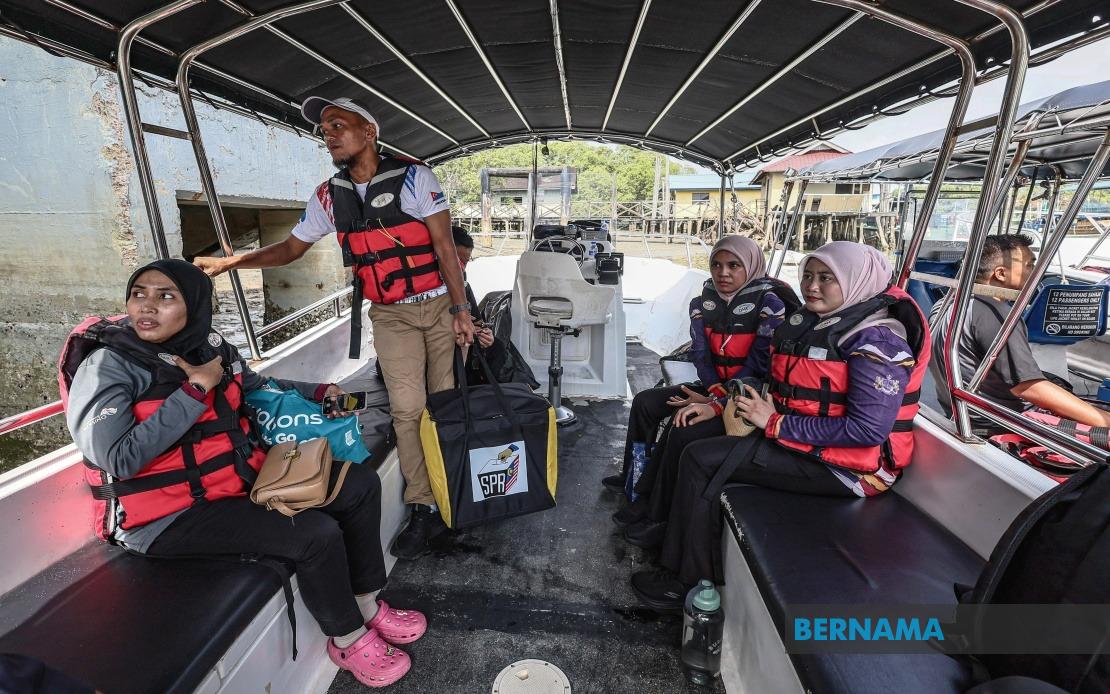
The 16th Johor State Election brought more than just political consequence to the southern state—it created a windfall for the small business community, particularly those positioned to serve the influx of voters and election personnel moving through the archipelago and polling centres on voting day. While the electorate focused on casting ballots, entrepreneurs from boat operators to food vendors found themselves benefiting from the logistical demands and foot traffic generated by the exercise, offering a glimpse into how electoral events ripple through local economies.
Among the most visible beneficiaries were maritime transport operators servicing Johor's island communities, where voters faced lengthy journeys to reach polling stations. Mustakim Shafie, 35, who runs Island Eagle Boat Services & Island Hopping, experienced a dramatic surge in demand across the two-day operation. His firm initially focused on ferrying Election Commission personnel and supporting materials to outlying islands, a standard contract role in any state election. However, as voting day progressed, the company shifted into overdrive transporting approximately 50 different voter groups seeking passage back to their home islands to exercise their democratic rights.
The contrast in his workload proved striking. Mustakim explained that his fleet of six speedboats handled exclusively official EC logistics on the first day, then pivoted to predominantly civilian passenger transport on polling day itself. The resulting uptick in business activity was substantial enough to warrant genuine celebration—his booking volume doubled compared to typical daily operations, a figure that carries meaningful implications for a small operator running a modest fleet. His pricing structure reveals the economics at play: charter packages for extended trips run between RM4,000 and RM4,500 for three-day, two-night arrangements, while point-to-point journeys accommodating up to 18 passengers cost approximately RM2,500 per trip. For an operator working on narrow profit margins, such concentrated demand over a brief window represents genuine financial relief.
Yet the maritime sector's gains came accompanied by genuine operational hazards. Both Mustakim and veteran operator Hasrul Azmin Jumaat, 39, highlighted the persistent challenge of unpredictable weather and sea conditions when managing passenger safety and cargo logistics during an election cycle. Hasrul draws on more than two decades of water-based experience, including navigating the treacherous 76-kilometre, two-plus-hour passage to Pulau Aur. Even with extensive expertise, the variables inherent in tropical maritime operations—sudden storms, strong currents, shifting visibility—demand constant vigilance. The responsibility intensifies when transporting election materials or facilitating democratic participation, as any mishap carries consequences far beyond ordinary commercial disruption.
On land, the food service sector experienced its own surge. Ismail Mad Hasim, 55, and his wife Faradila Fairuz Mohd Affandi, 45, operated a food stall positioned adjacent to Sekolah Kebangsaan Taman Sutera, strategically located to capture the voter traffic flowing through the polling centre. Their experience mirrors that of maritime operators—sustained, concentrated demand. Customers began queuing from the early morning hours, with particularly robust traffic from early voters completing their civic obligation. The couple drew on their experience, having operated at the same location during previous national elections, allowing them to anticipate demand patterns and stock accordingly.
The professional approach paid dividends. Despite the commercial success, neither Ismail nor Faradila abandoned their own voting responsibility. They planned to cast their ballots at the same polling centre immediately after exhausting their prepared inventory, demonstrating how even in seeking economic advantage from the electoral calendar, small business operators remained engaged citizens. Their decision to participate reflected a broader pattern visible across Johor's election day—entrepreneurial activity and democratic participation were not mutually exclusive but rather intertwined elements of the community event.
The economic stimulus extended beyond simple transaction volumes. For operators like these, concentrated periods of elevated demand provide cash flow relief that can sustain operations through slower periods. A boat operator securing three to four additional substantial bookings over two days captures revenue that might otherwise take weeks to accumulate during ordinary operations. Similarly, a food vendor exhausting stock in a single day—rather than across a typical week—optimises inventory turnover and minimises spoilage risk while maximising unit revenue. These microeconomic effects, multiplied across Johor's small business landscape, aggregate into measurable stimulus.
Yet such temporary boosts highlight the vulnerability of small enterprises dependent on episodic demand drivers. Elections occur at intervals measured in years, not months, making them unreliable as business planning tools. Boat operators cannot sustain six-vessel fleets on election-day bookings alone, nor can food vendors manage year-round operations based on polling-day traffic. The temporary prosperity generated during the 16th Johor State Election—which involved more than 2.6 million registered voters and continued through the scheduled 6 pm closure—represents a welcome but fundamentally unpredictable revenue stream for these operators.
From a broader economic perspective, the election's business activity underscores how electoral infrastructure and participation create secondary economic effects beyond the political sphere. Transport networks, catering services, and logistical coordination generate demand that flows through the community. Election management thus carries implicit economic consequences, making the exercise of democratic rights inseparable from livelihood considerations for service-sector operators. This interconnection between political participation and economic opportunity remains particularly pronounced in Johor's island and coastal communities, where geographic isolation makes electoral logistics more complex and economically consequential than in mainland urban areas.
The experiences documented during this state election cycle offer lessons for understanding how Malaysian electoral events affect local economies. While political analysts focus on voting patterns and outcomes, small business operators experience elections as cyclical opportunities for revenue generation. Policymakers considering electoral scheduling, polling centre location decisions, or transportation coordination might usefully account for such economic ramifications. Simultaneously, entrepreneurs dependent on these periodic surges benefit from advance planning and positioning themselves advantageously within electoral geography—lessons evident in Ismail and Faradila's deliberate stall placement and the boat operators' capacity planning.

