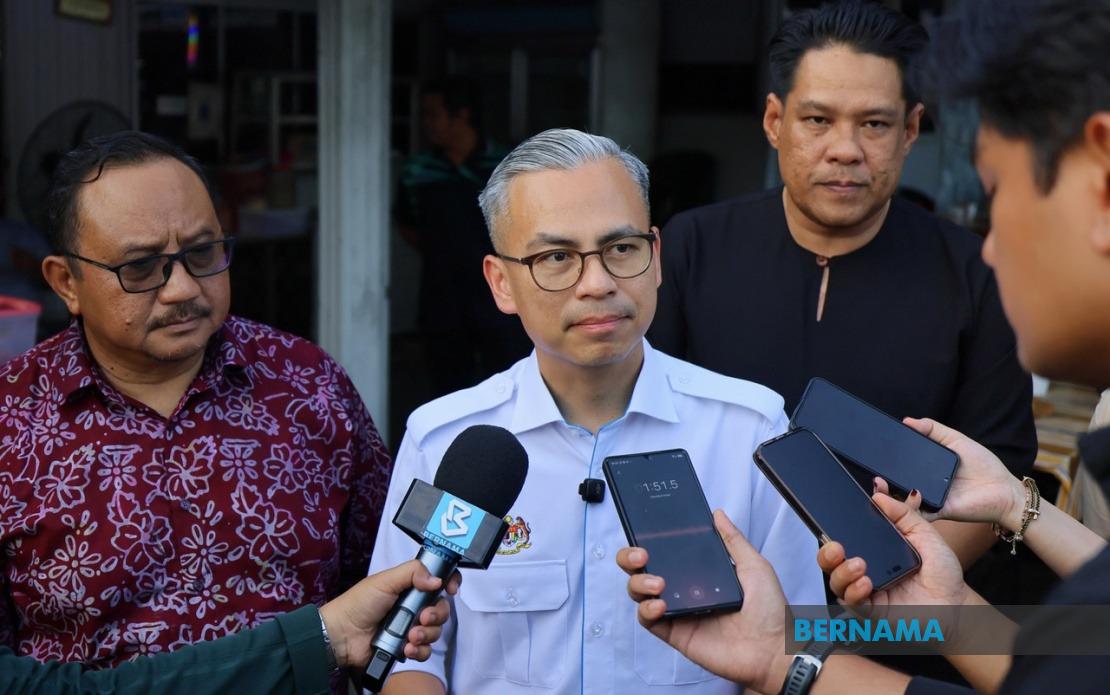
With nomination day for the Johor State Election fast approaching, Communications Minister Datuk Fahmi Fadzil has issued a pointed appeal to all political contestants to elevate the standard of campaigning conduct. Speaking in Batu Pahat ahead of tomorrow's nomination deadline, Fahmi stressed that the election period presents an opportunity for Malaysia to demonstrate its commitment to democratic values through dignified and fact-grounded political discourse. The messaging carries particular weight given the proliferation of unsubstantiated claims that have characterised recent electoral contests across the region, where social media amplification has accelerated the spread of misleading narratives.
Fahmi's exhortation goes beyond rhetoric, reflecting genuine institutional concern about maintaining electoral integrity during the competition for Johor's state assembly seats. He noted that both the Election Commission (EC) and the Royal Malaysia Police (PDRM) stand ready to initiate legal proceedings against any organisation, campaign machinery, or supporter who crosses the line into unlawful conduct. This dual-agency preparedness underscores the seriousness with which authorities view breaches of election conduct standards. The minister made clear that decorum and orderliness are not optional refinements but fundamental requirements for preserving public confidence in the democratic process itself.
The Malaysian Communications and Multimedia Commission (MCMC) has accordingly fortified its monitoring capabilities in partnership with social media platforms to detect and prevent the dissemination of false information across digital networks. This proactive stance addresses a recognised vulnerability in the information ecosystem, where rapid sharing and algorithmic amplification can distribute inaccurate content faster than traditional fact-checking mechanisms can respond. Of particular sensitivity are narratives touching on the three pillars of Royalty, Religion, and Race—areas where misinformation can inflame communal tensions and undermine social cohesion. The collaborative approach between government agencies and private platform operators represents an acknowledgment that managing information integrity during elections requires participation from multiple stakeholders.
Fahmi's remarks also encompassed practical support mechanisms designed to facilitate responsible media coverage of the election. A dedicated media centre has been established in Johor Bahru to serve as a hub for journalists covering the campaign trail and electoral developments. Additionally, the government has made available the National Information Dissemination Centre (NADI) network, with at least one facility positioned in each State Legislative Assembly constituency. These infrastructure investments acknowledge the critical role that media practitioners play in translating political events into public understanding. By providing journalists with accessible facilities for filing reports and conducting research, the authorities seek to reduce reliance on secondhand accounts or informal information sources that may lack verification.
Beyond electoral conduct guidelines, Fahmi's Batu Pahat visit served as a platform for addressing localised infrastructure grievances. The area's Member of Parliament, Onn Abu Bakar, raised persistent complaints regarding internet service disruptions and connectivity blind spots affecting residents and businesses. Fahmi committed to directing the MCMC to investigate these concerns with urgency, recognising that reliable telecommunications access is now integral to economic participation and effective governance. For constituencies like Batu Pahat, where digital connectivity gaps persist despite Malaysia's broader broadband expansion, such direct engagement between local representatives and federal ministers offers a mechanism for translating grassroots concerns into actionable policy responses.
Onn Abu Bakar characterised Fahmi's presence as valuable precisely because it creates a direct communication channel between constituents and decision-makers. Complaints that might otherwise languish in bureaucratic channels or fall through gaps in administrative oversight can be expedited when delivered during high-profile engagements. This observation hints at broader questions about the effectiveness of standard complaint mechanisms and the persistence of information asymmetries between federal authorities and state-level stakeholders. The Johor election campaign, therefore, becomes more than a contest for political office—it functions as a moment when ordinary residents can access lines of communication that typically remain closed.
The 16th Johor State Election represents a significant political moment for Malaysia's most economically dynamic state. The dissolution of the State Assembly on June 1 initiated the electoral calendar, with nomination day set for June 27 and polling day scheduled for July 11. This compressed timeline creates urgency for candidates to mobilise support and for voters to evaluate competing visions for Johor's development. Given the state's substantial manufacturing base, strategic port operations, and role as a gateway to Singapore, the election outcomes will have implications extending beyond Johor itself. State-level policies on business investment, infrastructure development, and skills training can either accelerate or impede the region's economic trajectory.
The emphasis on fact-based campaigning carries particular resonance in Malaysian politics, where communal sensitivities and historical grievances frequently surface during electoral contests. When campaigns descend into personal attacks, ethnic or religious innuendo, or unverified accusations, they risk polarising communities and eroding the interpersonal trust necessary for effective governance. Conversely, campaigns grounded in substantive policy discussion—infrastructure plans, employment creation, educational initiatives—invite voters to judge competitors on their demonstrated competence and vision. Fahmi's call for ethical campaigning implicitly advocates for the latter approach, though whether political parties will voluntarily constrain themselves remains an open question.
The establishment of monitoring mechanisms and warning about legal consequences reflects heightened institutional vigilance compared to previous electoral cycles. However, enforcement remains challenging when violations occur across decentralised social media networks and occur in real time during campaigns. The MCMC's partnership with platforms such as Facebook, TikTok, and WhatsApp provides some supervisory capacity, yet determined actors can circumvent detection through coded language, rapid deletion, or distributed sharing strategies. The credibility of government warnings ultimately depends on visible, proportionate enforcement—instances where actual legal action follows documented violations and receives public acknowledgment.
For Malaysian voters in Johor, the election presents an opportunity to advance their interests through informed choice rather than manufactured outrage. The availability of media facilities and commitment to transparent information dissemination should theoretically enhance voters' ability to assess candidate qualifications and policy proposals. Whether the combination of infrastructure support, monitoring mechanisms, and ministerial admonitions translates into meaningfully cleaner campaigning will become apparent as the nomination and campaign periods unfold. The test of Malaysia's democratic resilience lies not in the aspirations articulated by senior officials, but in their realisation across hundreds of campaign events, thousands of social media posts, and countless conversations among voters deciding their electoral preferences.

