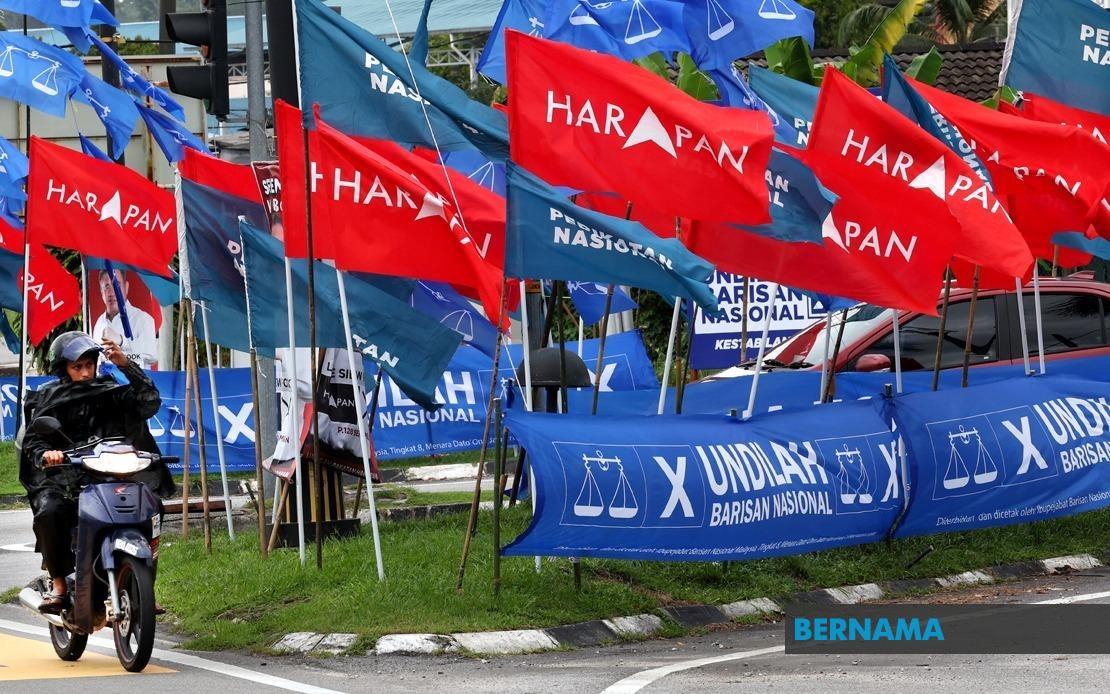
The Johor state election has shifted into overdrive with less than two days remaining before the campaign officially concludes at midnight tomorrow. Across the 56 state seats at stake in the 16th electoral contest, political operators from three major coalition blocs are executing coordinated final drives designed to crystallise voter sentiment before Saturday's polling day. The intensity reflects the genuine uncertainty surrounding several marginal constituencies, where vote margins remain tight and late-campaign momentum could prove decisive.
Pakatan Harapan maintains the most visible presence in the final stretch, with Prime Minister Datuk Seri Anwar Ibrahim scheduled to appear at three critical locations tonight, most notably Puteri Wangsa—a constituency that polling analysts have flagged as highly competitive. The coalition's strategy appears calculated to deploy its national leadership as a morale booster for candidates in vulnerable seats, particularly those held by narrow majorities from the previous election. Maszlee Malik, the PH candidate for Puteri Wangsa, has taken to social media to mobilise supporters, explicitly invoking the psychology of missing out to drive attendance at the "Grand Finale Harapan Johor Selatan" rally. This approach signals PH's recognition that enthusiasm and turnout mechanics may ultimately determine outcomes in close races.
The coalition has also demonstrated organisational flexibility in managing candidate circumstances. Dr A. Ruban, contesting the Paloh seat for PH, briefly stepped away from campaigning for medical treatment but rapidly returned to the trail, a move designed to project image of commitment and stamina to voters. Such details matter in tight contests, where impressions of candidate dedication and presence can influence marginal voter blocs. Meanwhile, Johor PKR chairperson Datuk Seri Dr Zaliha Mustafa has coordinated grassroots mobilisation efforts, deploying a motorcyclist convoy of 120 riders in Kemelah—a tactic that generates visible street presence and appeals to community-oriented voters in ways traditional rallies cannot match.
Barisan Nasional, governing Malaysia for seven decades before its 2018 defeat, is treating Johor as essential to reviving its political fortunes. Coalition chairman Datuk Seri Dr Ahmad Zahid Hamidi has personally concentrated fire on the Endau and Kempas constituencies, signalling that BN views these seats as winnable within its broader strategic calculus. The outgoing Menteri Besar, Datuk Onn Hafiz Ghazi, who is defending his own Machap seat while seeking a third term in the leadership position, has saturated his constituency with a video appeal directly requesting voter mandate. Simultaneously, BN's Larkin candidate Mohd Hairi Mad Shah has maintained an intensive door-to-door engagement programme styled "Ziarah Kasih," which frames the campaign as a personal compassion visit rather than transactional political business.
Perikatan Nasional, the third-force coalition that surprised many by winning Johor's 2022 elections before internal fractures cost it parliamentary seats, is projecting continued strength through high-profile event programming. Tonight's Endau mega-rally, featuring both PN chairman Datuk Seri Ir Dr Ahmad Samsuri Mokhtar and PAS president Tan Sri Abdul Hadi Awang, represents a statement of coalition unity at a moment when the PN brand has faced questions following the party's divisive manoeuvres in federal politics. The rally functions as both voter engagement and internal reinforcement, signalling to party cadres that leadership backing remains solid. PN's Kahang candidate Mazlan Bujang has articulated a grassroots philosophy of continuous voter contact, recognising that in a 56-seat contest with 172 total candidates, ground organisation and personal rapport may ultimately outweigh broadcast messaging.
Smaller players are also executing targeted campaigns tailored to their limited resources and strategic positioning. Parti Bersama Malaysia's "Bersama Tour Truck" initiative, employed by Kota Iskandar candidate Sahrudin Omar, provides mobile campaign visibility while Larkin candidate Norsinah Abu has opted for intimate community dialogue—a strategy that may resonate particularly in urban constituencies where voters increasingly prefer substantive conversations to rally performances. These approaches reflect broader shifts in Malaysian campaign culture, where personal testimonials and small-group discussions increasingly carry weight relative to mass gatherings.
The electoral landscape itself remains volatile. With 172 candidates spread across 56 seats and significant three-cornered contests in multiple constituencies, the translation of campaign activity into actual vote share remains unpredictable. The presence of national leaders, while generating headlines and media momentum, may carry limited persuasive power among voters whose decisions crystallise through local considerations—candidate competence, service delivery records, and community relationships. Conversely, the visibility of prime ministerial endorsement carries symbolic weight, suggesting a national government confident enough to campaign aggressively in a state it currently controls.
For Malaysian political observers and Southeast Asian analysts, the Johor contest carries importance beyond the state borders. This election tests whether BN's federal resurgence, consolidating under the current government, translates into ground-level electoral recovery. It also measures whether PN can stabilise its political position after the high-profile parliamentary voting drama that tainted its brand among moderate voters. For PH, retention of Johor represents institutional validation of the government's legitimacy, particularly as it approaches the mid-point of its parliamentary term and begins positioning for the next federal election.
The final two days will reveal whether last-minute campaign intensity moves voters in meaningful proportions. Historical evidence from regional elections suggests that final-week campaigns primarily serve to consolidate existing support and discourage opposition turnout, rather than substantially shifting undecided voters. Yet in a contest this fragmented, with multiple viable coalition options and seat-specific candidate appeal factors, incremental shifts in turnout or vote distribution could prove decisive across multiple constituencies. The rush of campaign activity underway across Johor tonight and tomorrow represents each coalition's recognition that these hours represent their final opportunity to shape Saturday's outcome.

