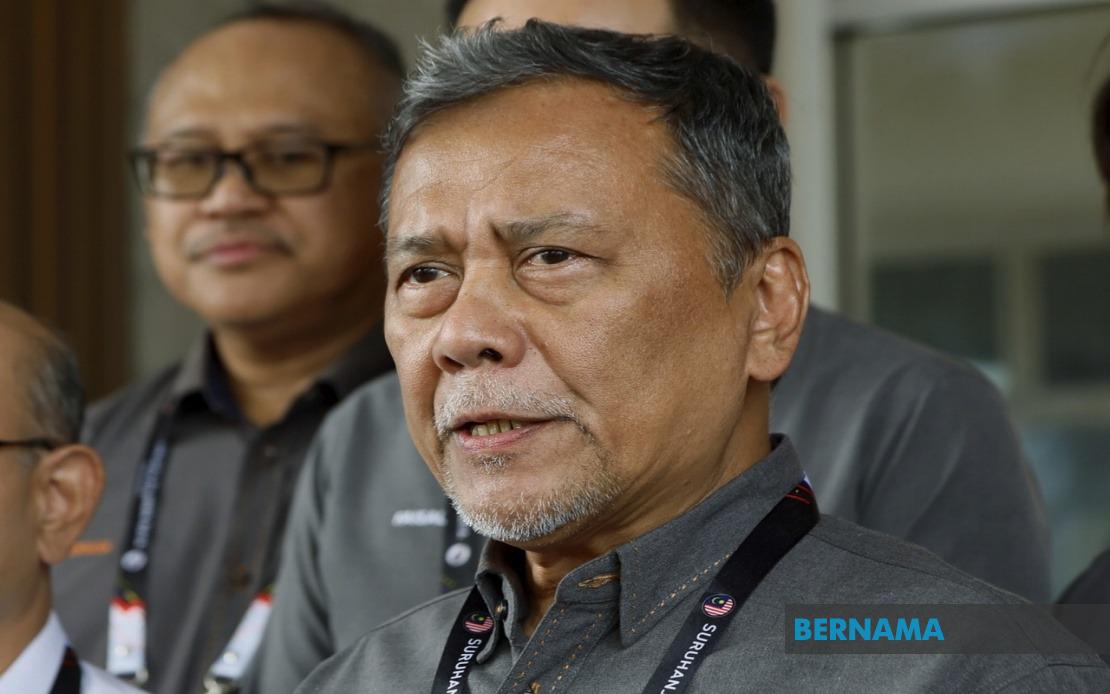
As polling neared for the 16th Johor State Election, the Election Commission disclosed it had documented 588 separate grievances related to electoral violations throughout the campaign phase. According to EC chairman Datuk Seri Ramlan Harun, the sheer volume of complaints underscores persistent enforcement challenges during state-level contests in Malaysia, where heightened political activity frequently triggers disputes over campaign conduct and regulatory compliance.
The complaints encompassed a diverse range of alleged breaches, from minor procedural infractions to more serious violations of electoral law. Of the 588 grievances submitted to the Commission, 44 had progressed to formal police reports, indicating that investigators deemed those cases sufficiently serious to warrant criminal investigation. This conversion rate—roughly 7.5 percent of total complaints—suggests that most allegations either lacked sufficient evidence or involved technical violations the police assessed as lower priority.
Three additional cases underwent separate referral to the Malaysian Anti-Corruption Commission, reflecting suspicions of financial impropriety or bribery during the campaign. These MACC referrals typically involve concerns about undisclosed funding sources, illicit cash transfers to voters, or other corruption-related malpractices that transcend purely electoral violations. The fact that corruption watchdogs were engaged signals that authorities detected conduct they believed warranted specialized investigative scrutiny beyond the EC's standard jurisdiction.
Ramlan delivered his briefing while stationed in Kluang, where he and Army Chief General Tan Sri Azhan Md Othman had jointly overseen early voting arrangements at multiple designated centres. This high-level oversight—bringing together military and electoral officials—reflected the Election Commission's determination to ensure ballot integrity during the advance polling phase. The dual leadership presence suggested particular attention to security and procedural adherence at sensitive locations such as the Kluang District Police Headquarters and Kem Mahkota.
The early voting process itself accommodated 20,607 individuals entitled to cast ballots prior to the main polling day. This cohort comprised two distinct groups: 8,544 members of the Malaysian Armed Forces alongside their spouses, and 12,063 police personnel together with their spouses. Early voting procedures exist to accommodate security personnel and military staff whose operational duties prevent them from voting during standard polling hours, ensuring they retain full electoral participation despite their professional obligations.
The forthcoming contest would determine control of 56 state assembly seats across Johor, Malaysia's southern economic powerhouse and strategically important territory for both ruling coalitions and opposition camps. A total of 172 candidates had registered nominations across all 56 constituencies, yielding an average of roughly three candidates per seat. This candidate density indicated competitive races in many areas, with multiple parties and independent contenders vying for representation.
Polling was scheduled for the following Saturday, meaning the EC had mere days to conclude complaints processing, finalize candidate registration, and conduct final security preparations. The timeline compressed campaign activity into an intensive final stretch, which historically correlates with increased allegations of misconduct as political actors intensified their ground operations and messaging efforts.
The volume of complaints merits consideration within broader Southeast Asian electoral trends. Regional election commissions routinely confront comparable numbers of allegations, particularly in state or provincial contests where decentralized campaign operations complicate compliance monitoring. Indonesia, Thailand, and the Philippines all document hundreds of complaints during mid-level elections, suggesting that enforcement capacity across the region struggles to prevent violations even when legal frameworks exist to punish them.
For Malaysian observers, the complaint figures reflect persistent anxiety about electoral conduct integrity, particularly given the strategic importance of Johor politics to national government formation. Opposition and ruling-coalition representatives alike deploy election monitoring networks that scrutinize opponent behaviour intensely, generating complaints designed both to document genuine breaches and to exert pressure on electoral authorities. The EC's reporting of complaint numbers serves partly as a transparency measure and partly as a signal of institutional attentiveness to stakeholder concerns.
The complainants likely encompassed political parties, candidate campaigns, voter advocacy groups, and individual citizens who witnessed alleged violations. Each category brings different motivations: parties seek to disqualify rival candidates or delegitimize campaigns, while voter groups and individuals typically pursue accountability for misconduct they personally observed. The EC's role involved sorting credible allegations from politically motivated complaints, a task requiring both investigative rigour and political sensitivity.
Moving forward, the impact of these 588 complaints depends substantially on investigative outcomes. Police inquiries and MACC investigations could yield charges, campaign disqualifications, or determinations that allegations proved unfounded. Electoral authorities often face criticism for either pursuing complaints too aggressively—thereby appearing politically motivated—or dismissing them too readily, inviting accusations of collusion with particular political actors.
The Johor election itself would generate additional scrutiny regarding whether voting occurred freely, fairly, and without intimidation or irregularities. International observers and domestic monitoring networks planned to field observers at polling stations, adding external accountability mechanisms to the EC's internal oversight. Results would ultimately reflect both the actual electoral preferences of Johor voters and the effectiveness of institutional frameworks designed to ensure democratic integrity.

