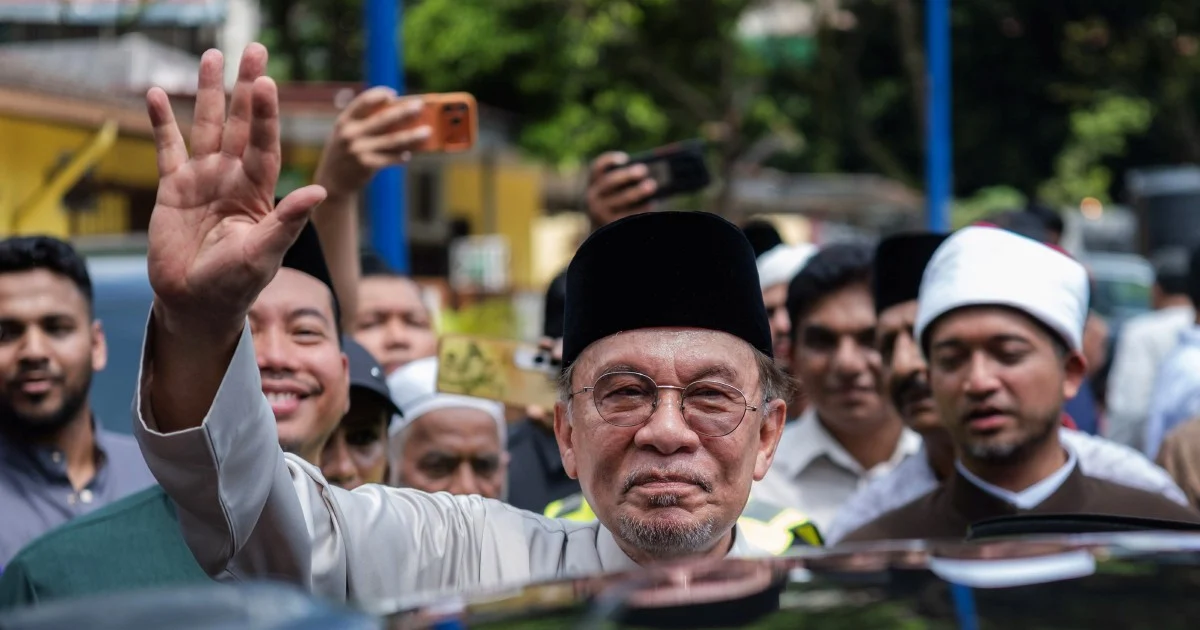
The Johor election race is reaching a fever pitch as the country's most senior politicians mobilise their resources and popularity to sway voters this weekend. Prime Minister Anwar Ibrahim, Deputy Prime Minister Zahid Hamidi, and a constellation of national-level party figures are descending on the state to participate in intensive campaign activities, including public ceramahs and rally programmes designed to energise their respective voter bases ahead of the crucial state polls.
This convergence of top-tier leadership underscores the strategic importance that Malaysia's major political coalitions attach to Johor. As the third most populous state and a significant economic contributor to the nation, Johor's electoral outcome carries implications that ripple far beyond regional politics. The state's voting patterns have historically influenced broader national political trends, making it essential terrain for any coalition seeking to strengthen its parliamentary position or test its appeal to working-class and middle-income voters.
Anwar Ibrahim's personal involvement in the campaign trail reflects the federal government's determination to consolidate its grip on the state apparatus. The Prime Minister's participation signals that the ruling Pakatan Harapan coalition views Johor as winnable ground and a potential barometer of their support heading into future parliamentary considerations. His presence serves a dual purpose: galvanising party machinery while projecting an image of decisive national leadership willing to engage directly with grassroots voters.
Meanwhile, Zahid Hamidi's parallel campaign efforts indicate the significance that Barisan Nasional, the historical governing coalition, continues to place on Johor as a traditional stronghold. As Deputy Prime Minister and leader of UMNO, Zahid's involvement bridges federal and regional politics, attempting to remind voters of Barisan's historical governance credentials whilst reasserting its relevance in contemporary Malaysian politics. The deployment of such senior figures suggests that both coalitions view this election as more than a local exercise.
The timing of this concentrated campaign push carries particular weight. By concentrating high-profile activities into a single weekend, political operatives maximise media coverage and create a sense of momentum that can influence voter sentiment during the critical final stretch before polling day. Such intensive campaigning moments often determine which narratives dominate public discourse and shape perception of which coalition possesses momentum.
For Malaysian voters, particularly those in Johor, these campaign events offer rare opportunities to engage directly with national leadership. Ceramahs and rallies have traditionally served as platforms where politicians address voter grievances, outline policy positions, and attempt to build emotional connections with communities. The scale of this weekend's activities suggests that both major coalitions intend to spare no effort in persuading undecided voters or motivating their existing support bases to actually cast ballots.
The convergence also reflects evolving campaign strategies in Malaysian politics, where national leadership increasingly travels to regional contests rather than leaving campaigns entirely to local figures. This approach recognises that state elections are rarely purely local affairs; they are now contested spaces where national parties project their broader policy platforms and attempt to demonstrate organisational capacity and popular appeal beyond their traditional bases.
Beyond the immediate campaign mechanics, this weekend's intensity reveals something deeper about Malaysian political competition. The commitment of scarce resources—the time and energy of multiple senior leaders—to Johor suggests genuine uncertainty about outcomes. If either coalition felt assured of victory, the deployment would likely be far more modest. The scale of effort indicates that both major coalitions genuinely view this contest as competitive, reflecting shifting voter preferences that remain unpredictable in contemporary Malaysian politics.
For business communities and investors watching Johor's political trajectory, leadership positioning in elections carries practical implications. State governments control licensing, land matters, and infrastructure priorities that directly affect commercial operations. The weekend's campaign events therefore matter not just to partisan supporters but to everyone with economic interests in how Johor is governed and developed over the coming years.
As these campaign activities unfold, they will generate considerable media attention and social media discussion, amplifying their reach beyond those physically attending rallies and ceramahs. Voters unable to attend these weekend events will nonetheless encounter campaign messaging through news coverage, speeches disseminated online, and discussions among peers influenced by the leaders' participation.
The concentration of national political talent in Johor this weekend ultimately demonstrates that Malaysian electoral politics has become increasingly centralised and coordinated, with outcomes in individual states now dependent partly on national leadership dynamics and broader coalition strategies rather than purely local considerations. This trend will likely continue shaping how future state elections are contested.

