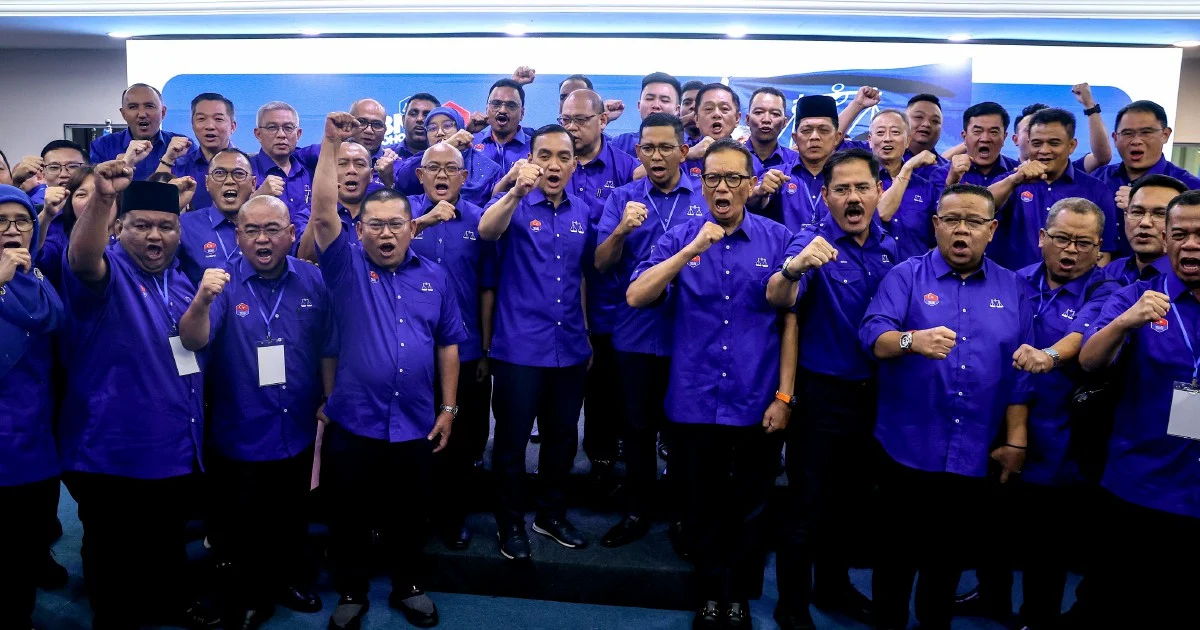
Barisan Nasional has effectively foreclosed months of political speculation in Johor by announcing its slate of candidates for the state election without including any representatives from Parti Wawasan Negara, signalling that plans for a three-way electoral partnership have been abandoned. The unveiling of the BN candidate list in Johor Baru definitively ended rumours that had circulated within political circles about a possible cooperation arrangement spanning BN, PAS, and Wawasan in the crucial southern state polls.
The decision to proceed without Wawasan candidates represents a significant political development in Johor, traditionally one of Malaysia's most electorally important states. BN's choice to maintain its established structure rather than accommodate Wawasan suggests internal coalition dynamics have remained intact despite months of external pressure and third-party overtures. The move indicates that BN leadership, perhaps guided by its core component parties including UMNO, MCA, and MIC, concluded that welcoming Wawasan into the candidacy framework would create complications rather than electoral advantages.
Wawasan's exclusion from BN's final roster underscores the complexities of coalition politics in contemporary Malaysia. The party, which has positioned itself as a centrist force in the political landscape, had apparently sought entry into the Johor electoral contests through partnership negotiations. Speculation had grown that such an arrangement could strengthen the coalition's appeal to moderate voters while potentially fragmenting the opposition vote. However, the absence of any Wawasan nominees indicates these overtures did not materialise into concrete agreements.
The broader context involves PAS, which maintains its own relationship with BN at the national level and contested separately in several previous state elections. The inclusion or exclusion of PAS candidates in Johor had also been a matter of discussion, though historical patterns suggest that state-level electoral arrangements often differ from federal-level coalitions. Whether BN proceeded with PAS candidates or maintained distinct candidacy boundaries remains a critical detail for understanding the coalition's strategic calculus in the state.
For Wawasan, the exclusion represents a setback in its strategy to establish itself as a significant political player at the state level. The party has attempted to position itself as an alternative to both BN and the opposition Pakatan Harapan, appealing to voters seeking a centrist option. Without electoral platforms provided by established coalitions, Wawasan would need to contest independently, a far more challenging endeavour that requires substantially greater organisational capacity and financial resources. This outcome may force Wawasan to reconsider its political strategy across Malaysia's states.
For Johor voters and BN supporters, the candidate announcement provides clarity after weeks of uncertainty. BN's decision to stick with its familiar coalition structure rather than attempt electoral experimentation with Wawasan may appeal to the party's traditional base, which generally prefers predictability and established arrangements. The stability of the coalition structure could translate into more cohesive campaign messaging and stronger ground organisation in the state, where BN remains the dominant political force.
From a Southeast Asian perspective, Malaysia's experience illustrates the perpetual tension between coalition expansion and coalition stability. Bringing new partners into electoral arrangements invariably creates complications regarding seat allocation, campaign coordination, and post-election power-sharing. BN's decision to exclude Wawasan suggests the coalition calculated that these complications outweighed any electoral benefits from incorporating the party. This reflects a broader pattern across the region where established political coalitions remain cautious about fundamentally restructuring themselves.
The announcement also illuminates how Malaysian political coalitions operate with considerable flexibility at the state level. BN maintains enough internal discipline to present unified candidate slates while retaining sufficient decentralisation that different states can pursue different electoral strategies. Johor's approach may differ significantly from how BN structures its candidates in other states facing their own elections in the coming months, demonstrating the sophisticated political machinery that enables the coalition to adapt to local circumstances.
For observers of Malaysian politics, BN's Johor candidacy decision signals confidence in its established approach rather than desperation to craft new electoral combinations. The coalition has governed Johor continuously for decades and retains substantial institutional advantages. By maintaining its traditional partnership structures and excluding Wawasan, BN leadership evidently believes these advantages remain sufficient to secure electoral victory without compromise or expansion. The coming campaign will reveal whether this assessment proves accurate and whether Johor voters remain inclined to support the coalition's candidates under the familiar political arrangements.