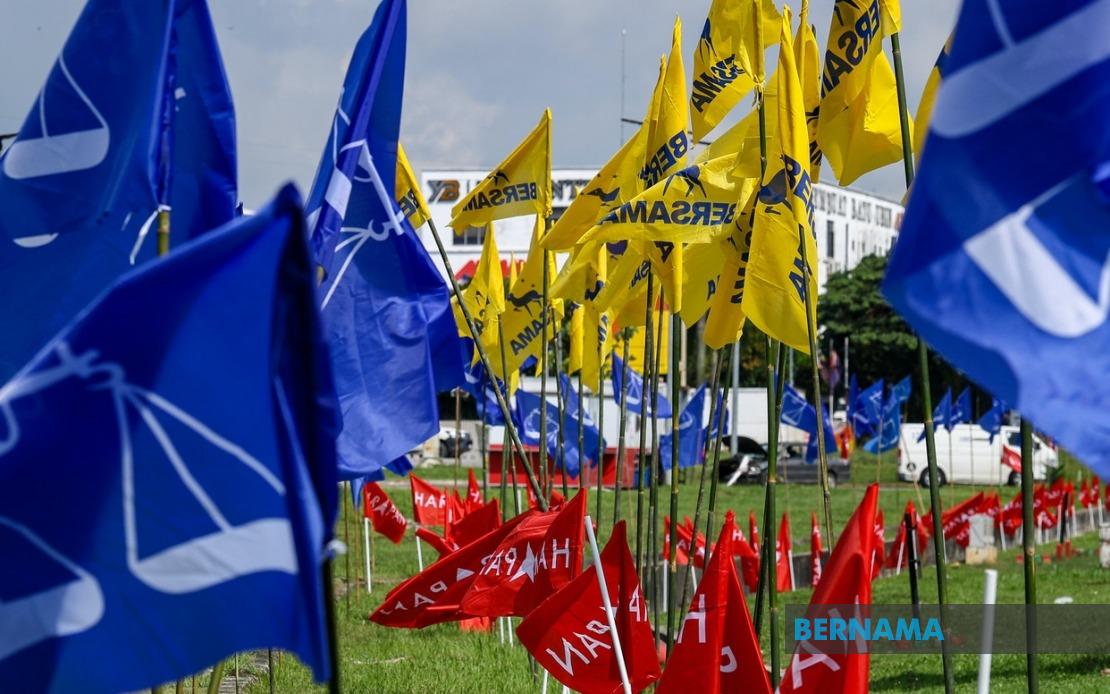
The upcoming 16th Johor state election presents a critical test of political maturity in Malaysia, with leading analysts calling on the 172 candidates vying for 56 seats to prioritize substantive policy debate over inflammatory rhetoric that could poison relationships needed for continued federal-level governance. The competition scheduled for this Saturday should showcase each party's distinct vision through concrete platforms and administrative records rather than through personal attacks or divisive messaging that narrows the possibility for post-election cooperation, according to observers monitoring the campaign.
Prof Datuk Dr Awang Azman Awang Pawi of Universiti Malaya, a prominent sociopolitical analyst and fellow at the Malaysia National Civics Academy, emphasizes that legitimate democratic competition must remain rooted in respect and decorum. Parties contesting the election should openly and thoroughly compare their respective manifestos, he argues, focusing on critical dimensions such as their capacity to govern Johor effectively, their strategies for attracting regional and foreign investment, their approach to engaging both urban and rural constituencies, and their concrete proposals for tackling pressing concerns including cost pressures, employment creation, affordable housing, and social safety nets.
The distinction Awang Azman draws between healthy and destructive campaigning hinges on what serves public discourse rather than narrow partisan interests. When parties resort to excessively combative language, paint political partners in Putrajaya as irredeemable adversaries, or inflame parochial state sentiments, they create confusion among voters who must ultimately make informed choices about state leadership. Conversely, competition anchored in demonstrable governance achievements, economic development outcomes, and institutional proposals generates the kind of electoral clarity that strengthens democratic decision-making rather than undermining it.
Crucially, Awang Azman points out that the campaign rhetoric deployed in Johor today will have tangible consequences for federal administration tomorrow. Multiple parties now competing at the state level will likely need to occupy ministerial positions, sit in Parliament together, and collaborate on national affairs regardless of Saturday's outcome. Deep political wounds inflicted during aggressive campaigning substantially complicate the rebuilding of trust and working relationships that are essential for effective governance after voting concludes. This structural reality creates an incentive for candidates to calibrate their messaging carefully, distinguishing between vigorous policy critique and personal or ideological delegitimization.
Within the Johor context specifically, Awang Azman identifies several substantive campaign topics deserving voter attention. These include the border economy's development and cross-strait cooperation with Singapore, strategies for managing cost-of-living pressures affecting household budgets, employment generation particularly through technical education and skills development, progress on major infrastructure projects such as the Rapid Transit System Link and the emerging Johor-Singapore Special Economic Zone, solutions to urban congestion, and the expansion of public welfare provisions. Each of these policy areas offers genuine grounds for distinguishing between competing party platforms and assessing which administration might deliver superior outcomes.
Dr Norman Sapar, a political analyst observing the campaign from another analytical vantage point, broadly concurs that contesting parties bear responsibility for moderating their campaign intensity and ensuring state-level electoral competition does not spill over into destabilizing federal cooperation. He redefines political maturity in contemporary Malaysia not as who deploys the most aggressive attacks against opponents, but rather as who demonstrates the greatest capability to manage political differences productively while preserving broader national interests and the institutional stability upon which all governance ultimately depends.
Based on his monitoring of the Johor campaign thus far, Sapar observes that contestants have largely maintained a commendable level of restraint and decorum, consistent with what he characterizes as Johor's distinctive political culture. While parties have certainly attempted to claim credit for various initiatives and raised pointed policy questions, the competition has remained within the boundaries of controlled political discourse rather than descending into open confrontation. Sapar attributes this relatively disciplined environment to Johor leaders' tendency to employ subtle criticism rather than inflammatory rhetoric, suggesting that longstanding cultural norms within the state continue to exert restraining influence.
Sapar further contends that campaigns prove most effective when they position ordinary voters as the central focus, with messaging organized around substantive ideas, demonstrated administrative competence, forward-looking policy proposals, and credible plans for addressing public concerns. In contrast, campaigns that attempt to weaponize federal-level relationships or generate national controversies designed to undermine broader cooperation generally fail to resonate with increasingly discerning electorates. Contemporary voters, he suggests, have developed sophisticated capacity to distinguish between legitimate state-level competition and the preservation of national political stability, rewarding parties that emphasize solutions over those that primarily emphasize opponent criticism.
This analytical consensus around the necessity of campaign maturity reflects broader structural realities within Malaysia's complex multi-level governance system. The 16th Johor state election does not occur in isolation but within a federal constitutional framework requiring ongoing coordination between state and national authorities. Current political coalitions at the federal level include representation from multiple parties simultaneously competing in Johor, meaning that electoral outcomes in the state must ultimately integrate into existing collaborative frameworks rather than fundamentally rupture them. This institutional constraint creates powerful incentives for all contestants to resist the temptation toward maximum polarization, however momentarily satisfying such strategies might appear during campaign season.
The specific policy issues Johor voters will confront on Saturday—infrastructure development, economic competitiveness, urban management, employment prospects, and social welfare expansion—transcend partisan divisions and affect all residents regardless of political preference. These substantive concerns provide natural organizing principles for campaign discourse that simultaneously educates voters and maintains the possibility of post-election cooperation. When parties instead compete primarily through personality-driven attacks or efforts to delegitimize opponents' basic political legitimacy, they squander opportunities to demonstrate governing competence and instead contribute to public cynicism about electoral democracy itself.
As polling day approaches, the calls from Awang Azman, Sapar, and other observers for continued campaign discipline reflect recognition that Malaysia's political system functions optimally when state-level competition occurs within guardrails of mutual respect and shared commitment to federal stability. The 16th Johor election, with 172 candidates seeking 56 seats, represents both a test and an opportunity—a test of whether contestants can compete vigorously while respecting essential boundaries, and an opportunity for voters to reward those parties that articulate most convincingly how they will improve state governance while contributing to national stability. The outcome will significantly influence whether Malaysian electoral competition continues on its current trajectory toward institutionalized maturity or begins sliding toward more destructive patterns of political polarization.

