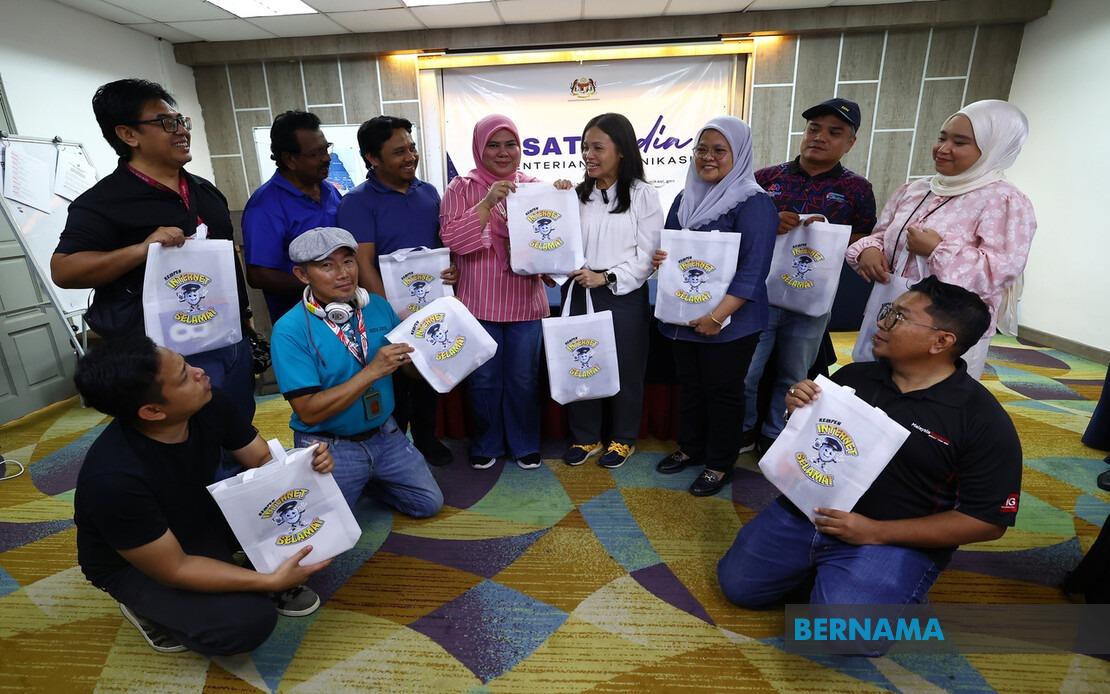
The Malaysian government is mobilising significant infrastructure to support media operations during the 16th Johor state election campaign, deploying a network of information and media facilities designed to ensure seamless coverage across the state. Deputy Communications Minister Teo Nie Ching announced on June 28 that the Communications Ministry, working alongside the Information Department (JaPen), has established two primary media centres and 100 National Information Dissemination Centres (NADI) throughout Johor to assist journalists and news organisations covering the election until polling day on July 11.
The dual-hub approach reflects an effort to balance centralised resources with distributed access. The main media centres are situated at Hotel Seri Malaysia in Johor Bahru, the state capital, and at NADI Kampung Sawah Awok in Muar, positioning facilities in both the northern and southern regions of the state. Both centres maintain extended operating hours from 9 am to 9 pm daily, beginning June 26 and running through election day, providing journalists with consistent access to resources across the two-week campaign period.
Technical capacity appears to be a priority concern, with Teo emphasising that all centres will maintain internet speeds of at least 100 Mbps to accommodate modern multimedia journalism requirements. The threshold is significant because it enables journalists to upload video content and high-resolution photographs without frustrating delays, a critical capability for news organisations competing to break stories and update coverage throughout the day. This specification suggests recognition that media operations during elections now demand robust digital infrastructure rather than traditional press room amenities alone.
Beyond connectivity, the physical facilities are equipped with standard office technology including laptops, desktop computers, photocopiers and printers, providing the conventional support infrastructure that print and online journalists require when working outside their newsrooms. The comprehensive approach indicates an understanding that different media outlets operate with varying technical capabilities and that centralised facilities can level the playing field, particularly for smaller publications that may lack mobile equipment comparable to major news organisations.
The Malaysian Communications and Multimedia Commission (MCMC) will oversee telecommunications performance during the campaign, tasked with monitoring service providers to prevent internet degradation during the critical election period. This regulatory oversight aims to prevent the technical bottlenecks that could handicap news organisations and disadvantage rural or less-developed areas of Johor that may rely on these facilities. The focus on maintaining service quality reflects lessons learned from previous elections and awareness that technical failures during crucial news cycles can distort coverage patterns.
In an innovative addition, Teo urged the public to download the MCMC Nexus application, which crowdsources real-time data on internet signal strength and coverage across specific locations. This tool transforms passive users into active monitors of telecommunications infrastructure, allowing citizens to contribute technical data that helps identify weak-signal areas. The initiative includes privacy safeguards; the MCMC collects only technical data such as location and signal strength rather than personal information, sharing findings with telecommunications companies to drive service improvements.
The election infrastructure messaging went beyond technical specifications to address conduct standards. Teo reminded political parties and their supporters that campaigns should maintain healthy discourse while avoiding sensitive topics touching on race, religion and royalty (3R)—longstanding boundaries in Malaysian political communication. The warning carries implicit acknowledgement that modern elections face challenges from provocative social media content that can inflame communal tensions, a concern that has materialised in previous election cycles across Malaysia and the region.
Coordination between communications authorities and law enforcement reflects institutional recognition that monitoring and rapid response are necessary safeguards. The MCMC will continue working with police to identify and remove social media content deemed to contain extreme provocation, though this arrangement raises recurring questions about the balance between preventing incitement and protecting online speech freedoms. The practical necessity of such monitoring during elections is evident, yet the mechanism itself remains contentious among civil liberties observers.
Teo also acknowledged the Malaysian Media Council's establishment of a dedicated fact-checking platform for the election period, encouraging citizens to adopt fact-checking habits before sharing information online. This appeal to individual responsibility reflects a broader ecosystem approach where government agencies, media councils and the public are all expected to contribute to information integrity. The emphasis on habit-formation suggests recognition that one-time fact-checking announcements prove insufficient; sustained behavioural change requires cultural reinforcement.
The infrastructure deployment across Johor reflects the state's significance in Malaysian politics. As the second-largest state by population and a traditional political battleground, Johor elections draw national attention and serve as indicators of broader political sentiment. The 16th state election assumes added importance given Malaysia's recent political volatility, with the Johor assembly dissolved following shifts in ruling coalitions. Media capacity and election infrastructure thus carry implications extending beyond state boundaries.
For Malaysian and Southeast Asian media observers, the Johor model demonstrates how governments can support press operations while attempting to shape campaign conduct through regulatory channels. The approach differs notably from some regional practices where election monitoring remains limited or press facilities minimal. However, the integration of conduct guidelines with technical infrastructure provision shows how support systems can simultaneously serve multiple policy objectives—facilitating coverage while channelling campaign discourse toward preferred boundaries.
Early voting is scheduled for July 7, with general polling following four days later on July 11. The extended timeline and distributed facilities suggest authorities are preparing for significant participation and have learned from previous elections about timing and resource distribution. The comprehensive media centre network positions Johor as a relatively well-resourced election environment compared to some other Malaysian state contests, potentially establishing standards that may influence future electoral infrastructure planning elsewhere.

