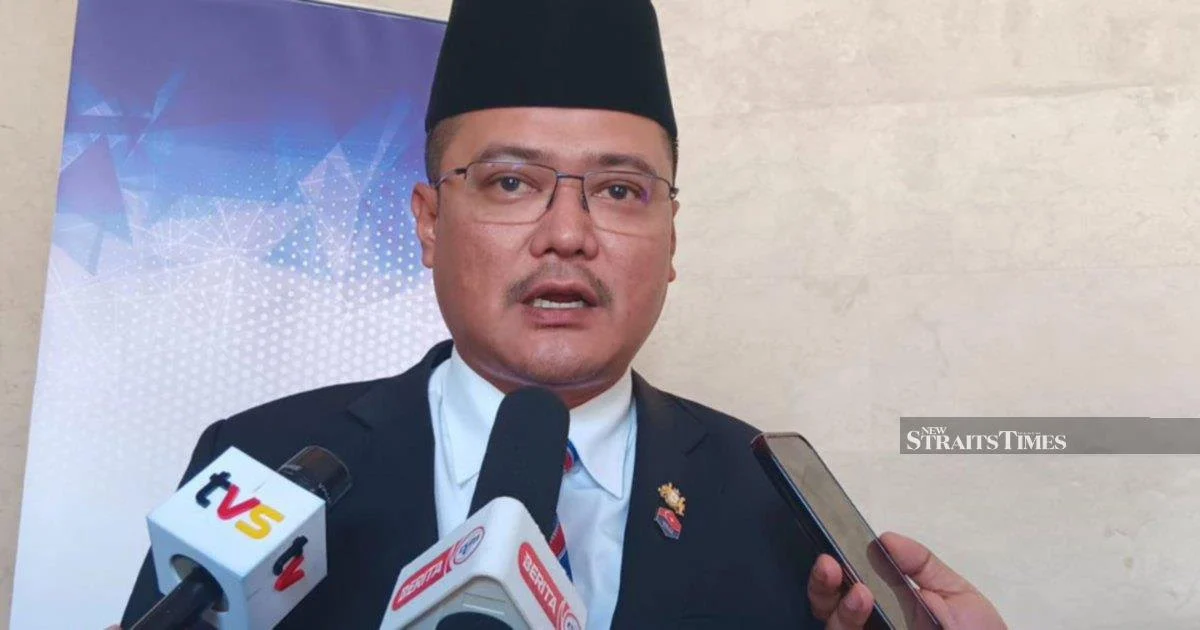
Johor Barisan Nasional has moved swiftly to dismiss claims made by former state legislative assembly speaker Datuk Dr Mohd Puad Zarkashi, characterising his allegations as baseless and irresponsible accusations that draw the palace into political matters. The coalition's response represents a significant escalation in tensions within Johor's political establishment, reflecting deeper divisions over governance and the proper role of institutional boundaries in state affairs.
The conflict between the two camps underscores the fractious nature of contemporary Malaysian politics, where institutional relationships remain contested terrain and accusations of impropriety can quickly inflame partisan sentiment. Puad's allegations appear to challenge the conventional understanding of how decisions are made within the state apparatus, potentially touching on sensitive questions about the respective roles of elected officials, administrative leadership, and the monarchy in directing government policy.
Umno Youth, taking a particular interest in the controversy, has claimed that hundreds of individuals have lodged police reports regarding Puad's statements. The precise nature of these reports remains unclear, though their volume suggests a coordinated response rather than spontaneous grassroots action. This development indicates that the matter has escalated beyond routine political disagreement into territory where formal mechanisms of accountability are being invoked.
For Malaysian observers, the controversy raises important questions about institutional integrity and the boundaries separating political competition from attacks on constitutionally protected institutions. The palace occupies a unique constitutional position, and allegations linking it to everyday political decisions represent precisely the kind of claim that can generate significant institutional friction. Johor BN's strong reaction suggests the coalition views such statements as particularly dangerous to political stability and institutional respect.
The involvement of Umno Youth in mobilising police reports demonstrates how contemporary political disputes increasingly involve institutional mechanisms beyond simply parliamentary debate or public statement. This layering of institutional responses—coalition condemnation coupled with police complaints—creates a multifaceted pressure campaign that moves beyond traditional political rhetoric. For Puad, such coordination may represent either a serious threat or an attempt at intimidation, depending on one's perspective.
Puad's previous position as speaker gives his claims particular weight within political circles, as his familiarity with assembly operations and state governance lends credibility to his allegations. However, this same background makes his claims appear more threatening to the establishment, since he speaks from a position of inside knowledge. The tension between his institutional credibility and the politically charged nature of his accusations creates a genuinely difficult situation for Johor's leadership, which must respond forcefully without appearing defensive or overly sensitive to criticism.
For Southeast Asian and Malaysian observers tracking institutional health, the incident illuminates the ongoing challenge of distinguishing legitimate political accountability from personal vindication through institutional mechanisms. When hundreds of police reports emerge in rapid succession around a political dispute, questions naturally arise about whether the legal system is being weaponised for political advantage. These concerns reflect broader regional anxieties about the instrumentalisation of state institutions for partisan purposes.
The timing and coordination of responses also warrant scrutiny. Umno Youth's specific claim regarding police report numbers suggests either significant organisational capacity or a figure that has been manufactured to demonstrate popular support for the party's position. Either interpretation carries implications for how we understand contemporary Malaysian political mobilisation and the relationship between party structures and grassroots activism.
The Johor situation has potentially broader ramifications for Malaysian governance. If senior figures increasingly challenge the palace's stated non-involvement in political decision-making, such accusations risk eroding the careful constitutional bargain that has sustained Malaysian institutions. Conversely, if such allegations are dismissed without serious examination, legitimate concerns about institutional boundaries might go unaddressed. This dilemma explains why both Johor BN and Umno Youth have responded so forcefully—the stakes involve not just current political battles but the fundamental architecture of state governance.
Puad's allegations also emerge during a period when institutional relationships across Malaysia remain under examination. Questions about the proper exercise of state authority, the relationship between elected and monarchical institutions, and the transparency of decision-making processes have generated discussion across the country. Johor's situation represents one manifestation of these broader tensions, with particular intensity given the state's economic importance and political significance within the federation.
The coalition's emphasis on describing Puad's claims as irresponsible reflects a strategy of framing the matter as one involving not just factual disagreement but breaches of institutional propriety. This rhetorical approach aims to move the conversation away from whether Puad's specific allegations contain truth and instead centres on whether raising such questions at all represents acceptable political conduct. It is a distinction with important implications, as it shifts debate from substance to procedure.
Moving forward, the central question remains whether additional evidence will emerge supporting or contradicting Puad's assertions, or whether the matter will resolve through political pressure and institutional mechanisms rather than substantive debate. The involvement of police suggests the parties view the dispute as potentially criminal, though the basis for such claims remains unclear from public statements. For observers of Malaysian politics, the unfolding situation offers important lessons about institutional stress, political accountability, and the ongoing challenge of maintaining constitutional boundaries amid intense partisan competition.

