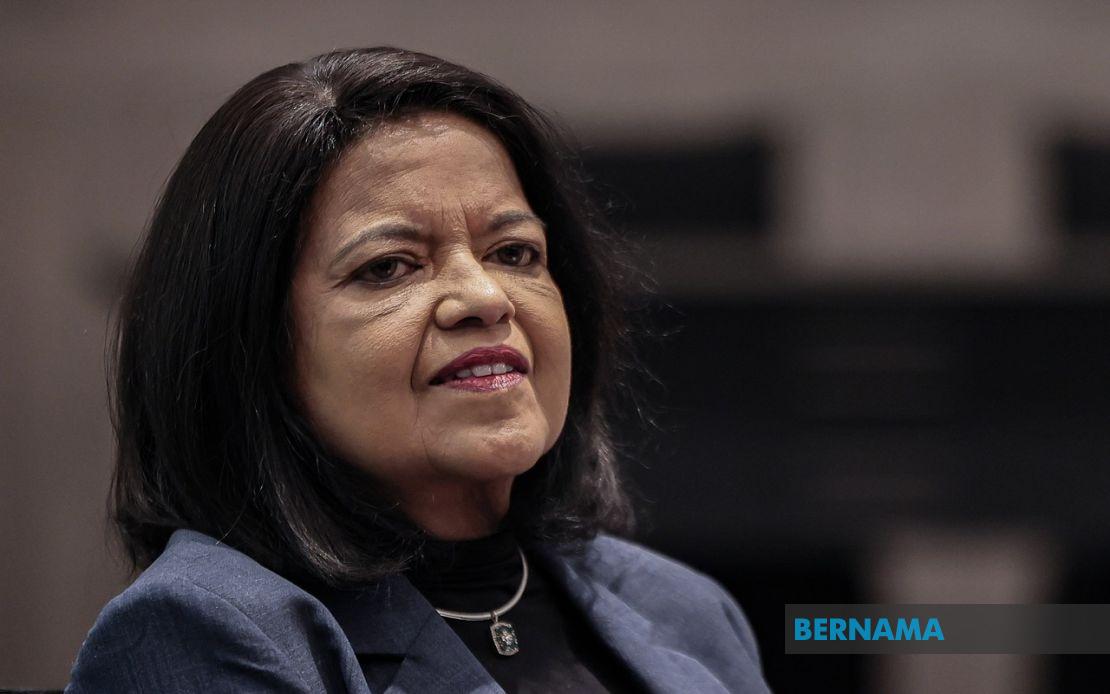
The Malaysian Media Council (MMC) is positioning the upcoming Johor and Negeri Sembilan state elections as a crucial testing ground for its freshly launched Rapid Response Election Initiative, a coordinated effort designed to combat the spread of fabricated media content and synthetic misinformation during campaign periods. According to MMC chairperson Tan Sri Nallini Pathmanathan, the proximity of these two elections—scheduled for July 11 and August 1 respectively—offers a rare opportunity to evaluate the initiative's effectiveness in real-world conditions and refine its mechanisms based on live feedback before applying lessons to the second ballot.
The core strength of this sequential arrangement, Nallini explained at a media dialogue session held alongside National Journalists' Day celebrations, lies in its capacity for iterative improvement. Insights gained from managing misinformation during the Johor election can be immediately integrated into enhanced protocols for Negeri Sembilan, allowing the council to learn and adapt within weeks rather than years. This pragmatic approach reflects the MMC's recognition that election misinformation operates at rapid speed, demanding equally agile institutional responses.
The initiative targets a specific category of deception that has become increasingly prevalent during Malaysian elections: false attribution of content to established media organisations. This encompasses fabricated news graphics bearing authentic logos, doctored screenshots designed to appear as genuine reporting, and fabricated articles presented with forged mastheads. By focusing narrowly on content authentication rather than broader truth claims, the MMC seeks to address a distinct vulnerability in the information ecosystem—the exploitation of media institutional credibility itself.
Under the operational framework, the MMC functions as coordinator rather than arbiter, with individual media organisations retaining responsibility for verifying whether disputed content actually originated from their platforms. This distributed model avoids concentrating power over information verification in a single entity, a design choice reflecting concerns about media freedom and institutional independence. The Election Commission serves as the definitive reference point for election-procedure queries, while Bernama assumes responsibility for disseminating verified corrections to the public through established news channels.
The architecture also incorporates several supporting institutions across Malaysia's communications and information landscape. Content Forum Malaysia contributes expertise in digital platform dynamics and media literacy initiatives. The Department of Community Communications and National Information Dissemination Centres will channel verified information into grassroots communities beyond traditional media reach. The Malaysian Communications and Multimedia Commission provides regulatory support and technical assistance when platform involvement becomes necessary, recognising that much misinformation now spreads through social media requiring intervention at the infrastructure level.
Practical examples illuminate how the mechanism functions in real time. When a false graphic bearing a reputable news outlet's logo circulates claiming a candidate has withdrawn from a race, the affected organisation can verify within minutes that the image never originated from its newsroom, issuing a rapid clarification before the fabrication gains momentum. Similarly, false claims regarding voting procedures, polling locations, or eligibility requirements can be referred to the Election Commission for authoritative correction and public distribution. This speed represents a critical advantage, since misinformation's potency depends substantially on its head start before fact-checks arrive.
The initiative directly responds to emerging threats posed by artificial intelligence-generated synthetic content and deepfake technologies. These tools enable rapid production and convincing presentation of entirely fabricated material, a capability beyond the reach of traditional misinformation creators. Election campaigns provide particular incentives for such creation, given the high stakes and compressed timelines. Malaysian policymakers and institutions have recognised that responding to AI-generated misinformation requires real-time detection and correction mechanisms, not post-election forensic analysis.
Complementing the institutional response, the MMC will launch a public awareness campaign encouraging critical information consumption through the slogan "Who Said It? What's The Source?" rendered in English and Malay as "Siapa kata? Sos mana?" The campaign seeks to cultivate voter habits of verification before acceptance or sharing, positioning scrutiny as an empowering civic practice rather than an accusation of naivety. This messaging explicitly acknowledges citizens' right to engage fully with election discourse—reading, sharing, debating, and participating—while grounding these activities in information trustworthiness.
The initiative notably avoids positioning itself as an arbiter of political claims or campaign manifestos. The MMC does not attempt to assess whether opposition criticisms of government policy are factually accurate, or whether ruling coalition promises are achievable. Instead, it concentrates on a narrower but crucial question: did this content actually originate from the media organisation whose branding it displays? This self-imposed boundary reflects both practical limitations and principled concerns about institutional overreach. Media organisations exist to report and analyse politics, not to rule campaign claims true or false—that function belongs to voters.
For Malaysian readers accustomed to intense political competition and the occasional circulation of dubious claims, this initiative represents an institutional acknowledgment that election information integrity requires sustained effort and coordination. The engagement of Bernama, the EC, multiple government communications agencies, and the private media sector indicates recognition that misinformation operates across institutional boundaries and cannot be defeated by any single organisation acting unilaterally. The approach also reflects lessons from elections elsewhere in Southeast Asia and globally, where coordinated rapid-response systems have proven more effective than reactive fact-checking alone.
The sequential testing in Johor and Negeri Sembilan will generate valuable evidence regarding mechanism effectiveness, institutional coordination capacity, and public receptiveness to anti-misinformation messaging. Should the initiative prove successful in reducing misinformation's spread and impact, Malaysian electoral authorities may deploy refined versions during the anticipated federal election in 2025, potentially influencing how one of Southeast Asia's largest democracies addresses information integrity during high-stakes contests. The coming months will demonstrate whether institutional coordination and public engagement can meaningfully constrain the most egregious forms of election-related falsehood.
%22%2F%3E%3C%2Fpattern%3E%3C%2Fdefs%3E%3Crect%20width%3D%22100%25%22%20height%3D%22100%25%22%20fill%3D%22url(%23ph1o3zeg)%22%2F%3E%3Crect%20width%3D%22100%25%22%20height%3D%22100%25%22%20fill%3D%22url(%23ph1o3zep)%22%2F%3E%3Ctext%20x%3D%2250%25%22%20y%3D%2250%25%22%20text-anchor%3D%22middle%22%20dominant-baseline%3D%22central%22%20fill%3D%22rgba(255%2C255%2C255%2C0.95)%22%20font-family%3D%22Georgia%2C%20'Times%20New%20Roman'%2C%20serif%22%20font-weight%3D%22700%22%20font-size%3D%22170%22%20letter-spacing%3D%22-0.02em%22%3ENational%3C%2Ftext%3E%3C%2Fsvg%3E)
%22%2F%3E%3C%2Fpattern%3E%3C%2Fdefs%3E%3Crect%20width%3D%22100%25%22%20height%3D%22100%25%22%20fill%3D%22url(%23ph4gh41g)%22%2F%3E%3Crect%20width%3D%22100%25%22%20height%3D%22100%25%22%20fill%3D%22url(%23ph4gh41p)%22%2F%3E%3Ctext%20x%3D%2250%25%22%20y%3D%2250%25%22%20text-anchor%3D%22middle%22%20dominant-baseline%3D%22central%22%20fill%3D%22rgba(255%2C255%2C255%2C0.95)%22%20font-family%3D%22Georgia%2C%20'Times%20New%20Roman'%2C%20serif%22%20font-weight%3D%22700%22%20font-size%3D%22170%22%20letter-spacing%3D%22-0.02em%22%3EMalaysia%3C%2Ftext%3E%3C%2Fsvg%3E)
%22%2F%3E%3C%2Fpattern%3E%3C%2Fdefs%3E%3Crect%20width%3D%22100%25%22%20height%3D%22100%25%22%20fill%3D%22url(%23ph4a2eeg)%22%2F%3E%3Crect%20width%3D%22100%25%22%20height%3D%22100%25%22%20fill%3D%22url(%23ph4a2eep)%22%2F%3E%3Ctext%20x%3D%2250%25%22%20y%3D%2250%25%22%20text-anchor%3D%22middle%22%20dominant-baseline%3D%22central%22%20fill%3D%22rgba(255%2C255%2C255%2C0.95)%22%20font-family%3D%22Georgia%2C%20'Times%20New%20Roman'%2C%20serif%22%20font-weight%3D%22700%22%20font-size%3D%22136%22%20letter-spacing%3D%22-0.02em%22%3EGovernment%3C%2Ftext%3E%3C%2Fsvg%3E)