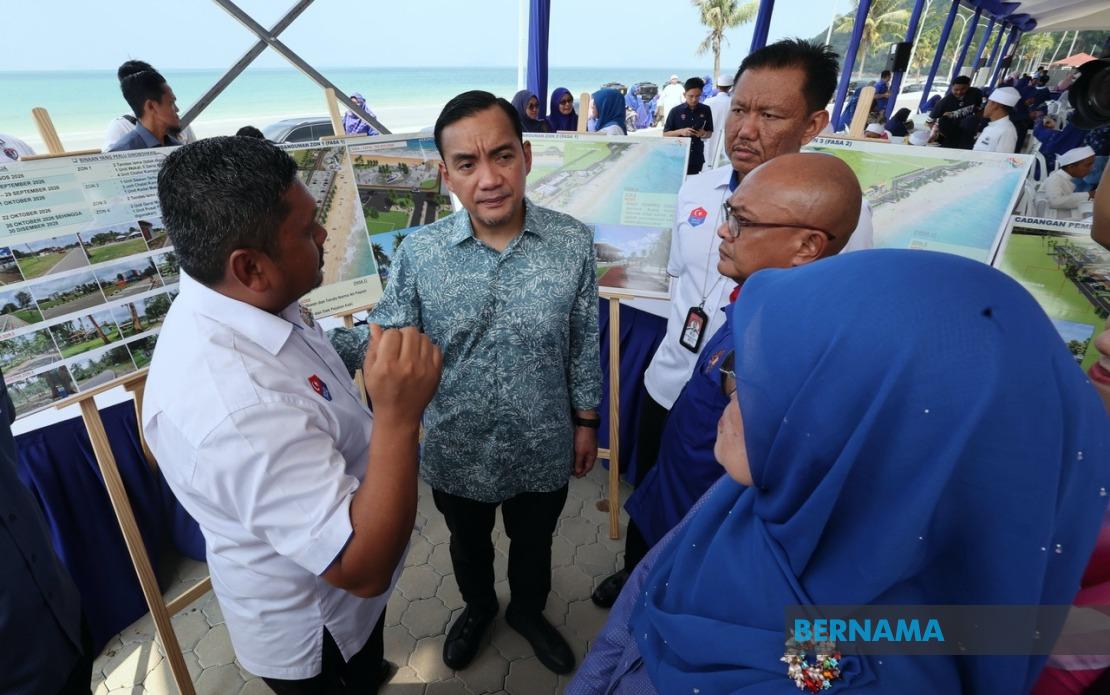
Johor has earmarked RM1.5 million for a comprehensive development programme in Mersing, marking a deliberate effort to channel the state's economic momentum into one of its more remote districts. The initiative, announced by Menteri Besar Datuk Onn Hafiz Ghazi, reflects the state government's commitment to ensuring that growth benefits are distributed more equitably across communities rather than concentrated in traditionally prosperous urban areas.
The underlying philosophy driving this allocation stems from concerns that economic development concentrated in a few commercial hubs can leave peripheral districts behind. Onn Hafiz articulated this concern bluntly when addressing local stakeholders, noting that tourism and commercial initiatives lack meaning if the district's 80,000 residents do not experience tangible improvements in living standards and job prospects. This perspective signals a shift toward inclusive development that specifically targets youth employment, a persistent challenge across Malaysia's more remote regions where limited opportunities drive migration to major cities.
The funding package spans multiple sectors reflecting a holistic approach to community development. Healthcare receives the largest single injection, with RM500,000 dedicated to upgrading the haemodialysis unit at Mersing Hospital, addressing critical medical infrastructure gaps. This investment carries particular significance given that dialysis treatment is essential for chronic kidney disease patients, and upgrading these facilities reduces the need for affected residents to travel to larger medical centres in Johor Bahru or beyond. Such improvements directly enhance quality of life whilst reducing financial burdens on families requiring regular treatment.
Recreational and religious infrastructure also feature prominently in the allocation strategy. RM200,000 will upgrade the Kampung Sri Lalang Mosque, addressing maintenance and facility improvements in a community space central to local life. Sports facilities receive RM600,000 collectively through futsal court construction and repairs at Taman Sri Mersing and Felda Nitar locations. These investments recognise that affordable, accessible recreational facilities serve crucial functions in youth engagement and community cohesion, particularly important in districts where commercial entertainment options are limited.
Infrastructure improvements targeting marginalised communities underline the programme's inclusive intent. The Orang Asli villages of Kampung Peta and Kampung Tanjung Tuan will each receive RM100,000 for solar-powered streetlighting installation, addressing safety and quality-of-life concerns in settlements historically underserved by government infrastructure investment. Similarly, RM100,000 supports the Kami Anak Felda Malaysia building upgrade in Felda Tenggaroh Timur, recognising the continuing role of Felda communities in Johor's social fabric whilst enhancing facilities serving this demographic.
The allocation framework reflects the broader Johor Economic Transformation Plan, an ambitious policy framework outlining development targets across multiple time horizons. Rather than limiting itself to short-term spending, this approach positions Mersing within a structured development narrative that encompasses infrastructure, employment creation, and skills development. Onn Hafiz framed the initiative as an effort to replicate the development model successfully implemented in Johor Bahru, suggesting that lessons learned in urban economic management can translate to district-level growth strategies.
Beyond immediate expenditures, the state government has signalled longer-term commitments with potentially greater transformative impact. A proposed petrol station serving Special Forces Group personnel at Camp Iskandar, whilst seemingly modest, represents coordination between state government, local assemblypersons, and district administrators in leveraging existing military infrastructure for commercial benefit. Such projects demonstrate how interagency collaboration can generate economic activity without massive upfront spending.
Two flagship initiatives carry substantial significance for Mersing's future trajectory. Plans to establish a Religious Affairs Office respond to the importance of Islamic institutional presence in a majority-Muslim district, whilst proposing a Technical and Vocational Education and Training campus directly addresses the employment challenge Onn Hafiz emphasised. A TVET facility would provide local youth with practical skills training without necessitating migration to distant educational centres, potentially retaining talent within the district whilst building workforce capacity in technical fields experiencing persistent labour shortages across Malaysia.
The involvement of local state representatives Tenggaroh assemblyman Mohd Youzaimi Yusof and Endau assemblywoman Alwiyah Talib underscores that development planning incorporates district-level representatives with direct accountability to constituents. This democratic dimension ensures that spending aligns with local priorities identified through representatives maintaining regular community contact, rather than imposing top-down initiatives disconnected from actual needs.
For Malaysian observers, this allocation exemplifies evolving approaches to regional equity within increasingly prosperous states. As larger metropolitan areas attract disproportionate investment and talent, peripheral districts risk stagnation unless deliberate policy mechanisms redistribute resources and opportunities. Mersing's situation mirrors challenges across Southeast Asia where rapid urbanisation concentrates wealth and services in capital regions, leaving rural and semi-urban communities struggling with infrastructure deficits and limited economic prospects. Johor's intervention suggests recognition that sustainable prosperity requires geographic distribution rather than allowing inequality to deepen across state boundaries.
The RM1.5 million commitment, whilst substantial, represents only a starting point. The proposed TVET campus and Religious Affairs Office signal aspirations extending beyond current spending cycles, indicating that Mersing development constitutes a multi-year project rather than a one-off initiative. Success will depend upon consistent follow-through on these commitments and whether subsequent budget allocations maintain this developmental trajectory or revert to historical patterns of concentrating resources in established urban centres.
For Malaysian policymakers monitoring state-level governance, Johor's Mersing initiative offers a potentially replicable model combining immediate community infrastructure improvements with longer-term institutional capacity building. Whether other states adopt comparable approaches will partly determine whether Malaysia's interior regions experience genuine inclusive growth or continue facing the developmental stagnation that drives rural-urban migration and threatens social cohesion.

