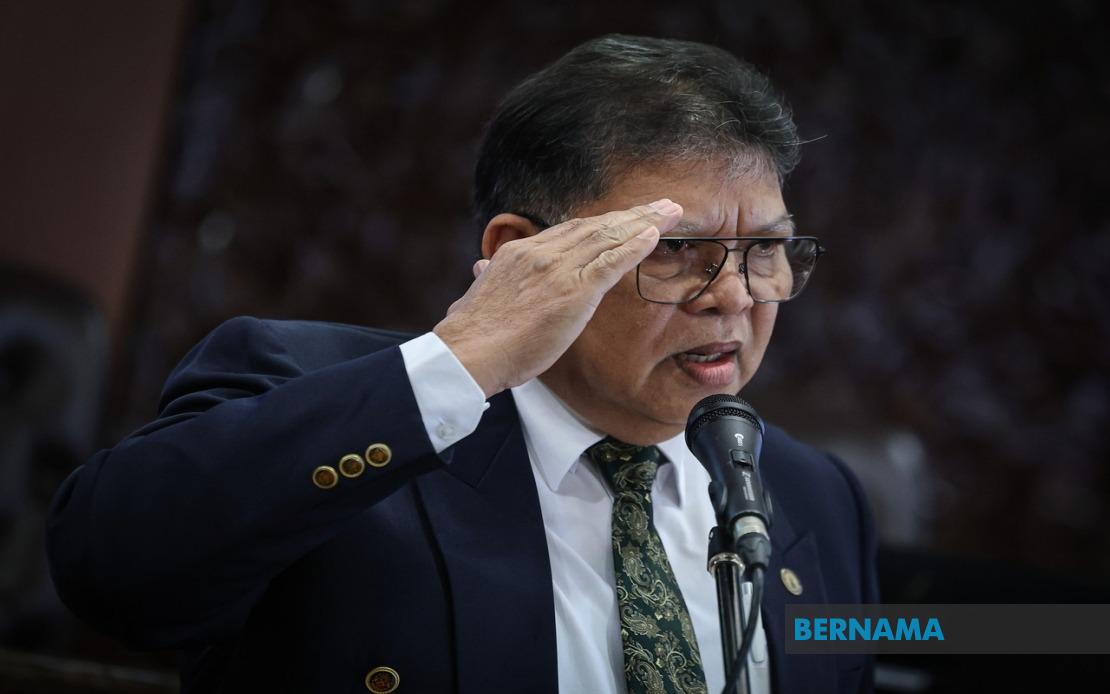
Dewan Rakyat Speaker Tan Sri Johari Abdul has advocated for Malaysia to adopt a proportional representation electoral system, arguing that such a fundamental shift in how parliamentary seats are allocated would create meaningful space for minority voices in the legislature. Speaking at the Harmony Symposium held at Parliament building, Johari presented the case for electoral reform as essential to the nation's long-term cohesion and democratic inclusivity, particularly as Malaysia confronts significant demographic changes that could otherwise marginalise non-Bumiputera communities from formal political representation.
Johari's intervention centres on a demographic reality that has profound implications for Malaysian politics. According to projections he cited, Bumiputera Malays are expected to constitute 77 per cent of the national population by 2050, a figure that raises urgent questions about the viability of the current constituency-based first-past-the-post system for protecting minority interests. Under this conventional model, electoral representation flows primarily to candidates who secure the most votes within geographically defined constituencies. As the Bumiputera proportion of the population rises, the number of constituencies where minorities form a substantial or dominant voting bloc naturally contracts, reducing their ability to elect representatives who can champion their concerns within Parliament.
The Speaker's concern extends beyond electoral mathematics into the realm of democratic legitimacy and social stability. He posed a pointed rhetorical question to symposium attendees: if minority voices become progressively silenced within Parliament, what consequences might unfold among those communities at ground level? This framing positions proportional representation not as a technical adjustment to electoral mechanics, but as a structural safeguard against the accumulation of grievances that might otherwise destabilise the nation's delicate multi-ethnic fabric. By ensuring that minority groups retain parliamentary representation proportional to their numbers, even if those numbers decline relative to the overall population, Malaysia might preserve channels through which diverse communities can articulate their concerns and influence policy.
Johari deliberately positioned his remarks within a longer historical and temporal perspective, exhorting policymakers and legislators to think beyond immediate political cycles. He argued that discussions about national harmony must transcend present-day preoccupations and instead grapple with the challenges Malaysia will face across the next five to 100 years. This temporal reframing reflects a recognition that constitutional and electoral frameworks, once established, prove difficult to reform and persist across generations. The decisions made today regarding how Parliament is constituted will determine whether future minority communities have recourse to formal democratic participation or face structural exclusion from legislative processes.
The demographic complexity underlying this discussion extends well beyond the Bumiputera-non-Bumiputera binary. Malaysia is home to 77 distinct ethnic groups, each with particular historical experiences, geographic concentrations, and political interests. The current electoral arrangement, which relies on constituencies as the primary unit of representation, tends to amplify the political weight of majority communities within any given geographic area while rendering scattered or geographically dispersed minorities politically invisible at the ballot box. Proportional representation would allow these smaller groups to aggregate their votes nationally and secure parliamentary seats based on their share of the total national vote, creating a more nuanced reflection of Malaysia's actual demographic and cultural diversity within the legislature.
The symposium itself, organised by the Malaysia Cross-Party Parliamentary Group on Racial and Religious Harmony (KRPPM-KKA), signalled an emerging institutional commitment to elevating harmony and minority representation on the parliamentary agenda. Chaired by Bangi Member of Parliament Syahredzan Johan, the group explicitly framed the symposium as an effort to embed discussions about ethnic and religious relations within the formal structures of Malaysia's democracy, rather than relegating such concerns to civil society forums or academic conferences. This deliberate choice to host the conversation within Parliament building itself suggested that the issues under discussion—electoral reform, minority representation, and mechanisms for inter-community dialogue—are now regarded as central to Malaysia's governance challenges.
Syahredzan articulated an ambitious agenda for KRPPM-KKA that moves beyond rhetorical commitments to specific policy and legal reforms. The group aims to generate concrete recommendations that Parliament and government ministries might implement, moving the discussion of ethnic and religious harmony from aspirational rhetoric into actionable institutional change. This approach acknowledges that harmony cannot be achieved through speeches or conferences alone; rather, it requires embedding protections for minority interests into the legal and regulatory frameworks that govern political competition and representation. The collaboration Syahredzan emphasised—spanning Parliament, government, civil society organisations, and educational institutions—reflects recognition that sustainable social cohesion depends on alignment across multiple institutional domains.
For Malaysia's political landscape, Johari's advocacy for proportional representation represents a significant intellectual shift from establishment figures. Traditionally, government and parliamentary leadership have been reluctant to entertain electoral reform, viewing the current system as legitimising the existing power structure. The Speaker's willingness to publicly champion such change suggests either a genuine evolution in thinking about long-term national stability, or perhaps growing awareness that demographic trends and social pressures make some accommodation of minority political interests inevitable. Either way, the framing of proportional representation as a protective measure for minorities rather than a threat to Bumiputera dominance reorients the debate in productive ways.
The implications of this proposal extend beyond Malaysia's borders. Across Southeast Asia, most nations grapple with the challenge of managing political representation amid substantial ethnic, religious, and cultural diversity. Thailand, Indonesia, and Philippines have experimented with various electoral systems, each seeking to balance majority rule with minority protection. Malaysia's consideration of proportional representation would add another regional data point to discussions about how diverse democracies can institutionalise fairness. Furthermore, if Malaysia were to adopt such a system, it would likely intensify regional conversations about whether first-past-the-post electoral arrangements remain appropriate for multi-ethnic societies in the 21st century.
Critical questions remain unresolved, however. Proportional representation exists in multiple forms, each with distinct consequences for coalition-building, government stability, and the representation of smaller parties. Countries employing full proportional representation sometimes struggle to form stable governments when numerous small parties fragment the legislature. Malaysia would need to consider whether some modified version—such as mixed-member proportional systems employed in Germany and New Zealand—might better serve its particular circumstances. The transition from the current system to any new arrangement would also require constitutional amendment, a threshold that demands broad consensus and raises questions about timing and political feasibility.
Johari's proposal also assumes that electoral system design constitutes the primary mechanism through which minorities gain political voice and influence. Yet representation depends on multiple factors beyond legislative seats: the degree to which elected representatives actually champion minority concerns, the distribution of executive power, the protection of minority rights through constitutional guarantees and judicial review, and the accessibility of political parties to minority candidates and voters. A more inclusive Parliament would matter little if executive power remained concentrated in structures indifferent to minority interests, or if the broader institutional environment discouraged minority political participation.
Nevertheless, the Speaker's intervention marks an important moment in Malaysian political discourse. By naming demographic trends directly and proposing structural responses, Johari has moved the discussion of minority representation out of the realm of crisis management or symbolic gestures and into the domain of long-term institutional design. Whether this advocacy translates into actual electoral reform depends on whether other key political actors—particularly within the ruling coalition and across parliamentary opposition—embrace similar reasoning. The coming years will reveal whether Johari's proposal gains traction as a serious policy proposal or remains an intellectual exercise by a senior parliamentary figure.

