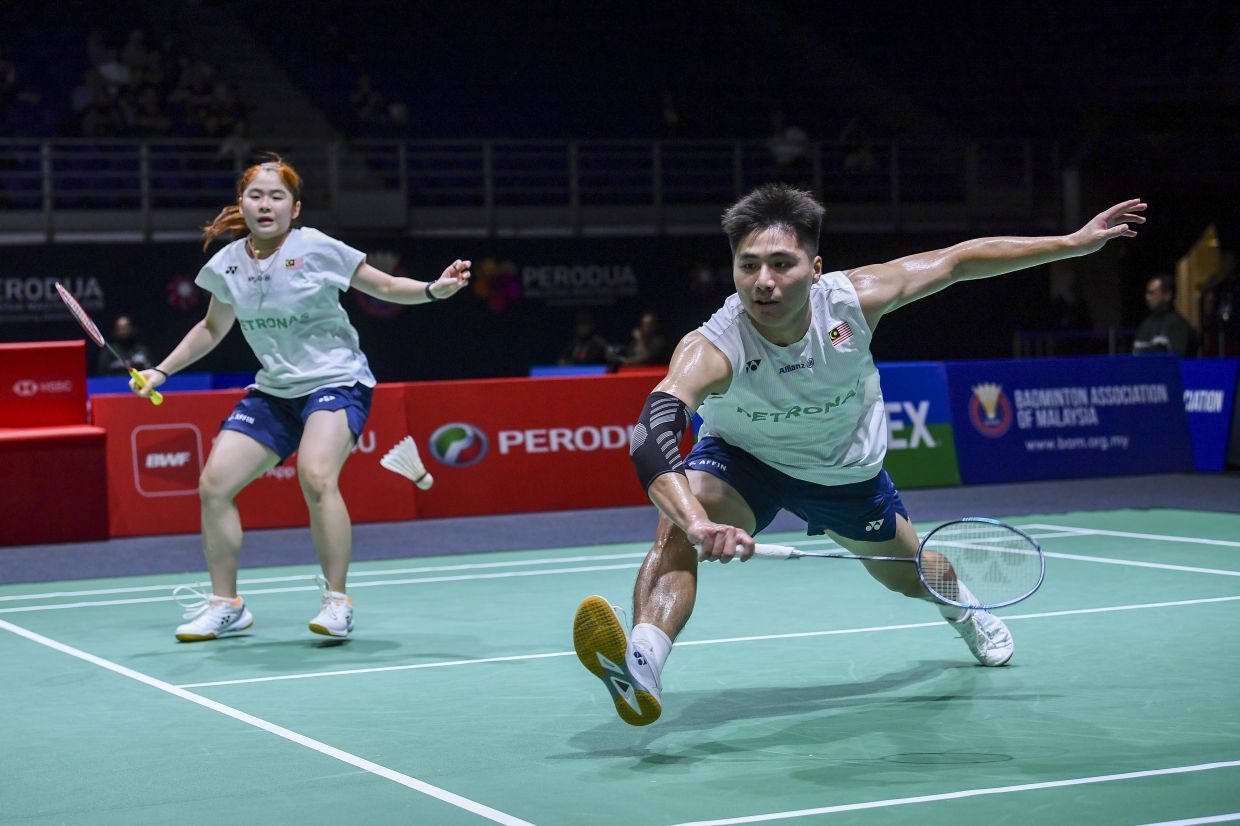
Mixed doubles shuttler Jimmy Wong has embraced his return to Malaysia's national badminton programme with optimism, viewing the decision to rejoin the Badminton Association of Malaysia in April as a pivotal step towards fulfilling his Olympic aspirations. The 23-year-old is now training within the country's elite coaching structure, where he works alongside his doubles partner Cheng Su Yin with clear ambitions to secure a spot at the 2028 Los Angeles Olympics. After settling into the national set-up in recent months, Wong has found renewed motivation in the professional environment and institutional support that comes with competing at the highest domestic level.
Wong's commitment to the Olympic project remains unwavering, though he approaches his targets with measured pragmatism rather than the kind of pressure-inducing goal-setting that can undermine performance. He emphasises that while qualifying for Los Angeles 2028 represents a primary objective, his immediate focus centres on executing quality play in each match rather than becoming consumed by distant milestones. This philosophical approach reflects maturity in how he manages the psychological dimensions of elite sport, recognising that sustainable improvement emerges through consistent effort rather than rigid target obsession.
A significant catalyst for Wong's optimism stems from working with Nova Widianto, the mixed doubles coach recruited to guide Malaysia's partnership-based competitors. Widianto brings extensive pedigree to the role, having competed at Olympic level and previously claimed the world championship, providing Wong with access to expertise few domestic players typically encounter. The coach's influence extends beyond technical refinement of strokes and court positioning; Wong credits Widianto with developing his resilience and adaptability when facing challenging match situations, dimensions of performance that often separate elite competitors from the merely competent.
The partnership between Wong and Cheng Su Yin remains in its early competitive phase, having contested just four tournaments since their formation. Despite this limited history together, the pair have already demonstrated encouraging chemistry and mutual understanding on court, communicating effectively during matches and displaying promising tactical coordination. Wong acknowledges that certain aspects of their combined game require further development, a realistic self-assessment that suggests neither player suffers from overconfidence despite their emergence onto the international stage.
Their breakthrough moment arrived at the Singapore Open, where they achieved a stunning upset by defeating world No. 1 pairing Feng Yanzhe and Huang Dongping in the opening round, a victory that demonstrated their capacity to trouble the sport's elite performers. The achievement proved Wong's contention that he and Su Yin possess the potential to develop into genuine contenders, though their subsequent second-round exit also illustrated the inconsistency typical of emerging partnerships. Such results, however, provide valuable learning experiences that inform future preparation and tactical refinement.
Wong and his partner have identified a concrete ranking target designed to unlock participation in higher-tier international tournaments. Their goal of breaking into the world top 32 by year's end would provide access to Super 750 and Super 1000 events, the most prestigious competitions outside Grand Slams and World Championships. Currently positioned at 118th in the world rankings, reaching the top 32 would represent a substantial but achievable advancement that reflects realistic ambition calibrated to their current development level. Success in this objective would fundamentally alter the calibre of opposition they face and the ranking points available from each victory.
The significance of accessing Super 750 and Super 1000 tournaments extends beyond mere prestige or ranking accumulation. These competitions feature the world's strongest field of competitors and provide the most reliable pathway for rating point acquisition necessary for Olympic qualification. Without consistent participation in high-level events, even talented players struggle to accumulate the ranking points required for selection to Olympic Games, making this intermediate goal essential for long-term aspirations. Malaysia has historically produced competitive mixed doubles players, and Wong's resurgence within the national programme contributes to rebuilding strength in this particular discipline.
Wong's integration into BAM's coaching ecosystem represents broader institutional investment in Malaysia's Olympic ambitions. The recruitment of world-class technical experts like Widianto signals commitment to developing players capable of representing the nation on sport's greatest stage. This structural support differentiates Wong's current trajectory from his earlier career phases and provides tangible resources that enhance his competitive prospects. The national association's commitment extends beyond individual player development to creating an environment where technical excellence and mental resilience can flourish.
The personal dimension of Wong's journey cannot be overlooked. His decision to return to the national programme, rather than pursue other professional pathways, reflects both his confidence in Malaysia's badminton system and his determination to achieve Olympic representation through his home nation's structures. Many athletes of equivalent talent opt for alternative professional arrangements or relocate to training centres overseas; Wong's choice to embrace the domestic environment suggests either deeply-rooted patriotic commitment or, more pragmatically, assessment that BAM provides optimal conditions for his competitive development.
Looking forward, Wong's trajectory will depend substantially on the consistency with which he and Cheng Su Yin execute their ranking targets and translate promising performances like the Singapore Open upset into sustained success against elite opponents. The partnership appears complementary in terms of playing styles and court positioning, factors that contribute to positive early results. However, the transition from promising newcomers to established contenders typically demands several years of sustained competition and continuous refinement. Wong's realistic expectations and supportive coaching environment position him reasonably well for this progression, though the Olympic pathway remains intensely competitive with numerous internationally-established pairs pursuing identical qualification objectives.

